

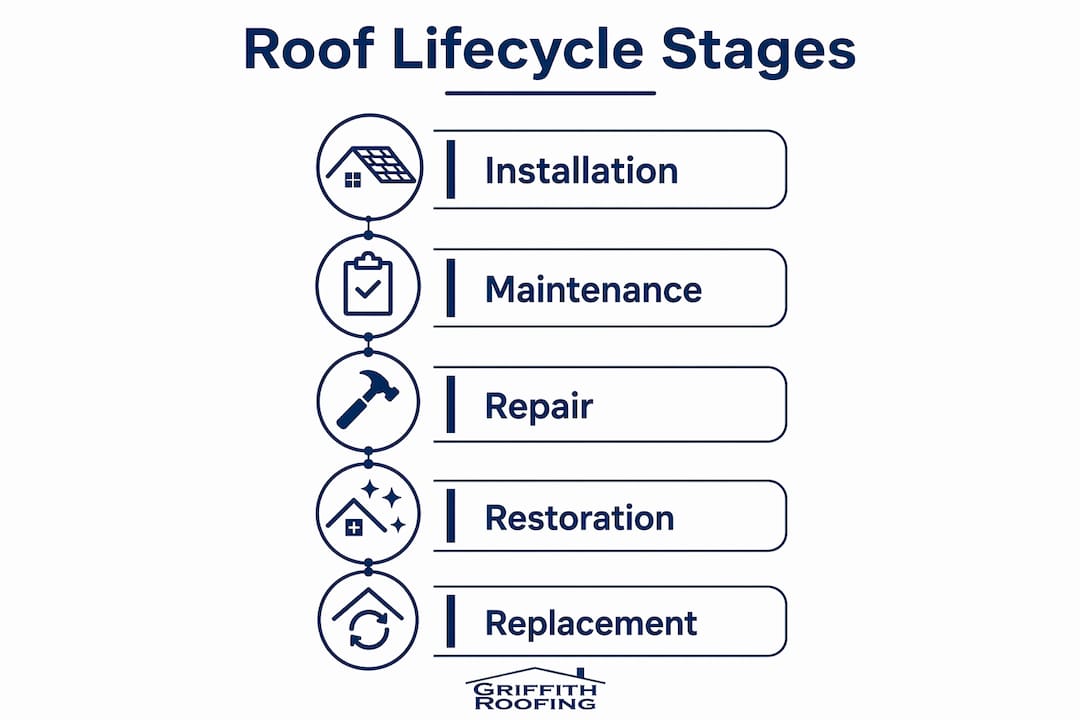
The commercial roof lifecycle is defined as the staged progression a roofing system undergoes from installation through maintenance, restoration, and eventual replacement. Understanding this lifecycle is the foundation of sound property management. Material type, installation quality, climate, and maintenance frequency all determine how long your roof performs before it needs replacing. For commercial property owners in the Dallas-Fort Worth area and beyond, getting this right means the difference between a predictable capital budget and a costly emergency.
What are the typical lifespan ranges for commercial roofing materials?
Commercial roofing lifespans vary significantly by material type, and knowing those ranges is the starting point for any lifecycle plan. TPO and EPDM membranes typically last 20–30 years. Metal roofing systems deliver 40–60 or more years of service. Modified bitumen and built-up roofing (BUR) systems generally fall in the 15–30 year range. That spread matters because a 20-year gap in expected service life translates directly into your capital replacement schedule.
Climate and membrane thickness push those numbers in either direction. A TPO roof installed in a high-UV, high-heat environment like Texas will age faster than the same product in a milder climate. Thicker membranes resist puncture and thermal stress better, which is why specifying the right gauge for your region is not a cosmetic decision.
| Material | Typical Lifespan | Key Strength | Key Weakness |
|---|---|---|---|
| TPO | 20–30 years | Heat-weldable seams, energy efficient | UV degradation in extreme heat |
| EPDM | 20–30 years | Flexible, cold-weather performance | Seam adhesive can fail over time |
| PVC | 20–30 years | Chemical resistance, strong seams | Higher upfront cost |
| Metal | 40–60+ years | Extreme durability, low maintenance | Higher installation cost |
| Modified bitumen | 15–25 years | Layered redundancy, easy repair | Requires careful installation |
| Built-up roofing (BUR) | 15–30 years | Proven track record, multi-ply protection | Heavy, labor-intensive installation |
Metal roofing stands apart from the rest of the field. A well-installed standing-seam metal roof can outlast two or three membrane replacements on the same building. If your property has a long ownership horizon, the higher upfront cost of metal often pays for itself in avoided replacement cycles.
How do installation quality and roof design affect the commercial roof lifecycle?
Installation quality outweighs membrane brand or type in determining long-term roof performance. A premium TPO membrane installed by an inexperienced crew will fail years before a mid-grade product installed by a certified contractor. Poor seam welding and improper flashing are the two most common causes of early roof failure. Both are invisible to the untrained eye until water is already inside your building.
Drainage design is equally critical. Standing water beyond 48 hours promotes membrane degradation and accelerates leaks. A flat or low-slope roof without properly sized drains, scuppers, and tapered insulation will pond water after every heavy rain. That ponding slowly breaks down the membrane from below, cutting years off the roof’s rated service life. Griffith roofing addresses drainage design at the specification stage, not as an afterthought.
Design best practices that protect longevity include proper crickets and saddles around penetrations, adequate parapet height, and correct fastener patterns for wind uplift resistance. Each of these details is specified in the design phase and verified during installation. Skipping the verification step is where most lifecycle problems begin.
Pro Tip: Before signing a roofing contract, ask the contractor for their installer certification documentation and request a copy of the project’s quality control checklist. Reviewing contractor qualifications before work starts is the single highest-return action you can take for long-term roof performance.
How does preventive maintenance extend roof lifespan and reduce long-term costs?
Preventive maintenance is the most cost-effective tool in commercial roof lifecycle management. Proactive maintenance yields up to a 4:1 cost savings ratio and can extend roof lifespan by up to 50%. That means every dollar you spend on scheduled inspections and minor repairs can save four dollars in emergency patching, interior damage remediation, and premature replacement.
The standard maintenance program includes semi-annual inspections, drain and scupper cleaning, seam and flashing re-sealing, and debris removal. Inspections should also follow major weather events, particularly hail storms and high-wind events common in North Texas. Warranties often require documented maintenance records, and missing documentation can void coverage even when the membrane itself is still sound. Keeping a maintenance log is not bureaucracy. It is warranty protection.
Reactive, break-fix maintenance costs more in every measurable way. Emergency repairs carry premium labor rates, interior damage from leaks adds remediation costs, and repeated patching without addressing root causes shortens the roof’s remaining service life. The math consistently favors a scheduled approach.
Pro Tip: Set a recurring inspection calendar tied to two fixed dates each year, spring and fall, plus a post-storm trigger. Pair this with a commercial property maintenance schedule for your other building systems so roofing never gets deprioritized during busy operational periods.
Watch for these warning signs that warrant an immediate inspection:
- Visible membrane blistering, bubbling, or surface cracking
- Water stains on interior ceilings or walls
- Blocked or slow-draining roof drains and scuppers
- Flashing pulling away from walls, curbs, or penetrations
- Granule loss or bare spots on modified bitumen or BUR surfaces
- Soft or spongy areas underfoot when walking the roof
What are the key stages in managing a commercial roof asset?
Effective roof life cycle management starts with a complete asset inventory. Record each roof section’s age, material type, warranty expiration, last inspection date, and current condition rating. Without this baseline, you are budgeting blind.
Condition rating scales typically run from 1 to 10, with 10 representing a new roof. The maintain-repair-restore-replace ladder maps directly to those ratings. A roof rated 7 or above is a maintenance candidate. A roof rated 4–6 is a repair or restoration candidate. A roof rated below 4 is a replacement candidate. Using this framework removes emotion and urgency from the decision and replaces it with data.
Start budgeting for replacement once a roof surpasses 85% of its rated service life. For a 25-year TPO roof, that means initiating replacement planning at year 21. Replacement projects require 6–12 months for engineering, bidding, and scheduling. Starting too late forces emergency decisions that cost significantly more and disrupt building operations.
| Decision stage | Condition rating | Trigger | Budget implication |
|---|---|---|---|
| Maintain | 7–10 | Routine inspection, minor wear | Low annual cost, preventive spend |
| Repair | 5–6 | Localized damage, seam failures | Moderate, targeted repair budget |
| Restore | 4–5 | Mid-life membrane, sound substrate | Coating cost, 10–15 year extension |
| Replace | Below 4 | Widespread failure, moisture intrusion | Full capital replacement budget |
Planned replacement reduces emergency interruptions and interior damage risk. It also gives you time to evaluate material upgrades, secure competitive bids, and schedule work during low-occupancy periods. An emergency replacement gives you none of those options.
When and how can roof restoration coatings extend the lifecycle effectively?
Roof restoration coatings are most effective when applied during the mid-lifecycle window, typically between years 15 and 22 for most membrane systems. Applied at the right time, coatings add 10–15 years of service life at a fraction of full replacement cost. That extension can defer a major capital expenditure by more than a decade, which is a significant advantage for any property’s operating budget.
Coatings work by sealing minor surface cracks, reflecting UV radiation, and restoring waterproofing integrity to a membrane that is aging but structurally sound. Silicone, acrylic, and polyurethane formulations each suit different membrane types and climate conditions. Silicone coatings perform well in ponding water environments. Acrylic coatings offer strong UV reflectivity in dry climates. Choosing the wrong coating for your substrate wastes money and can accelerate failure.
Restoration is not suitable for every roof. The substrate must be dry, structurally sound, and free of widespread membrane brittleness or delamination. A roof with active moisture intrusion or saturated insulation requires repair or replacement first. Applying a coating over a compromised substrate traps moisture and accelerates the damage it was meant to prevent.
Key conditions that make a roof a good restoration candidate:
- Membrane is intact with no widespread cracking or delamination
- Insulation is dry, confirmed by infrared or core sampling
- Seams and flashings are repairable before coating application
- Roof is within the 15–22 year service window for its material type
- No history of repeated, unresolved moisture intrusion
Pro Tip: Schedule a professional inspection before committing to a restoration coating. An infrared scan can identify wet insulation that is invisible from the surface. Coating over wet insulation is one of the most expensive mistakes in commercial roof restoration, and it voids most coating warranties.
Key Takeaways
A commercial roof’s total service life is determined by material type, installation quality, drainage design, and a consistent preventive maintenance program, not by warranty duration alone.
| Point | Details |
|---|---|
| Material lifespan varies widely | Metal lasts 40–60+ years; TPO and EPDM last 20–30 years; plan capital budgets accordingly. |
| Installation quality is the top factor | Poor seam welding and flashing errors cause early failure regardless of membrane quality. |
| Maintenance delivers 4:1 savings | Preventive maintenance can extend roof life by up to 50% and saves four dollars per dollar spent. |
| Start replacement planning at 85% of life | Budget and begin procurement 6–12 months before the roof reaches end of rated service life. |
| Restoration coatings add 10–15 years | Apply coatings mid-lifecycle on dry, sound substrates to defer full replacement cost. |
What I’ve learned after 25 years of commercial roofing in Texas
The biggest misconception I see from commercial property owners is treating the roof warranty as a proxy for roof life. A 20-year warranty does not mean the roof will perform for 20 years without attention. It means the manufacturer will cover defects under specific conditions, most of which require documented maintenance. I have seen roofs fail at year 12 because the owner never scheduled a single inspection, and I have seen roofs push past year 30 because the owner treated them like a mechanical asset with a service schedule.
The second mistake is waiting for a visible leak before calling anyone. By the time water shows up on your ceiling, it has usually been moving through the insulation layer for months. The damage is already done. The repair cost at that stage is three to five times what it would have been if caught during a routine inspection.
The shift I encourage every property owner to make is from “fix it when it breaks” to “manage it like the asset it is.” Your roof represents a significant portion of your building’s replacement value. Treating it as a passive component that you ignore until it fails is the most expensive approach available to you. A simple asset inventory, a twice-yearly inspection schedule, and a replacement reserve fund started at year 15 will protect your investment and eliminate budget surprises.
One more thing: do not let a contractor talk you into a restoration coating on a roof that needs replacement. I have seen that conversation go wrong for property owners who trusted the lower price over the honest assessment. If your roof has widespread moisture intrusion or membrane failure, coating it is not a solution. Get a second opinion before committing to any major scope of work.
— Mark Griffith
How Griffith roofing helps you manage your commercial roof
Griffith roofing has served commercial property owners across the Dallas-Fort Worth Metroplex since 2001. The team performs full lifecycle services including condition assessments, preventive maintenance programs, targeted repairs, restoration coating applications, and complete roof replacements across TPO, EPDM, metal, and modified bitumen systems.
If you are unsure where your roof sits in its lifecycle, a professional inspection is the right first step. Griffith roofing’s commercial roofing specialists provide detailed condition reports with clear recommendations tied to your budget and timeline. For properties that need repair work now, the roof repair team is available across the DFW area with the documentation and workmanship standards your warranty requires.
FAQ
What is the commercial roof lifecycle?
The commercial roof lifecycle is the progression a roofing system follows from installation through maintenance, repair, restoration, and eventual replacement. Material type, installation quality, climate, and maintenance frequency determine the total service life.
How long does a commercial roof last?
Commercial roofing lifespan ranges from 15–30 years for membrane systems like TPO, EPDM, and BUR, up to 40–60 or more years for metal roofing. Actual service life depends heavily on installation quality and how consistently the roof is maintained.
How often should a commercial roof be inspected?
Commercial roofs should be inspected twice per year, typically in spring and fall, and after any major storm event. Documented inspections protect warranty coverage and catch minor issues before they become costly failures.
When should I start budgeting for a commercial roof replacement?
Start budgeting for replacement once the roof reaches 85% of its rated service life. Replacement projects require 6–12 months for engineering, bidding, and scheduling, so early planning avoids emergency costs and operational disruption.
Can a roof coating replace a full commercial roof replacement?
A restoration coating can add 10–15 years to a mid-life roof that is structurally sound and dry. It is not a substitute for replacement when the membrane has widespread failure, active moisture intrusion, or saturated insulation.


