

A commercial roofing insurance claim is a formal request made by a property owner to recover costs for roof damage covered under their commercial property insurance policy. Understanding the commercial roofing insurance claims process is the difference between a full payout and leaving thousands of dollars on the table. The key actors in every claim are the property owner, the insurance carrier, the adjuster, the roofing contractor, and sometimes a public adjuster. Success depends on documentation quality, policy knowledge, and how well you manage each stage of the process.
What are the essential steps to file a commercial roofing insurance claim?
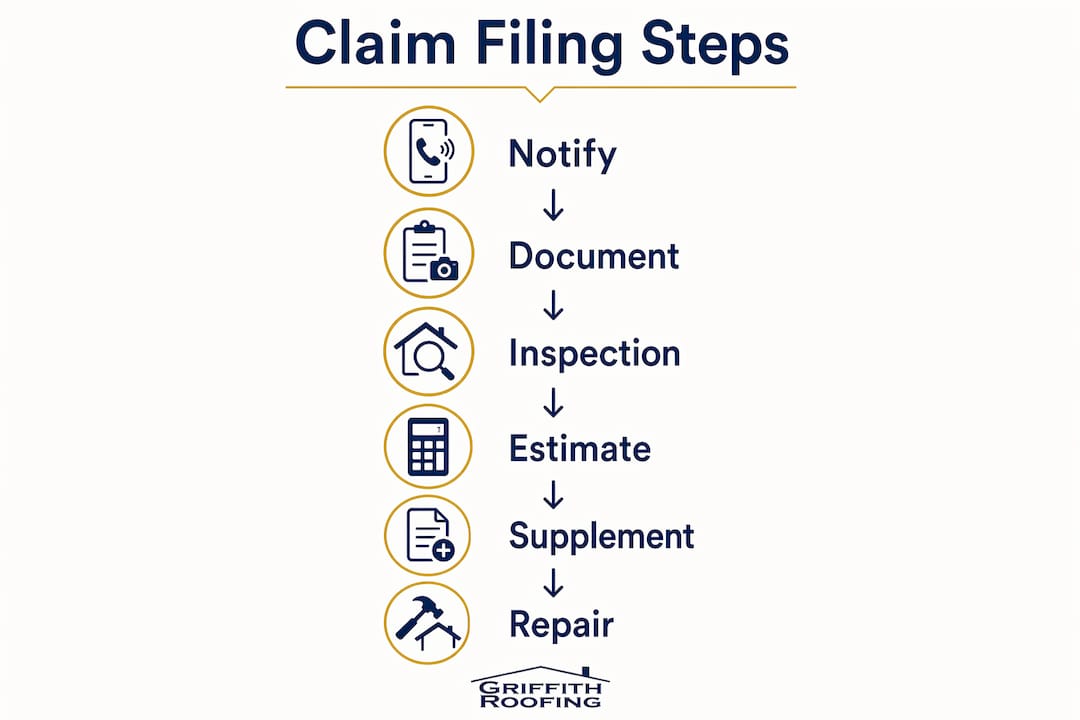
Filing a commercial roof insurance claim is a sequential process where each step builds on the last. Skipping or rushing any stage weakens your position with the insurer.
-
Document the damage immediately. Photograph and video every affected area from multiple angles before any temporary repairs are made. A complete evidence set includes your policy number, property address, loss date, a written description of the damage, and organized photo files labeled by location and date.
-
Review your policy before you call the carrier. Pull your declarations page and identify your coverage type, deductible, exclusions, and any wind or hail endorsements. The Texas Department of Insurance recommends confirming your roof replacement coverage type and deductible levels before filing, because these two factors directly determine your out-of-pocket costs.
-
Notify your insurer promptly. Contact your carrier as soon as damage is confirmed and request a claim number. Delayed notification can result in outright coverage denial. A 2026 New York case confirmed that courts treat prompt notice as a coverage condition, regardless of whether the damage itself is proven.
-
Schedule a professional roof inspection. Hire a licensed commercial roofing contractor to inspect the roof before the adjuster arrives. Their written report becomes your independent baseline for damage scope.
-
Organize all paperwork. Compile maintenance records, prior inspection reports, contractor estimates, and your photo documentation into a single organized file before the adjuster visit.
Pro Tip: Never make permanent repairs before the adjuster inspects the roof. Temporary tarping to prevent further damage is acceptable and expected, but permanent work can void portions of your claim.
How does the insurance adjuster inspection affect your claim outcome?
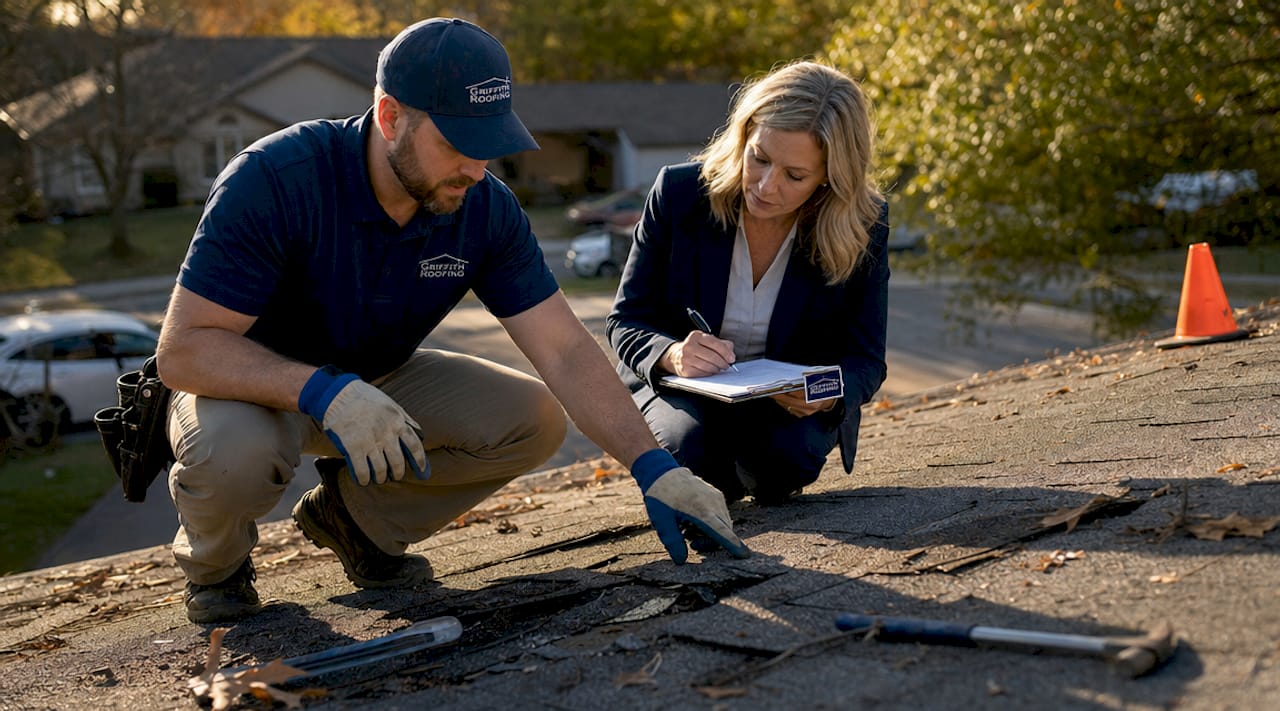
The adjuster’s role is often misunderstood. Adjusters act as policy enforcers, not advocates. Their job is to estimate the cost of covered damage within the terms of your policy, not to find every damaged item on your roof.
This distinction matters because adjusters typically schedule inspections within 5 to 10 business days after a claim is filed. That window is short, and property owners who arrive unprepared often receive estimates that miss significant damage.
Here is what to do before and during the adjuster visit:
- Have your roofing contractor present during the inspection. Their expertise ensures that damage to flashing, membrane seams, HVAC curbs, and drainage systems is not overlooked.
- Bring your photo documentation and written damage description to the inspection. Hand the adjuster a printed copy.
- Walk the roof with the adjuster rather than waiting at ground level. Point out each area of concern directly.
- Request a copy of the adjuster’s report and estimate as soon as it is available.
Poor documentation quality before and during the inspection is the most common cause of claim underpayment. Adjusters work from what they can see and verify. If you have not documented it, it effectively does not exist in the claim file.
Pro Tip: If you believe the adjuster’s estimate is significantly low, consider hiring a public adjuster. Public adjusters work on your behalf, typically for a percentage of the settlement, and they specialize in identifying missed damage and negotiating with carriers.
What is the difference between RCV and ACV in roofing claims?
The financial outcome of your claim depends almost entirely on whether your policy pays on a replacement cost value (RCV) or actual cash value (ACV) basis. RCV covers repair or replacement at current market prices. ACV subtracts depreciation from that figure, which means an older roof receives a significantly smaller payout.
Here is a direct comparison:
| Factor | Replacement Cost Value (RCV) | Actual Cash Value (ACV) |
|---|---|---|
| Payout basis | Full cost to repair or replace at today’s prices | Repair cost minus depreciation for age and wear |
| Depreciation | Withheld initially, then released after work is complete | Permanently deducted, not recoverable |
| Best for | Newer roofs or owners who want full protection | Lower premiums, accepted higher out-of-pocket risk |
| Payout timing | Two payments: initial ACV amount, then recoverable depreciation | Single payment at reduced amount |
Under an RCV policy, the carrier first pays the ACV amount. Once you complete the repairs and submit proof, the insurer releases the withheld depreciation, called recoverable depreciation. This two-step payout structure catches many property owners off guard. For a detailed breakdown of how Texas insurers calculate these figures, the Texas roof payout guide from Griffith Roofing walks through the math with real examples.
Understanding which policy type you hold before a storm hits is not optional. It shapes every financial decision you make during the claim.
How and when should you submit supplements to increase your claim payout?
A supplement is a formal request to the insurer for additional funds beyond the original adjuster estimate. Supplements are not disputes. They are corrections submitted when the initial estimate omits covered damage or underestimates repair costs.
Supplements must be documented with line-item details and before photos to avoid delays in approval. Vague requests get rejected. Specific, itemized requests get processed.
The most effective supplement packages include:
- A line-by-line breakdown of every item the original estimate missed, with quantities and unit costs in a standard estimating format
- Before photos tied directly to each line item, showing the pre-damage condition of the area in question
- A written narrative explaining why each item is covered under the policy language
- Third-party validation such as a contractor’s signed scope of work or a materials invoice
Supplements lacking line-item detail and before documentation cause reviewers to delay or deny approvals outright. The insurer’s supplement team processes dozens of requests daily. A well-organized packet moves to the front of the queue. A disorganized one sits.
File your supplement as soon as your contractor identifies discrepancies in the adjuster’s estimate. Waiting until repairs are underway reduces your leverage and can complicate the approval timeline.
What is business interruption coverage and how does it protect you?
Business interruption (BI) coverage reimburses a commercial property owner for financial losses caused by a covered event that forces full or partial operational closure. For roof damage severe enough to halt operations, BI coverage can be the financial lifeline that keeps a business solvent during repairs.
BI coverage typically includes lost revenue, continuing expenses such as payroll and rent, and temporary relocation costs for up to 12 months. The specific terms vary by policy, so verify these four items before you need them:
- Waiting period. Most BI policies include a 48 to 72-hour waiting period before coverage activates. Damage that resolves faster than that threshold may not qualify.
- Coverage duration. Confirm the maximum indemnity period. Twelve months is common, but some policies cap coverage at 30 or 60 days.
- Revenue calculation method. Carriers use prior-year financials to estimate lost income. Keep clean, current financial records so this calculation works in your favor.
- Triggering event definition. Confirm that roof damage from wind, hail, or storm qualifies as a covered cause under your BI endorsement.
A retail property in the Dallas area that suffers hail damage severe enough to close for six weeks faces not just repair costs but lost sales, continued lease obligations, and potential customer attrition. BI coverage addresses all three. Filing the BI claim alongside your roof damage claim, rather than as an afterthought, keeps both processes aligned and reduces the risk of gaps in documentation.
Key takeaways
Successful commercial roofing insurance claims depend on prompt notification, thorough documentation, and a clear understanding of your policy’s RCV or ACV terms before the adjuster ever sets foot on your roof.
| Point | Details |
|---|---|
| Document before everything else | Photograph all damage immediately, before any repairs, and organize evidence by location and date. |
| Know your policy type | RCV policies release recoverable depreciation after repairs; ACV policies permanently reduce your payout. |
| Prepare for the adjuster | Have a roofing contractor present during inspection to ensure no covered damage is overlooked. |
| Use supplements correctly | Submit itemized, photo-backed supplement requests as soon as your contractor identifies estimate gaps. |
| File BI claims in parallel | Business interruption coverage for lost revenue must be filed alongside the roof damage claim, not after. |
What I’ve learned after 20+ years of commercial roofing claims in DFW
I have been on hundreds of roofs after storms, and the pattern I see most often is not bad luck. It is unpreparedness. Property owners who walk into the adjuster inspection without a contractor, without photos, and without a printed damage summary almost always receive a lower initial estimate than they deserve. That is not the adjuster being dishonest. It is the system working exactly as designed.
The appraisal clause is one of the most underused tools in a property owner’s arsenal. When you and the carrier disagree on the value of a loss, the appraisal process brings in two independent appraisers and an umpire to settle the number without going to court. The carrier must name its appraiser within 20 days. This process works well for valuation disputes, but I want to be direct: it does not resolve coverage disputes. If the carrier is denying the claim entirely based on cause of loss, appraisal will not help you. You need an attorney or a public adjuster for that fight.
My honest advice is this. Treat every claim like a business negotiation, because that is exactly what it is. The insurer has a team of professionals protecting their position. You need the same on your side. A qualified roofing contractor who understands the claims process, combined with clean documentation from day one, is your strongest asset. For complex disputes, the appraisal risks guide from Lundquist Law Firm is worth reading before you invoke any clause.
— Mark Griffith
How Griffith Roofing supports your commercial claim from inspection to completion
When a storm scars your commercial roof, the last thing you need is to manage the insurance process alone. Griffith Roofing has worked alongside Dallas-Fort Worth property owners since 2001, providing professional inspections, detailed damage documentation, and contractor support throughout the commercial roof repair process.
Our team attends adjuster inspections, prepares scope-of-work documentation that aligns with standard estimating formats, and guides you through supplement submissions when initial estimates fall short. If you are weighing repair against full replacement after a claim, our restoration vs. replacement guide breaks down the decision with real cost comparisons. Contact Griffith Roofing today for a professional inspection and a clear path through your claim.
FAQ
What does a commercial roofing insurance claim cover?
A commercial roofing insurance claim covers the cost of repairing or replacing roof damage caused by covered events such as wind, hail, fire, or falling debris. Coverage scope depends on your policy type, exclusions, and whether you carry RCV or ACV terms.
How long does a commercial roof insurance claim take?
Most commercial roof claims resolve within 30 to 90 days, though complex claims with supplements or disputes can extend beyond that. Prompt notification, organized documentation, and a contractor-supported inspection are the fastest ways to move the process forward.
What is recoverable depreciation in a roofing claim?
Recoverable depreciation is the withheld portion of your payout under an RCV policy, released by the insurer after you complete and document the repairs. Under an ACV policy, depreciation is permanently deducted and cannot be recovered.
Can I dispute a low adjuster estimate on my commercial roof claim?
Yes. You can submit a supplement with itemized documentation to correct an incomplete estimate, or invoke the appraisal clause for valuation disputes. For coverage denials, consult a public adjuster or property insurance attorney.
Does filing a commercial roof claim affect my insurance premiums?
Filing a claim can influence your renewal premium, particularly if multiple claims are filed within a short period. Review your policy’s claims history provisions and consult your broker before filing minor damage claims that fall close to your deductible amount.


