

Common roofing scams after Texas storms use pressure tactics, illegal contract terms, and false promises to strip homeowners of thousands of dollars before a single shingle gets replaced. When a hailstorm or tornado scars a neighborhood, unscrupulous contractors descend within hours, targeting homes with visible damage and homeowners in a vulnerable, stressed state. The Texas Department of Insurance (TDI) and the Texas Attorney General have both issued warnings about these patterns, and a 2026 lawsuit against a Dallas-area roofing company shows the threat is not theoretical. Knowing the specific tactics used in contractor fraud is your strongest defense.
1. What are storm chaser scams and how do they work in Texas?
Storm chasers are out-of-town contractors who arrive immediately after storms, often uninvited, targeting damaged neighborhoods before local roofers can respond. They knock on doors, offer suspiciously low bids, and push homeowners to sign contracts on the spot. The TDI advises hiring local licensed contractors, getting at least three written bids on company letterhead, and checking references before agreeing to anything.
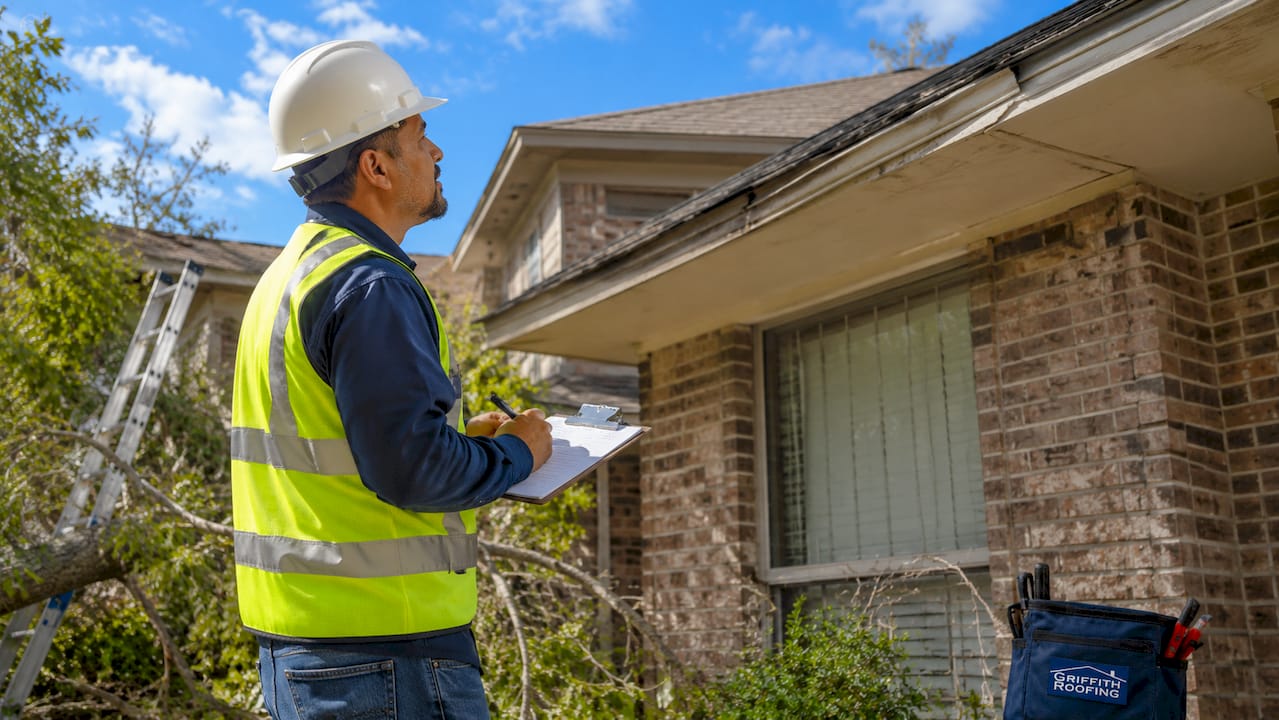
The low bid is the hook. Once you sign, the price often climbs through change orders, or the contractor disappears after collecting a deposit. Urgent pressure appeals are designed to prevent you from comparing bids, which is exactly why getting multiple written bids on letterhead with contact information is the single most effective defense.
Here is what to watch for with storm chasers:
- No local address or physical office in the Dallas-Fort Worth area
- Unmarked vehicles with out-of-state license plates
- Refusal to provide a contractor license number or proof of insurance
- Verbal-only estimates with no written documentation
- Pressure to sign before you can call your insurance company
Pro Tip: Before signing anything, verify a contractor’s license through the Texas Department of Licensing and Regulation (TDLR) database. It takes two minutes and can save you from a five-figure loss. You can also learn how to identify a licensed roofer before you open the door.
2. How contract traps enable roofing fraud
Contract language is where most Texas storm roof scams actually execute. The most dangerous clause reads something like: “Homeowner agrees to the listed repairs for the value of insurance proceeds.” That single sentence gives a contractor legal access to your entire insurance payout, regardless of what the actual repair costs. TDI warns against signing such contracts and advises confirming that every material, scope item, and cost is spelled out in full.
Blank spaces in contracts are equally dangerous. A contractor can fill them in after you sign, adding unauthorized costs or expanding the scope of work without your knowledge. Contracts tied to insurance proceeds without detailed material lists also enable change orders and disputes, facilitating fraud even when homeowners believe they are only signing an estimate.
Protect yourself by checking every contract for these red flags:
- Any phrase referencing “insurance proceeds” as the payment amount
- Blank lines anywhere in the document
- Missing material specifications (shingle brand, grade, underlayment type)
- No start date, completion date, or payment schedule
- Clauses that assign your insurance rights to the contractor
Always insist on a fully detailed contract. Keep a signed copy before any work begins. TDI frames roofing scams as primarily contract and payment manipulation, which means your best protection is in the paperwork, not the handshake.
3. Why large upfront deposits are a red flag and often illegal
Texas law prohibits contractors from asking for large or full down payments before starting repairs after a disaster. That rule exists because upfront payment demands are one of the clearest signals of roofing contractor scams. A legitimate contractor has supplier relationships and cash flow. A scammer needs your money before they do any work.
The 2026 lawsuit filed by Texas Attorney General Ken Paxton against Rubinsky Roofing illustrates the pattern precisely. The company allegedly collected insurance payments but delayed or never completed roofing work, affecting dozens of homeowners with estimated losses of $500,000. The lawsuit describes aggressive sales tactics, upfront payment demands, and a pattern of noncompliance that left families with damaged roofs and empty bank accounts.
Deductible waivers are a separate but equally serious issue. Texas law prohibits contractors from waiving the insurance deductible or absorbing it into their bid. Any contractor who offers to “cover your deductible” is committing insurance fraud, and you could face liability alongside them.
Report any contractor who offers to waive your deductible directly to the Texas Attorney General’s office at 1-800-621-0508. Accepting that offer, even unknowingly, can put your insurance policy at risk.
Pro Tip: A reasonable deposit for a roofing job is typically 10 to 30 percent of the total contract value, paid after a written contract is signed. Never pay in full before work is complete, and pay by check or credit card so you have a paper trail.
4. Recognizing sales pressure tactics and emergency tarp scams
Pressure tactics after storms are designed to short-circuit your judgment. A contractor installs a temporary tarp on your roof, creating a sense of obligation, then immediately presents a binding replacement contract for you to sign. Once that tarp goes down, the urgency feels real, even when it is manufactured.
Kristen Harford of the North Texas Roofing Contractors Association clarifies that free inspections are legitimate and common, but the problems start when urgency and pressure follow. A reputable contractor will give you time to review the inspection report, call your insurer, and compare bids. A scammer will tell you the deal expires today.
Watch for these pressure tactics:
- “This price is only good if you sign right now”
- Tarp installation followed immediately by a contract presentation
- Claims that your roof will be condemned if you wait
- Refusal to leave a written estimate for you to review overnight
- Discounts tied to signing before your insurance adjuster visits
Homeowners have three days to cancel roofing contracts in Texas, provided work has not started. That right becomes much harder to exercise once tarps or construction begin, which is exactly why scammers move fast.
Pro Tip: Tell any contractor who pressures you to sign immediately that you need 48 hours to review the contract with your insurance company. A legitimate contractor will respect that. A scammer will escalate. That reaction alone tells you everything.
5. How insurance claim manipulation puts you at risk
Signing over an insurance check before work is complete is one of the most financially devastating moves a homeowner can make. Victims of roofing fraud in Texas have reported signing over insurance checks before work started, losing all control over disbursements and never seeing their roofs repaired. Once that check is endorsed over to the contractor, your leverage disappears.
A related scam involves contractors who act as de facto insurance adjusters, negotiating your claim directly with your insurer without clear disclosure. Contractors acting as adjusters without proper licensing creates a conflict of interest and is illegal in Texas. Your insurer pays based on the contractor’s assessment, and the contractor has every incentive to inflate that assessment in ways that benefit them, not you.
Protect your claim with these steps:
- Never endorse an insurance check over to a contractor before work is complete
- Require written project timelines with milestone-based payment schedules
- Confirm your contractor is not acting as your public adjuster unless properly licensed
- Document all communications with your contractor in writing
- Understand your insurance payout before any contractor tells you what it covers
Pro Tip: Review your insurance policy’s claim process before a storm ever hits. Knowing how insurance pays for roof replacement in Texas puts you in a far stronger position when a contractor tries to take control of your claim.
6. Quick-reference guide to the most common post-storm roofing scams
Use this table to quickly identify which scam you may be facing and what to do about it.
| Scam type | Key tactic | Warning sign | Your best response |
|---|---|---|---|
| Storm chaser fraud | Out-of-town contractor arrives unsolicited | No local address, out-of-state plates | Verify license via TDLR, get three local bids |
| Contract trap | “Insurance proceeds” language or blank spaces | Vague scope, no material list | Demand fully detailed contract, keep a copy |
| Upfront payment demand | Full deposit required before work starts | Request for cash before contract | Pay 10 to 30 percent max, use check or card |
| Emergency tarp pressure | Tarp installed, contract pushed immediately | “Sign today or lose the deal” | Invoke 3-day cancellation right, get second opinion |
| Insurance check fraud | Contractor asks you to sign over check | Request before work completion | Never endorse check until job is done and inspected |
| Deductible waiver offer | Contractor offers to absorb your deductible | “We’ll cover your out-of-pocket” | Decline and report to Texas AG at 1-800-621-0508 |
Key takeaways
Avoiding roofing fraud after Texas storms requires verifying contractor credentials, reading every contract line, and never releasing payment before work is complete and inspected.
| Point | Details |
|---|---|
| Verify before you sign | Check contractor licenses through TDLR and get at least three written bids on letterhead. |
| Read every contract word | Reject any contract with “insurance proceeds” language, blank spaces, or missing material specs. |
| Know the payment laws | Texas law bars large upfront deposits for disaster repairs; pay in stages tied to completed milestones. |
| Protect your insurance check | Never sign over an insurance check before the job is finished and you have inspected the work. |
| Use your cancellation right | Texas gives you three days to cancel a roofing contract, but only if work has not yet started. |
What 23 years in DFW roofing taught me about scam season
Every time a major storm rolls through North Texas, I watch the same pattern unfold. Within 24 hours, trucks with out-of-state plates are circling neighborhoods. Homeowners who are already stressed about their homes get hit with slick sales pitches and contracts they do not have time to read. I have seen families lose $15,000 or more to contractors who vanished after cashing a check.
The thing that frustrates me most is that the scams are not sophisticated. They work because fear and urgency cloud judgment. A contractor who tells you your roof will fail tonight if you do not sign right now is exploiting your anxiety, not solving your problem. Legitimate roofing professionals give you time because they know their work and their contracts can withstand scrutiny.
My honest advice: slow down. Get three bids from local contractors with verifiable Texas addresses and references. Read every line of every contract before you sign. Call your insurance company before you let any contractor negotiate on your behalf. And if something feels wrong, it probably is. The TDI website and the Texas AG’s office both have free resources to verify contractors and report fraud. Use them.
— Mark Griffith
Why Griffith Roofing is the trusted choice after a Texas storm
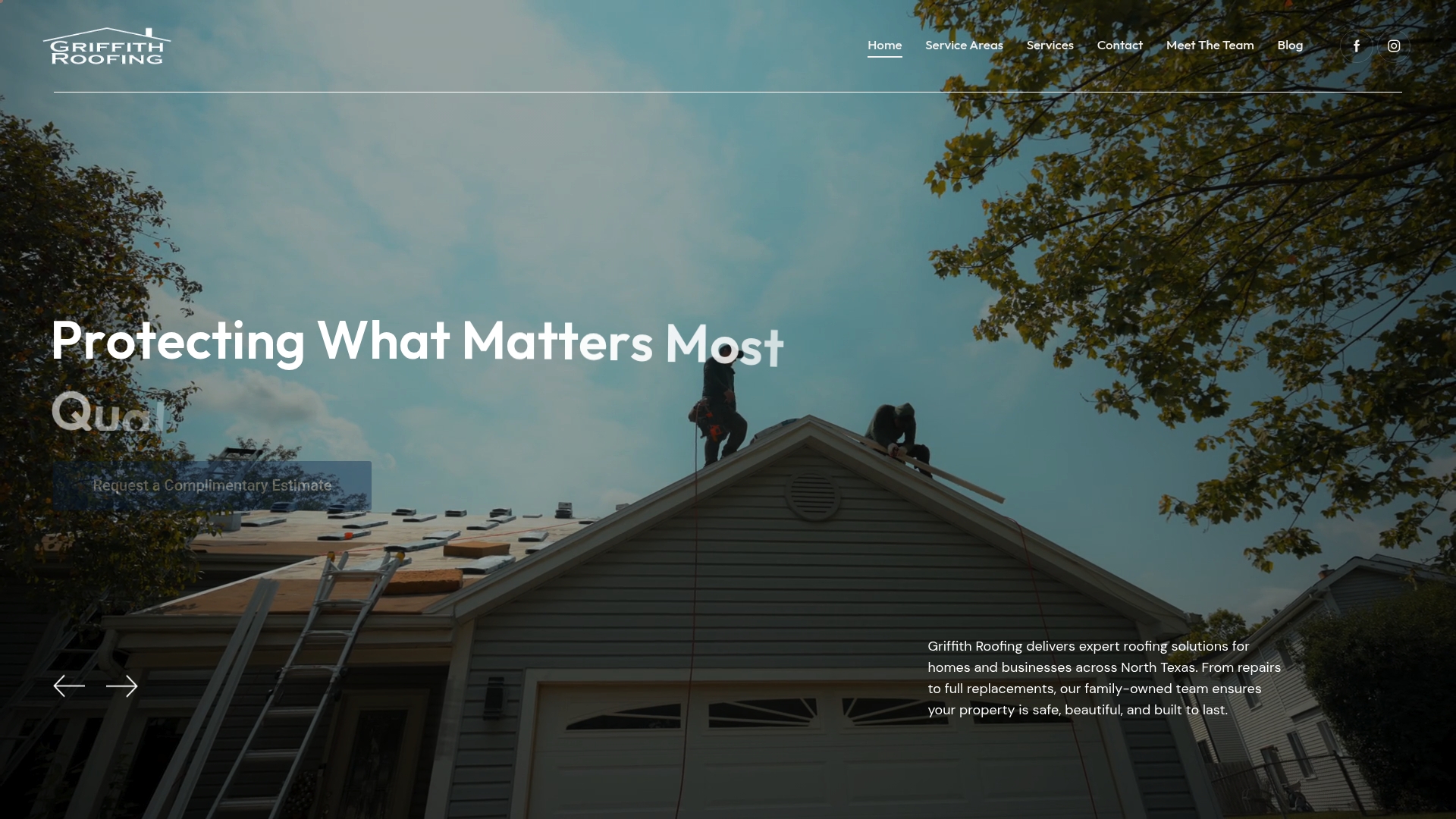
Griffith Roofing has served Dallas-Fort Worth homeowners since 2001, and transparent contracts with no pressure tactics are the foundation of how we operate. Every estimate we provide is fully detailed, with material specifications, a clear payment schedule, and no blank spaces. We comply with all Texas laws on deposits and deductible handling, and we never ask you to sign over your insurance check before your roof is complete and you are satisfied.
If your home took a hit in a recent storm, get a free inspection from a contractor you can actually verify. Explore our residential roofing services or our roof repair options to see what a transparent, local contractor looks like in practice. No pressure. No tricks. Just honest work from a team that has been here for over two decades.
FAQ
What is the most common roofing scam after a Texas storm?
The storm chaser scam is the most frequent form of roofing fraud after Texas storms. Out-of-town contractors arrive unsolicited, pressure homeowners to sign quickly, and often disappear after collecting a deposit or insurance check.
Is it illegal for a roofer to waive my deductible in Texas?
Yes. Texas law prohibits contractors from waiving or absorbing your insurance deductible, and doing so constitutes insurance fraud. Report any contractor who makes this offer to the Texas Attorney General at 1-800-621-0508.
How long do I have to cancel a roofing contract in Texas?
Texas homeowners have three days to cancel a roofing contract, but only if work has not yet started. Once a contractor begins work, including installing a temporary tarp, that right becomes significantly harder to exercise.
How do I verify a roofing contractor in Texas?
Check the contractor’s license through the Texas Department of Licensing and Regulation (TDLR) database online. Also confirm they carry general liability insurance and workers’ compensation coverage before signing any contract.
Should I let my contractor handle my insurance claim?
No. Contractors acting as insurance adjusters without proper licensing is illegal in Texas and creates a direct conflict of interest. Handle your claim directly with your insurer and only share contractor estimates as supporting documentation.


