

Will Home Insurance Pay for a New Roof? Here’s What Texas Homeowners Need to Know
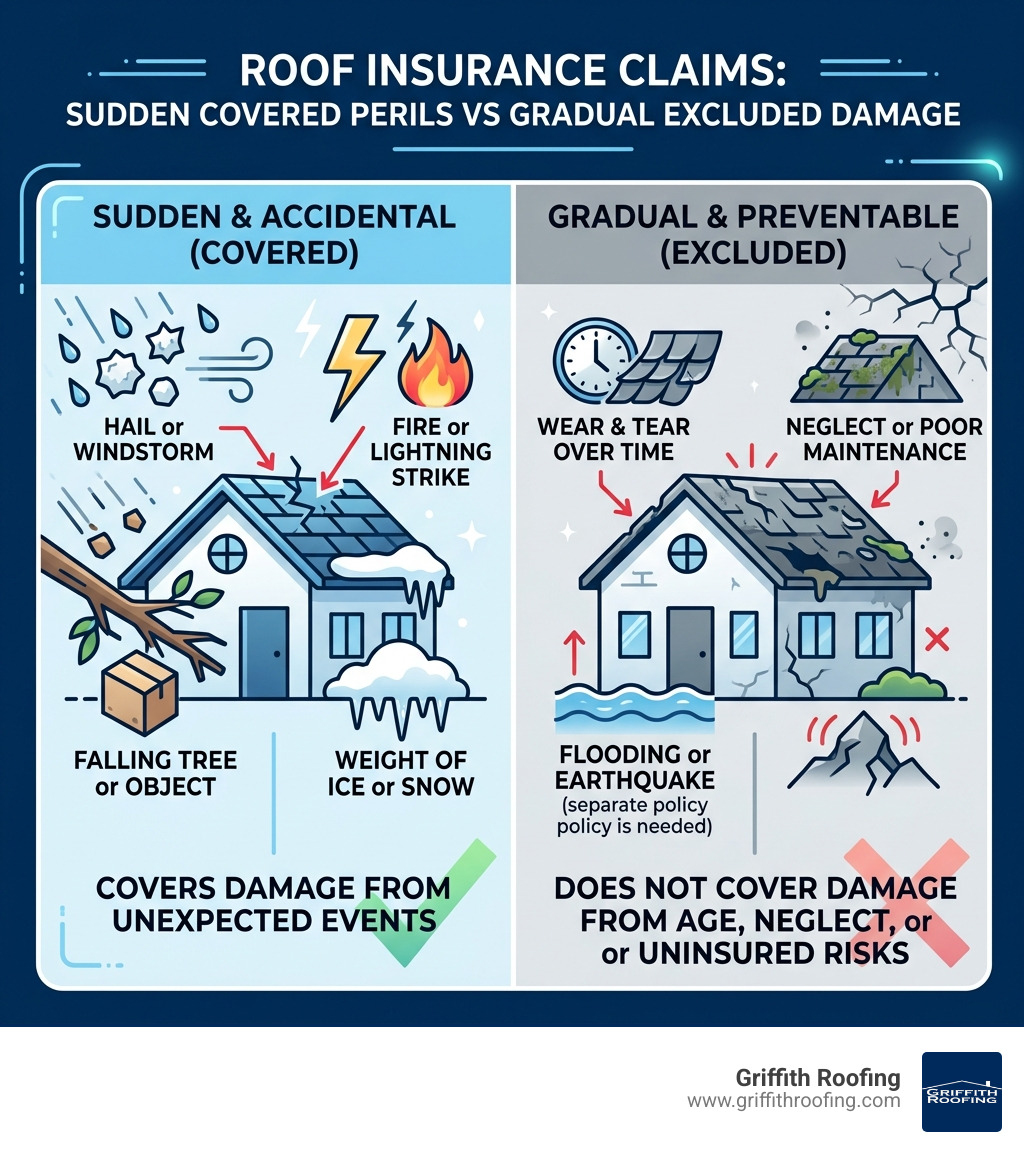
Will home insurance pay for new roof damage? In most cases, yes — but only if the damage was sudden and caused by a covered event like a storm, hail, or falling tree. If the damage built up slowly over time from age or neglect, your insurer will likely say no.
Here’s the short answer:
| Situation | Covered? |
|---|---|
| Hail or windstorm damage | Usually yes |
| Fire or lightning strike | Usually yes |
| Falling tree or object | Usually yes |
| Weight of ice or snow | Usually yes |
| Wear and tear over time | No |
| Neglect or poor maintenance | No |
| Flooding or earthquake | No (separate policy needed) |
The key rule insurers follow is simple: sudden and accidental = covered. Gradual and preventable = not covered.
That distinction matters a lot in North Texas, where hailstorms and high winds can cause serious roof damage almost overnight. But it also means that a roof quietly deteriorating for years — even if it finally fails during a storm — may not get a full payout.
Roofing claims have surged in recent years, with nearly $31 billion reported in claims in 2024 — a 30% increase since 2022. Yet despite that volume, nearly 47% of Texas home insurance claims were closed without any payment in 2024. Knowing what your policy covers before damage happens can make all the difference.
I’m Mark Griffith, founder of Griffith Roofing, and after replacing over 3,000 roofs across the DFW Metroplex since 2001, I’ve helped hundreds of homeowners navigate the question of will home insurance pay for new roof repairs or replacements after storm damage. In this guide, I’ll walk you through exactly what’s covered, what isn’t, and how to give your claim the best possible chance of approval.
Understanding When Home Insurance Will Pay for a New Roof
When we talk about whether an insurance company will foot the bill for a brand-new roof, we have to look at the “cause of loss.” In the insurance world, these are called “perils.” For a claim to be successful, the damage must be the direct result of a peril that your policy specifically covers.
In North Texas—from Southlake to McKinney and everywhere in between—our roofs take a beating. The most common reasons insurance companies approve a full roof replacement include:
- Windstorms and Tornadoes: High winds can lift shingles, snap tabs, or peel back entire sections of roofing material. In the “Tornado Corridor,” this is a frequent reality.
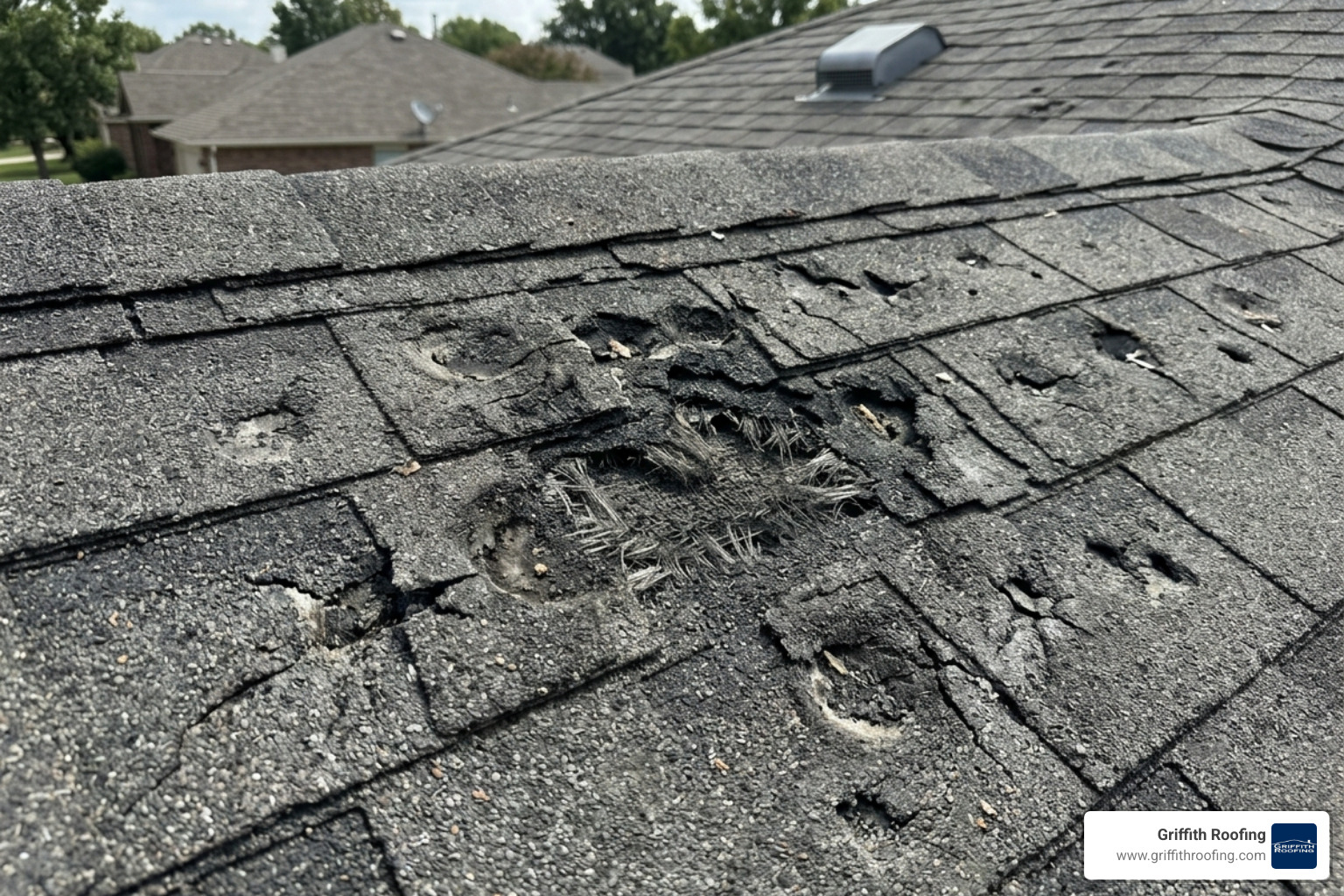
- Hail Impact: This is the big one for DFW homeowners. Hail can range from pea-sized to golf-ball-sized (or larger), causing deep bruises in shingles that knock off protective granules and expose the underlying mat.
- Fire and Lightning: If your home is struck by lightning or suffers a fire, the roof is almost always covered under your dwelling protection.
- Falling Trees: If a heavy oak limb crashes through your roof during a summer thunderstorm, insurance typically pays for the structural repairs and the new roofing material.
- Weight of Ice or Snow: While rare, heavy “northers” can bring enough ice to cause structural strain or collapse on older roofs.
According to Does Homeowners Insurance Cover Roof Damage? | U.S. News, your policy is designed to protect you from these sudden, unexpected disasters. If you’ve recently experienced one of these events, you can explore our more info about storm damage services to see how we help homeowners recover.
Covered Perils vs. Exclusions
Most standard Texas policies (like HO-3 or HO-5 forms) provide “open-perils” coverage for your dwelling. This means everything is covered unless it is specifically excluded.
Beyond weather, your insurance might also cover damage from vandalism or falling objects (like a stray limb from a neighbor’s tree). An important detail many homeowners miss is that if a covered roof peril causes interior leaks, the insurance company may also pay to repair your ruined drywall, paint, and flooring. You can see examples of these comprehensive repairs in our Storm Damage Portfolio.
However, there are “hard exclusions.” Standard home insurance almost never covers:
- Flooding: Requires a separate policy through FEMA/NFIP.
- Earthquakes: Requires a specific rider.
- Pest Infestations: Damage from squirrels, raccoons, or termites is considered a maintenance issue.
- Cosmetic Damage: Some policies now include “cosmetic damage exclusions,” meaning if hail dents your metal roof but it still keeps water out, they might not pay to replace it just for looks.
The Impact of Roof Age on Coverage
Age is the ultimate “gotcha” in the roofing world. We often see homeowners shocked when their claim is denied or severely underpaid because their roof is “too old.”
Inaccurate roof age reporting is a massive issue for the industry, costing insurers an estimated $1.31 billion in lost premiums annually. Because of this, insurance companies have become very strict about the 15-to-20-year threshold.
- Under 15 years: Most roofs in good condition qualify for full replacement cost coverage.
- 15-20 years: Many insurers will switch your policy from “Replacement Cost” to “Actual Cash Value” (which we will explain below), or they may refuse to renew your policy until the roof is replaced.
- Over 20 years: At this point, getting a full replacement covered is very difficult. Insurers view a 20-year-old asphalt roof as having reached its life expectancy (the average 3-tab shingle lasts 15-18 years).
As noted by Does Home Insurance Cover Roof Replacement? | Bankrate, the age of your roof also impacts your wallet today. Homeowners with a brand-new roof pay an average of 19% less for insurance than those with a 20-year-old roof.
Replacement Cost (RCV) vs. Actual Cash Value (ACV)
This is perhaps the most important section of your insurance policy to understand. It determines whether you get a check for a whole new roof or just a small “down payment” on one.
- Replacement Cost Value (RCV): This is the gold standard. If your roof costs $20,000 to replace, the insurance company pays $20,000 (minus your deductible). They don’t care how old the roof was; they pay for a new one at today’s prices.
- Actual Cash Value (ACV): This factors in depreciation. Think of it like a car. As soon as you drive it off the lot, it’s worth less. If your 15-year-old roof is destroyed, the insurer calculates what a 15-year-old roof is worth today—not what a new one costs.
| Feature | RCV Policy | ACV Policy |
|---|---|---|
| Payout Basis | Current market price for new materials | Depreciated value based on age |
| Out-of-pocket | Only your deductible | Deductible + Value lost to age |
| Typical Example | $20,000 roof = $18,000 payout ($2k ded.) | $20,000 roof = $8,000 payout ($2k ded. + $10k dep.) |
Many Texas homeowners are being moved to ACV policies without realizing it, especially as their roofs hit that 15-year mark. We specialize in Residential Roofing and can help you review your “Summary of Coverage” to see which type you have.
How Deductibles Affect Your Payout
Your deductible is the “skin in the game” you have to pay before insurance kicks in. In Texas, we have a unique challenge: Wind and Hail Deductibles.
While your standard deductible might be a flat $1,000 for a fire, your wind/hail deductible is often a percentage of your home’s insured value.
- If your home is insured for $400,000 and you have a 2% wind/hail deductible, you are responsible for the first $8,000 of the roof cost.
With the average cost of replacing a roof sitting around $9,520, a high percentage deductible can sometimes mean the insurance payout is very small. We always recommend checking your declarations page to see if you have a flat dollar amount or a percentage. You can see the quality of work we provide, regardless of the claim size, in our Residential Roofing Portfolio.
Why Insurance Might Deny Your Roof Claim
It is a sobering statistic: nearly 47% of Texas home insurance claims were closed without payment in 2024. Why does this happen? Usually, it’s because the insurance adjuster finds evidence that the damage wasn’t “sudden.”
Common reasons for denial include:
- Wear and Tear: Shingles naturally lose granules and crack over time due to UV exposure. Insurance does not cover “getting old.”
- Lack of Maintenance: If you have moss growing on your shingles or clogged gutters that caused wood rot, the insurer will argue that the damage was preventable.
- Pre-existing Damage: If you try to file a claim for a storm that happened three years ago, or for damage that was present when you bought the house, it will likely be denied.
- Cosmetic Only: As mentioned, if the hail only made small dents that don’t affect the roof’s ability to shed water, some policies won’t pay.
If your claim is denied due to age or wear, you may still need a Roof Repair to keep your home dry and maintain your insurability.
The Role of Maintenance and Documentation
The best way to fight a denial is with proof. We tell all our Southlake and Colleyville clients to keep a “Roof Diary.”
- Gutter Cleaning: Do it twice a year and take a photo.
- Tree Pruning: Keep branches at least 10 feet away from the roofline.
- Annual Inspections: Have a professional roofer (like us!) do a quick checkup every year. We provide documentation that your roof was in good shape before the storm hit.
Having a paper trail of your Roof Repair Portfolio and maintenance records makes it very hard for an insurance company to claim “neglect.”
How to File a Successful Roof Insurance Claim
Filing a claim can feel like a full-time job. You’re dealing with adjusters, paperwork, and strict deadlines. The secret to success is having a professional advocate on your side from day one.
When you suspect damage, the first thing you should do is call a reputable local contractor. According to When Will Insurance Pay for a New Roof? | Angi, having a contractor present when the insurance adjuster arrives ensures that no damage is overlooked.
Step-by-Step Filing Guide
- Document Everything: After a storm, take photos of the roof (from the ground—stay safe!) and any hail on your lawn or porch.
- Call Griffith Roofing: We provide a free, professional inspection. If there isn’t enough damage to warrant a claim, we’ll tell you honestly so you don’t risk a premium increase for a denied claim.
- Contact Your Insurer: If we find significant damage, call your agent or the claims hotline. Give them the date of the storm and our inspection details.
- The Adjuster Meeting: The insurance company will send an adjuster. We will meet them at your home to walk the roof together, ensuring they see exactly what we saw.
- Review the Estimate: Once the “Scope of Work” arrives, we compare it to our own measurements. If they missed something (like the “matching law” which requires replacing the whole roof if shingles can’t be matched), we file a “supplement” to get the extra funds.
- Final Inspection: After we complete the work, we provide the final invoice to the insurer so they can release the remaining funds (the “recoverable depreciation”).
Frequently Asked Questions about Roof Insurance
Will home insurance pay for new roof if it is over 20 years old?
It’s an uphill battle. If a 20-year-old roof is destroyed by a tornado, they will likely pay, but only at Actual Cash Value. This means they will subtract 20 years of “use” from the check. If the roof is just leaking because it’s old, they will not pay. In fact, many insurers in North Texas will send a “Notice of Non-Renewal” if they see a 20-year-old roof during a drive-by inspection.
Will home insurance pay for new roof leaks?
It depends on why it’s leaking. If a hailstone cracked a shingle and caused a leak, yes. If the leak is caused by rusted flashing or old sealant that you didn’t maintain, no. However, even if the roof repair itself isn’t covered, the “resulting damage” (like the stained ceiling in your living room) might be covered under your interior dwelling protection.
Will filing a roof claim increase my insurance premiums?
This is the number one question we get in Southlake and Keller. In Texas, insurance companies generally cannot raise your rates individually just because you filed a “weather-related” claim (an Act of God). However, they can raise rates for an entire zip code if a massive hailstorm hits the area. If everyone on your street is getting a new roof, your rates are likely going up anyway—you might as well get your roof replaced, too!
Conclusion
Navigating insurance can be confusing, but you don’t have to do it alone. At Griffith Roofing, we’ve been the trusted experts in Southlake and the DFW area since 2001. Our USP is simple: we exceed expectations through customer-focused service, expert insurance handling, and flawless craftsmanship.
Whether you’re wondering will home insurance pay for new roof replacement after a recent hailstorm or you just want a professional to check the health of your shingles, we’re here to help. Don’t wait until a small leak becomes a major structural headache. Contact us today for a free inspection and more info about storm damage repair to ensure your home stays protected for years to come.


