

DFW new construction roofing standards are defined by the 2021 International Residential Code and International Building Code, each adopted locally with amendments that go beyond the national baseline. Dallas adopted the 2021 IRC via Ordinance 32424, while Fort Worth uses the 2021 IBC and IRC with additional tornado shelter and water conservation requirements. North Texas weather forces these stricter rules. Hail pummels rooftops across the Metroplex every spring, and wind events can strip an undersized roof in minutes. Whether you are building a new home in Southlake or managing a commercial project in Fort Worth, understanding these standards protects your investment, your insurance coverage, and your family.
1. What are the key permitting requirements for new roofing projects in DFW?
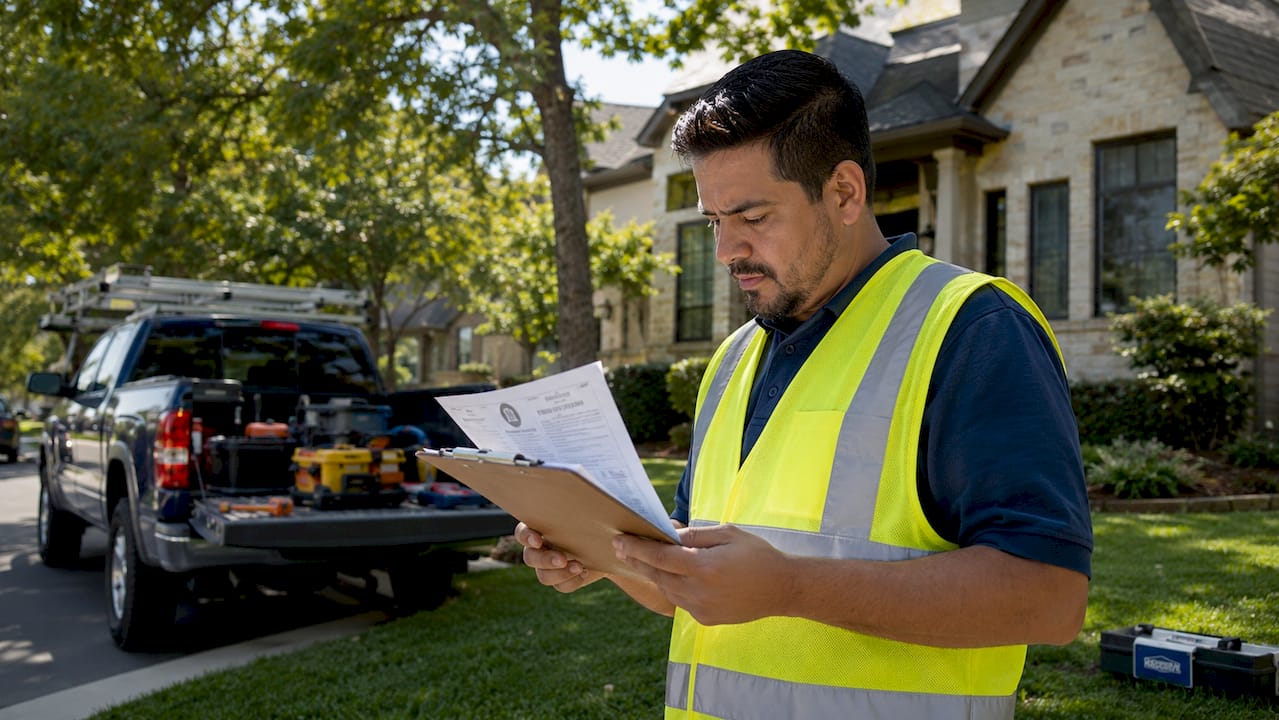
Every new residential roof in Dallas and Fort Worth requires a permit before work begins. Skipping this step is not a minor oversight. It can void your manufacturer warranty and create serious problems when you sell the home.
Key permitting facts you need to know:
- Permit fees in Dallas range from $75 to $200 for residential roofs. Fort Worth residential new construction permits start near $96.84.
- Processing times in Dallas run from same-day approval to 30 business days. New construction plan reviews typically take longer than simple reroofs.
- Dallas requires contractors to hold an active Certificate of Registration under Chapter 52, including proof of general liability insurance.
- Homeowners generally cannot pull their own permits for new construction roofing. The licensed contractor must do it.
- An unregistered roofer pulling a permit creates an invalid permit. That voids warranties and can block a future home sale.
Pro Tip: Before signing any contract, ask your contractor for their Dallas or Fort Worth Certificate of Registration number and verify it directly with the city. A legitimate contractor will hand it over without hesitation.
The permit must be displayed on-site throughout the project. Inspectors check for it. Missing paperwork at inspection means delays and potential fines. For a full breakdown of what DFW permit rules require, the DFW roofing permit guide from Griffith roofing covers the process step by step.
2. How do wind and hail resistance standards affect new construction roofs in DFW?
DFW sits in one of the most hail-active regions in the United States. Local amendments to the 2021 IRC and IBC reflect that reality with specific wind-uplift and impact-resistance requirements that exceed the national model code.
Here is what the standards require and why they matter:
- Class 4 impact-resistant shingles are the recognized standard for DFW new construction. They carry the highest impact rating under UL 2218 testing.
- Class 4 shingles lower insurance premiums by 10–30% with most major carriers. That savings compounds over the life of the roof.
- Wind uplift resistance ratings are mandated by local amendments. Fastening patterns, nail type, and shingle overlap all factor into compliance.
- Metal roofing and TPO membranes are common on commercial new construction for their wind and impact performance.
- UL 997 wind resistance testing is one of the code-referenced standards for shingle performance in high-wind zones.
The DFW climate and roofing impact resource explains how local weather patterns drive these specific material choices. Choosing a Class 4 shingle is not just about meeting code. It is the single best decision a DFW homeowner can make for long-term roof performance and insurance cost control.
3. What materials and installation standards does DFW mandate for new roofs?
Dallas and Fort Worth building codes specify not just what materials are allowed, but exactly how they must be installed. Meeting the material list is only half the job.
- Approved roofing materials include asphalt shingles, standing seam metal, and TPO for commercial applications. Each must meet minimum performance ratings under the adopted code.
- Ice and water shield installation is mandatory at all eaves and valleys for permitted roofs in Dallas. This local amendment directly reduces water intrusion damage during heavy storms.
- Decking requirements follow IRC and IBC structural standards. Sheathing thickness, fastener spacing, and span ratings are all inspected.
- Underlayment must meet minimum weight and performance standards. Synthetic underlayments are widely accepted and often outperform traditional felt in DFW heat.
- Flashing at all roof penetrations, chimneys, and wall intersections must be installed per code. Inspectors flag improper flashing as one of the most common installation failures.
Pro Tip: Ask your contractor to walk you through the underlayment and ice-and-water-shield plan before installation starts. Seeing the spec on paper confirms they are not cutting corners on materials that are buried under the finished roof.
The best roofing materials for North Texas guide from Griffith roofing matches specific products to DFW weather and code requirements. Material selection and installation quality are inseparable. A premium shingle installed with the wrong fastener pattern still fails inspection.
4. How do DFW energy efficiency and weather-resilience codes impact new roof construction?
Energy codes are no longer a secondary concern in DFW new construction. Dallas Chapter 53 amendments impose specific reflectivity and cool roof standards that affect material selection on both commercial and residential projects.
What the energy and resilience standards require:
- Low-slope commercial roofs in Dallas must use cool roofing materials that meet minimum solar reflectance and thermal emittance values tied to the IECC.
- Residential steep-slope roofs face reflectivity standards that influence shingle color and product selection.
- Compliance paths include either a prescribed reflectivity route or a simulated performance path, where higher insulation values can offset lower reflectivity.
- Fines for violations reach up to $2,000 per day under Dallas Chapter 53. Inspectors check compliance at final approval.
- Water conservation amendments in Fort Worth add another layer of resilience requirements beyond the national model code.
These rules exist because a reflective roof surface measurably reduces cooling loads in Texas summers. A roof that meets cool roof standards cuts energy bills and passes inspection. One that does not can stall your certificate of occupancy and generate daily fines.
5. What are the inspection and warranty considerations for new construction roofing in DFW?
City inspections in Dallas and Fort Worth follow a structured protocol. Passing them is not automatic, and failing them costs time and money.
Key inspection and warranty points:
- The permit must be physically on-site at every inspection stage. Missing it delays approval.
- Dallas city inspectors check flashing installation, ventilation adequacy, shingle alignment, underlayment coverage, and ice-and-water-shield placement.
- Multiple inspection stages apply to new construction. Rough framing, sheathing, and final roofing are each reviewed separately.
- Manufacturer warranties require registration within a specific window after installation, often 30–90 days. Missing that window voids the coverage.
- Workmanship warranties from the contractor are separate from manufacturer warranties. Both require documentation. Homeowners should photograph every stage of installation for their records.
The residential roof replacement process guide details what to expect at each inspection stage. Final city approval must happen before you register the manufacturer warranty. Sequence matters.
6. How do HOA and historic district rules affect roofing standards in DFW new construction?
Building code compliance is the floor, not the ceiling. HOA rules and historic district requirements can impose stricter standards that override your material preferences entirely.
What you need to know before selecting materials:
- HOAs in DFW communities commonly restrict roofing materials to specific colors, profiles, and product lines. Approval is required before installation begins.
- The Dallas Landmark Commission has denied synthetic slate substitutions in historic districts, requiring in-kind natural slate replacement instead.
- Historic district projects require a Certificate of Appropriateness from the Landmark Commission before a city permit is issued.
- HOA approval and city permit approval are separate processes. Both must be in hand before work starts.
- Submitting the wrong material sample to an HOA architectural review board is one of the most common delays on new construction timelines.
The Fort Worth roofing code guide covers how local overlay rules interact with state and city code requirements. If your property sits in a historic district or a deed-restricted community, start the approval process weeks before you need the permit.
Key takeaways
DFW new construction roofing standards require compliance with the 2021 IRC and IBC, local amendments, city permits, Class 4 impact-resistant materials, and mandatory inspections before any warranty registration is valid.
| Point | Details |
|---|---|
| Permits are non-negotiable | All new construction roofs in Dallas and Fort Worth require a city permit pulled by a registered contractor. |
| Class 4 shingles are the standard | Impact-resistant shingles lower insurance premiums by 10–30% and meet DFW wind and hail code requirements. |
| Ice and water shield is mandatory | Dallas local amendments require ice and water shield at all eaves and valleys on permitted roofs. |
| Energy codes carry real penalties | Dallas Chapter 53 violations can result in fines up to $2,000 per day until the roof meets cool roof standards. |
| HOA rules go beyond city code | Historic districts and HOAs impose material and color restrictions that require separate approval before permits are issued. |
What 23 years in DFW roofing taught me about code compliance
I have seen the same mistakes repeat themselves on job sites across Dallas and Fort Worth for over two decades. The most damaging one is not a technical error. It is a business decision: choosing the lowest bid without confirming it covers every code-required component.
A contractor who skips the ice-and-water-shield installation or uses a non-compliant underlayment is not saving you money. They are transferring risk onto you. When the inspector flags it, you pay for the correction. When the warranty claim comes in years later and the manufacturer finds non-compliant installation, you pay for that too.
Local amendments in Fort Worth and Dallas go significantly beyond the national model codes. A roofer who learned their trade in another state and has not studied the local amendments will miss requirements that are specific to this region. I have seen it happen on commercial projects and residential builds alike.
My advice is direct: verify your contractor’s city registration before signing anything. Confirm the material spec sheet matches the code requirements for your specific project type. Plan your inspections in advance and keep every document. A roof that passes inspection and carries a registered warranty is worth far more than one that looks identical but has no paper trail.
— Mark Griffith
Griffith roofing: your partner for code-compliant new construction in DFW
Building or replacing a roof in the Dallas-Fort Worth Metroplex means navigating permits, local amendments, HOA submissions, and inspection timelines all at once. Griffith roofing has handled every one of those steps for homeowners and builders across DFW since 2001.
Griffith roofing’s team knows Dallas Ordinance 32424, Fort Worth’s IBC amendments, and the Class 4 material requirements that protect your home and your insurance rates. From residential roofing services that cover new construction from permit to final inspection, to warranty registration and HOA documentation, Griffith roofing manages the details so you do not have to. Contact Griffith roofing today to get a code-compliant roof built right the first time.
FAQ
What codes govern new construction roofing in DFW?
Dallas and Fort Worth both adopt the 2021 IRC and IBC with local amendments. Dallas adopted the 2021 IRC via Ordinance 32424; Fort Worth adds tornado shelter and water conservation amendments.
Do I need a permit for a new construction roof in Dallas or Fort Worth?
Yes. All new construction roofs require a city permit pulled by a registered contractor. Homeowners generally cannot pull their own permits for new construction projects.
What is the best roofing material for DFW new construction?
Class 4 impact-resistant asphalt shingles are the standard choice for DFW residential new construction. They meet local wind and hail code requirements and lower insurance premiums by 10–30%.
What happens if my roof fails a city inspection in DFW?
The contractor must correct the flagged items before final approval is granted. Uncorrected violations can delay your certificate of occupancy and prevent manufacturer warranty registration.
Can my HOA require different materials than the city building code?
Yes. HOA rules and historic district requirements can be stricter than city code. Both approvals must be secured before installation begins, and they are separate processes.


