

DFW roofing season timing explained simply: late spring and early fall are the optimal windows for roof maintenance and replacement in the Dallas-Fort Worth Metroplex. Mild temperatures, lower precipitation, and reduced storm risk during these periods create the best conditions for quality installation. Understanding this seasonal rhythm helps you schedule projects at the right time, control costs, and avoid the chaos that follows a major hail event. Griffith roofing has served DFW property owners since 2001, and the patterns we see every year confirm that timing is one of the most controllable factors in a roofing project’s success.
What weather factors determine roofing season timing in DFW?
Late spring and early fall deliver the most favorable roofing conditions in North Texas. Temperatures in the 50°F–80°F range allow asphalt shingles to seal properly without cracking from cold or blistering from heat. Outside that range, installation quality drops and callbacks rise.
Summer in DFW is a different story. Temperatures regularly exceed 100°F on rooftops, which creates safety risks for crews and causes shingles to soften and distort during installation. Winter brings its own problems. Cold temperatures below 40°F prevent asphalt shingles from sealing correctly, leaving your roof vulnerable until warmer weather arrives. Choosing the right roofing material for North Texas weather matters as much as choosing the right season.
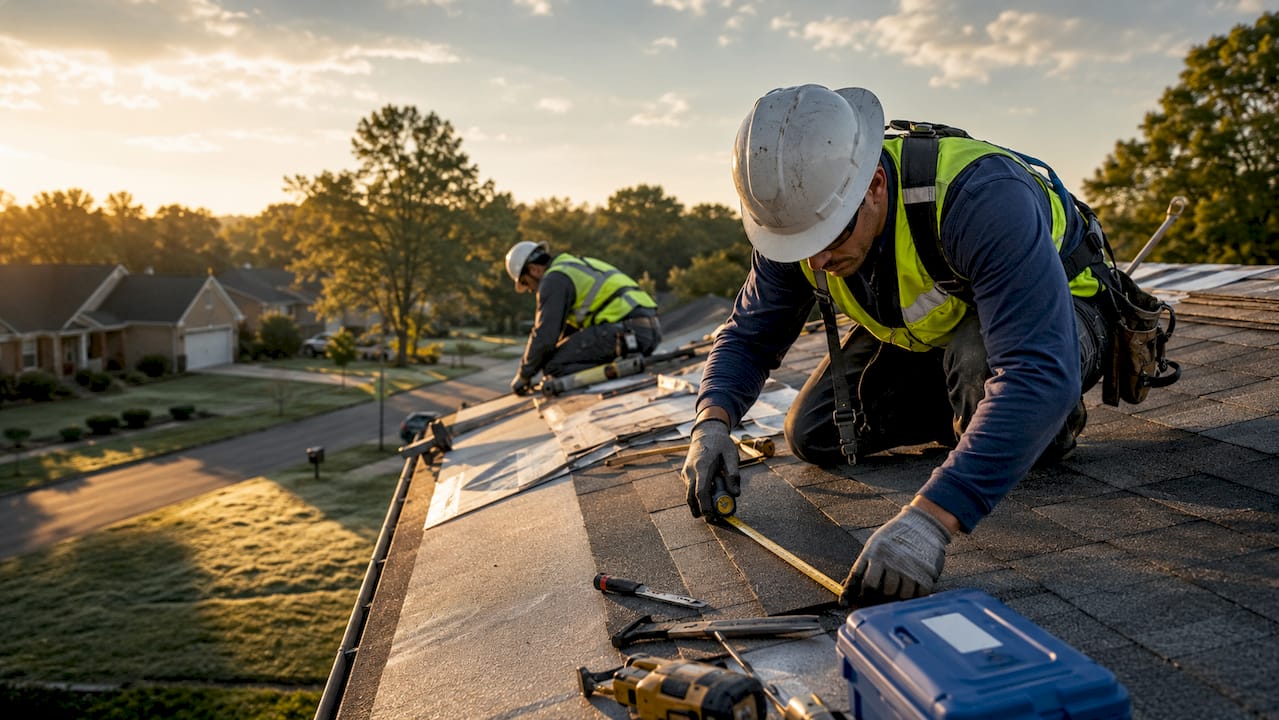
Rain is the other major variable. Spring storms can delay projects by days or weeks, and wet decking creates moisture problems that shorten a roof’s lifespan. The window between the worst spring storms and peak summer heat, typically mid-april through early june, is narrow but valuable.
| Season | Avg. Temperature | Precipitation Risk | Hail Risk | Roofing Suitability |
|---|---|---|---|---|
| Spring (Mar–May) | 55°F–80°F | Moderate to high | High | Good, with storm monitoring |
| Summer (Jun–Aug) | 85°F–105°F | Low | Low | Poor (heat risk) |
| Fall (Sep–Nov) | 55°F–80°F | Low to moderate | Low | Excellent |
| Winter (Dec–Feb) | 30°F–55°F | Low | Very low | Fair (cold risk) |
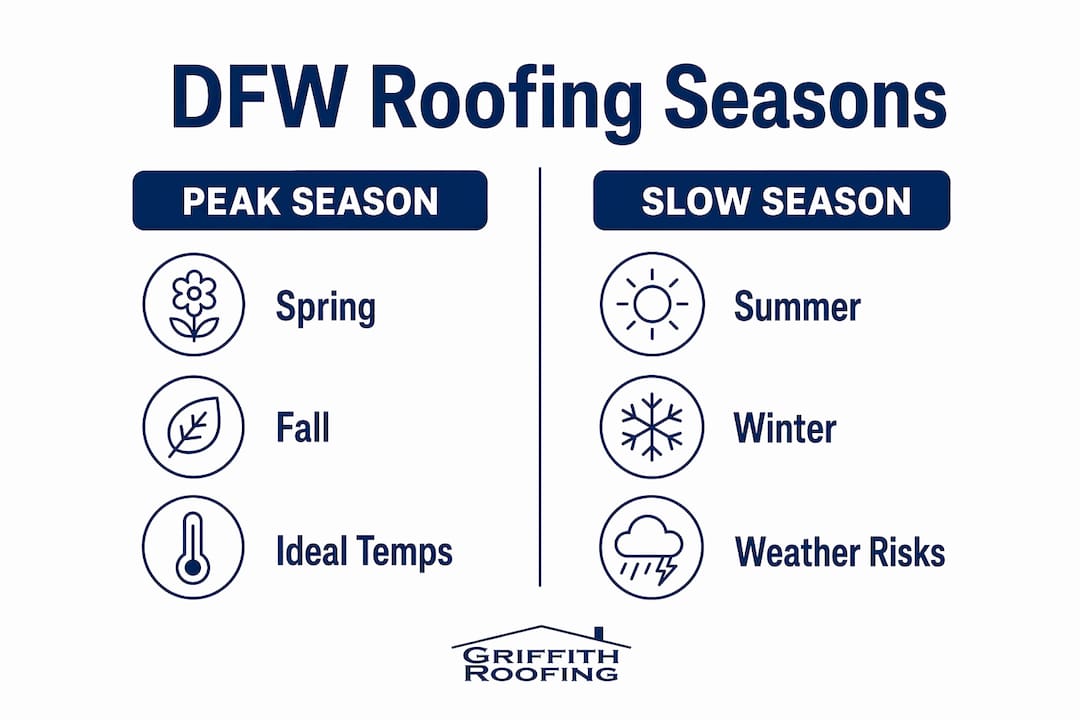
Pro Tip: Schedule your roof replacement for september or october. Hail season has typically passed, temperatures are ideal, and contractors have more availability than they do in the post-storm spring rush.
How does DFW’s storm and hail season affect roof maintenance scheduling?
DFW sits squarely in what meteorologists call “Hail Alley,” and the spring season brings multiple severe hailstorms on average each year. Hail damage accelerates roof wear by stripping granules from shingles, exposing the underlying material to UV radiation. Without those granules, cracking and leaks can develop within a few years, even on a relatively new roof.
After a major hailstorm, the clock starts immediately. The duty to mitigate activates within 24–48 hours of damage occurring. That means you are legally and financially responsible for taking reasonable steps to prevent further harm, such as water intrusion and mold growth. Waiting too long can give your insurance company grounds to deny part of your claim.
Emergency response steps after a hail event:
- Within 24–48 hours: Inspect from the ground for visible damage. Document everything with photos and video.
- Within 1–3 days: Emergency tarping of any holes or compromised areas prevents secondary water damage and is typically covered by your policy.
- Within 3–7 days: File your insurance claim. Texas law requires insurers to acknowledge your claim within 15 business days.
- Within 1–3 weeks: An adjuster inspects the roof. Have your own contractor present if possible.
- After adjuster approval: Schedule the full replacement. This is where seasonal timing re-enters the picture.
Pro Tip: Learn the signs of storm damage before a storm hits. Knowing what bruised shingles, dented flashing, and granule loss look like helps you document damage accurately and speeds up the claims process.
Treating mitigation and replacement as two separate phases is the right approach. Emergency tarping happens within days. The actual replacement can be scheduled weeks later, during a better weather window, without jeopardizing your claim.
What are the pros and cons of DFW’s roofing slow season?
The roofing slow season in DFW runs from december through february. Winter months bring lower demand for roofing services, which creates real advantages for property owners who can plan ahead and are not dealing with storm damage.
Slow season advantages:
- Contractors have more open slots, so you get faster scheduling.
- Some roofing companies offer discounts to keep crews working through winter.
- Less competition means more attention to your project.
- No post-storm surge pricing or backlogs.
Slow season challenges:
- Temperatures below 40°F prevent asphalt shingles from sealing properly.
- Short daylight hours reduce daily work time and can stretch project duration.
- Cold snaps can cause unexpected delays mid-project.
- Ice or frost on the roof creates safety hazards for crews.
| Factor | Peak Season (Spring/Fall) | Slow Season (Winter) |
|---|---|---|
| Contractor availability | Low after storms | High |
| Potential cost | Higher demand pricing | Possible discounts |
| Weather risk | Moderate | Higher (cold, ice) |
| Project duration | Predictable | May extend |
| Material performance | Optimal | Reduced (cold sealing) |
Winter work is feasible for repairs and for metal roofing systems, which are less temperature-sensitive than asphalt shingles. If you are replacing a full asphalt shingle roof, waiting for a mild stretch in late february or early march is a better call than pushing through a cold snap. Griffith roofing can assess your specific situation and advise whether a winter project makes sense for your property. For cold-weather damage concerns, the Texas freeze roof damage guide covers what to watch for after a hard freeze.
How do you optimize your DFW roofing schedule for timing, costs, and weather?
Smart scheduling separates property owners who control their roofing costs from those who react to every storm. Planning outside peak hail season gives you better contractor availability and more predictable pricing. After large hail events, roofing contractors across DFW face scheduling bottlenecks that can stretch weeks to months. Getting ahead of that demand is one of the most practical things you can do.
The full insurance and replacement timeline after storm damage typically runs 2–4 months from the first tarp to the final payment. Knowing that timeline helps you set realistic expectations and avoid rushed decisions that cost more in the long run.
Roofing schedule optimization steps:
- Inspect your roof every spring and fall. Catching minor wear before storm season prevents emergency calls after a hailstorm.
- Document your roof’s current condition. Photos with timestamps protect you during the insurance claims process.
- File claims promptly. Texas insurers must acknowledge claims within 15 days and accept or deny within 15 business days of receiving all required information.
- Separate mitigation from replacement. Tarp immediately, but schedule the full replacement during a favorable weather window.
- Contact contractors before storm season peaks. Getting on a contractor’s schedule in march or early april, before the first major hailstorm, puts you ahead of the post-storm rush.
- Consider fall as your primary replacement window. Hail risk drops sharply after september, temperatures are ideal, and contractor availability improves.
- Explore financing options early. Knowing your roof replacement financing options before you need them removes one more stressor from the process.
Pro Tip: If you are planning a non-emergency replacement, request quotes from contractors in january or february. You will get faster responses, more competitive pricing, and a better pick of scheduling slots before spring demand surges.
Balancing insurance claim timelines with seasonal roofing windows reduces stress and protects your financial investment. The residential roof replacement process in DFW follows a predictable sequence once you understand the seasonal constraints. Subcontractor scheduling conflicts are also a real factor; understanding how contractors manage scheduling helps you ask better questions when hiring.
Key Takeaways
The single most effective approach to DFW roofing season timing is scheduling non-emergency replacements in fall, filing insurance claims immediately after storm damage, and treating emergency mitigation as a separate urgent phase from the full replacement project.
| Point | Details |
|---|---|
| Best replacement windows | Late spring and early fall offer mild temps and low storm risk for quality installation. |
| Emergency mitigation timing | Tarp damaged areas within 1–3 days to prevent water intrusion and protect your insurance claim. |
| Slow season trade-offs | Winter brings lower demand and possible discounts, but cold temperatures can compromise asphalt shingle sealing. |
| Insurance claim deadlines | Texas insurers must acknowledge claims within 15 days; file promptly after any storm event. |
| Avoid post-storm bottlenecks | Schedule replacements outside peak hail season to get better pricing and faster contractor availability. |
What 23 years in DFW roofing taught me about timing
After more than two decades working roofs across the Dallas-Fort Worth Metroplex, the timing mistakes I see most often are not about ignorance. They are about underestimating how fast conditions change here.
DFW does not follow a neat seasonal script. I have seen severe hailstorms in october and 80-degree days in january. The general windows I describe in this article are real and reliable, but they are not guarantees. The property owners who come out ahead are the ones who stay ready year-round, not just in spring.
The post-storm contractor rush is the single biggest cost driver I watch play out every year. After a major hail event, every roofing company in the Metroplex is booked. Prices climb. Timelines stretch. Corners get cut by less reputable crews chasing volume. I have seen homeowners wait four months for a replacement that should have taken two weeks, simply because they called after the storm instead of before.
My honest advice: treat your roof like your HVAC system. Schedule an inspection every spring before hail season and every fall before winter. Catch the small stuff early. Know your insurance policy’s mitigation requirements before you ever need them. And if you are not in an emergency situation, fall is your best window. Every time.
One more thing. After a storm, watch out for door-to-door contractors you have never heard of. The pressure tactics and too-good-to-be-true offers are a red flag. Stick with established local companies who have a track record in DFW. Your roof is not the place to gamble on an unknown crew.
— Mark Griffith
Griffith roofing: year-round roofing support for DFW property owners
Griffith roofing has served Dallas-Fort Worth homeowners and businesses since 2001, and seasonal timing is built into everything we do. Whether you are planning a proactive replacement this fall, managing storm damage from last week’s hail, or exploring residential roofing solutions for your property, our team schedules around DFW’s seasonal patterns to deliver quality work at the right time.
We offer residential roofing, roof repair services, and metal roofing solutions built for North Texas weather. Our team works with your insurance timeline and helps you avoid the post-storm scheduling crunch. Contact Griffith roofing today to request a free inspection or project quote, and get your roof on the right seasonal schedule before the next storm season arrives.
FAQ
When is the best time for roofing in DFW?
Late spring and early fall are the best times for roofing in DFW. Mild temperatures and lower storm risk during these windows produce better installation results and more predictable project timelines.
How soon should I act after hail damages my roof?
You should begin emergency mitigation within 24–48 hours of hail damage to prevent water intrusion and mold. Tarping damaged areas within 1–3 days is typically covered by your insurance policy and protects your claim.
Does roofing cost less in winter in DFW?
Winter roofing in DFW can cost less due to lower contractor demand, and some companies offer discounts to keep crews active. However, cold temperatures below 40°F can compromise asphalt shingle sealing, so weigh the savings against potential quality risks.
How long does the full roof replacement process take after storm damage?
The complete process from emergency tarping through final insurance payment typically takes 2–4 months. The physical roof replacement itself takes 1–3 days on a standard home; the insurance and scheduling process accounts for the rest of the timeline.
How do I avoid contractor delays after a DFW hailstorm?
Contact roofing contractors before peak hail season in spring, or schedule your replacement in fall when demand drops. Post-storm bottlenecks can push timelines out by weeks to months across the DFW market.


