

A DFW roofing subcontractor is a specialty trade contractor hired under a separate agreement by a general contractor to perform a defined roofing scope on a construction project. This is the industry’s standard term: specialty subcontractor. Understanding what this role covers is not optional for project managers and developers in the Dallas-Fort Worth area. The contract chain runs from property owner to general contractor to roofing subcontractor, and every link in that chain carries distinct obligations. Miss one, and you face schedule delays, payment disputes, or uncovered liability. This guide breaks down the DFW roofing subcontractor role with the specificity your projects demand.
What is a DFW roofing subcontractor role on a construction project?
A roofing subcontractor operates as an independent business entity, not an employee of the general contractor. The GC contracts the roofing sub for a discrete scope of work, typically defined by the project plans, specifications, and a separate subcontract agreement. That agreement governs everything: scope, schedule, payment terms, and risk allocation.
The contract chain matters because liability flows through it. The property owner holds the GC accountable for the entire project. The GC, in turn, holds the roofing subcontractor accountable for the roofing scope. Flow-down clauses bind the subcontractor to the same obligations the GC accepted under the prime contract. That means if the prime contract requires specific documentation, change order procedures, or quality standards, the roofing sub must meet those same standards.
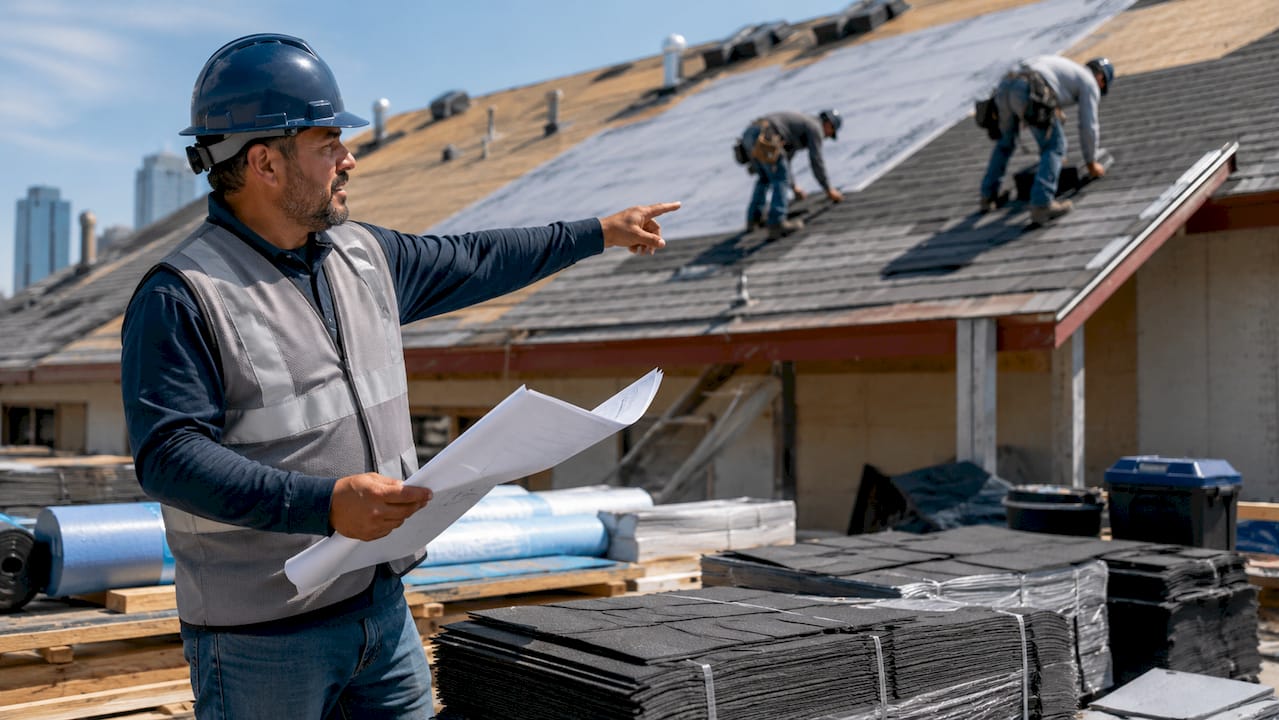
For project managers, recognizing this structure early prevents coordination failures. You need to know who is responsible for what before the first shingle goes on the roof, not after a dispute surfaces.
What specific duties does a roofing subcontractor handle in DFW projects?
Roofing subcontractor responsibilities cover a defined but demanding scope. The sub executes the roofing installation per project plans, manufacturer specifications, and local building codes. They select and manage their own crews, supply materials within their scope, and control the means and methods of their work.
Core DFW subcontractor duties include:
- Installation compliance: Executing roofing work per approved plans and manufacturer requirements, including underlayment, flashing, and fastening schedules.
- OSHA safety obligations: Maintaining fall protection, hazard communication, and safety compliance within their work scope.
- Coordination with the GC: Communicating schedule changes, material deliveries, and crew access needs to the GC’s site supervisor.
- Documentation: Submitting daily logs, material certifications, and change order requests as required by the subcontract.
- Flow-down obligations: Adhering to prime contract terms passed down by the GC, including scope limits and change order protocols.
The GC retains overall site responsibility, but the roofing sub owns the means and methods within their scope. That distinction matters when something goes wrong. If a crew member falls on the roofing sub’s watch, OSHA looks first at the sub’s safety program, not the GC’s.
Pro Tip: Require every roofing subcontractor to submit a written safety plan specific to the roofing scope before mobilization. A generic company safety manual does not satisfy OSHA’s site-specific requirements.
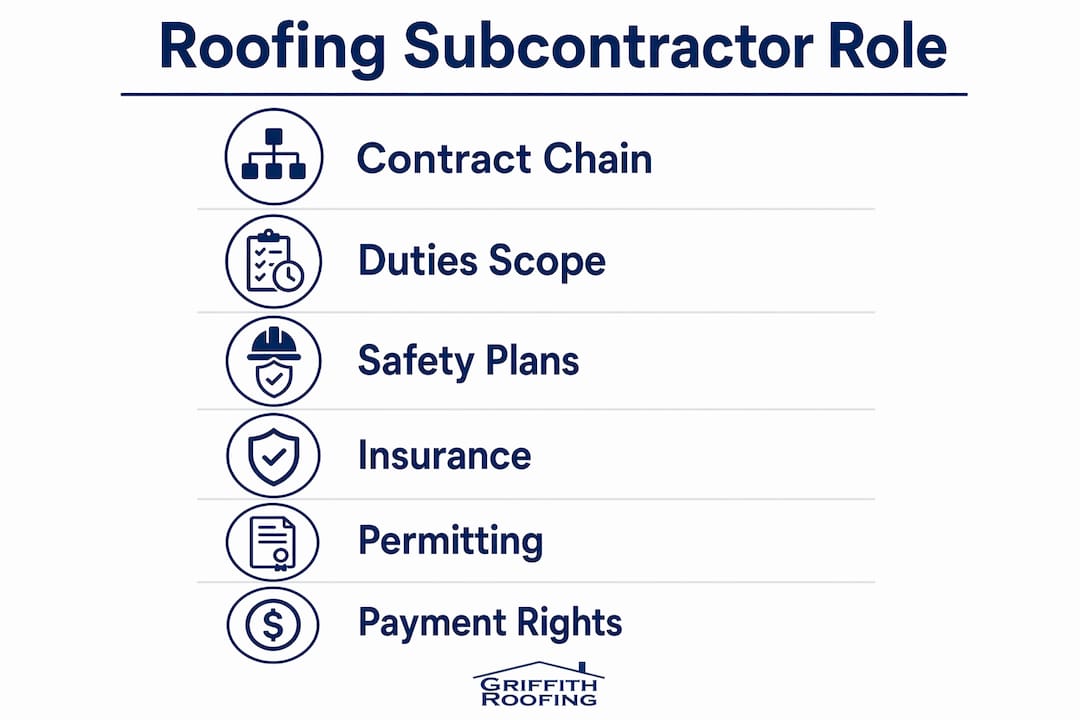
Vague subcontract scopes create the most common disputes on DFW projects. Detailed scope language prevents scope creep and protects both the GC and the sub from unpaid work claims. If the subcontract does not explicitly include a task, expect a change order request when that task comes up.
How do insurance and liability management work within the DFW roofing subcontractor role?
Insurance is the primary risk transfer tool between a GC and a roofing subcontractor. Before any crew sets foot on your project, the roofing sub must provide a certificate of insurance showing active general liability and workers’ compensation coverage. Minimum general liability coverage is typically $1 million per occurrence. That number reflects the minimum most GCs and developers accept on commercial and residential projects in DFW.
Standard insurance requirements for roofing subcontractors include:
- General liability insurance: Covers property damage and bodily injury caused by the sub’s operations.
- Workers’ compensation: Covers the sub’s employees for on-the-job injuries, removing that liability from the GC.
- Additional insured endorsement: Names the GC and often the property owner as additional insureds on the sub’s policy.
- Certificate of insurance: Proof of coverage submitted before work begins and renewed at each policy expiration.
The additional insured endorsement is the detail most project managers overlook. A certificate of insurance alone does not make the GC an additional insured. The endorsement must appear on the actual policy. Reviewing endorsements before work starts reduces downstream disputes and project delays significantly.
Pro Tip: Request the actual additional insured endorsement document, not just the certificate. Your insurance broker can confirm whether the endorsement language meets your contract requirements.
Prime contractors remain liable to owners for subcontractor work quality even when faults originate with the sub. That upstream exposure is exactly why GCs push insurance and indemnity obligations down to roofing subs through the subcontract. As a project manager or developer, verify that indemnity language in the subcontract aligns with what the prime contract requires. A gap there becomes your problem at claim time.
What are the key payment protections and lien rights roofing subcontractors have in DFW?
Texas gives roofing subcontractors a powerful payment protection tool: the mechanics lien. Under Texas Property Code Chapter 53, a subcontractor who is not paid can file a lien against the property itself. That lien can cloud title and block financing or sale of the property. Project managers and developers need to understand this mechanism because it directly affects project risk.
Texas lien law is strict about deadlines. Here is how the process works:
- Monthly notice requirement: The roofing subcontractor must send a written notice to the GC and property owner by the 15th day of each month for unpaid amounts from the prior month. Missing one monthly notice means losing lien rights for that covered period.
- Lien affidavit filing: The sub must file a lien affidavit with the county clerk by the 15th day of the third month after the month in which the work was performed.
- Second-tier subcontractor complexity: If the roofing sub further subcontracts work, those second-tier subs have their own notice and filing obligations. Managing lien claimant status becomes more complex at each tier.
- Lien release at payment: Upon receiving payment, the sub provides a lien release or waiver. Conditional waivers release rights only upon actual receipt of funds.
The consequences of missed deadlines are severe. A roofing subcontractor who misses even one monthly notice loses lien rights for that period permanently. That loss shifts payment risk back to the sub and removes a key leverage point in any payment dispute.
For project managers, the practical takeaway is this: track lien notice deadlines on every project with layered subcontracting. Require the GC to provide copies of all lien notices received. If a notice arrives, it signals a payment problem that needs immediate attention. Ignoring it does not make the lien go away. It makes the dispute more expensive.
How do permitting, inspection, and quality control work between roofing subs and GCs in DFW?
Permit responsibility determines who is the contractor of record for the roofing scope. In Dallas-Fort Worth, the permit holder is legally responsible for code compliance and passing inspections with the Authority Having Jurisdiction. That status varies by project and local AHJ rules.
| Responsibility | General contractor | Roofing subcontractor |
|---|---|---|
| Pulling the roofing permit | Common on large commercial projects | Common on residential and smaller scopes |
| Contractor of record | When GC holds the permit | When sub holds the permit |
| AHJ inspection coordination | GC schedules if permit holder | Sub schedules and must be present |
| Code compliance accountability | GC if permit holder | Sub if permit holder |
| Quality control oversight | GC site supervisor monitors all trades | Sub’s foreman manages crew execution |
When the roofing subcontractor holds the permit, they handle inspection scheduling, respond to correction notices, and carry the code compliance burden directly. This is common on residential re-roofing projects across DFW. On larger commercial builds, the GC typically holds the master permit and the roofing sub works under it.
Quality control is a shared responsibility in practice, even when contracts assign it to one party. GC-assigned site supervisors oversee subcontractor crews, perform quality checks, and coordinate final inspections. Requiring the GC to document site oversight measures for all subcontracted roofing work closes accountability gaps before they become defect claims.
Pro Tip: Build a pre-inspection checklist into every roofing subcontract. Require the sub’s foreman to sign off on each phase before the GC calls for an AHJ inspection. That paper trail protects everyone if a defect surfaces later.
For a detailed breakdown of DFW permit requirements, local AHJ rules vary by municipality. What applies in Dallas may differ from requirements in Fort Worth, Frisco, or Arlington.
Key Takeaways
A roofing subcontractor in DFW operates under a defined contract chain, carrying specific safety, insurance, lien, and code compliance obligations that project managers must actively track to protect their projects.
| Point | Details |
|---|---|
| Contract chain defines liability | Flow-down clauses bind roofing subs to the same prime contract obligations the GC accepted. |
| Insurance must include endorsements | A certificate of insurance alone is not enough; require the additional insured endorsement on the actual policy. |
| Texas lien deadlines are strict | Missing one monthly notice by the 15th forfeits lien rights for that period under Texas Property Code Chapter 53. |
| Permit holder is contractor of record | Whoever pulls the roofing permit owns code compliance and AHJ inspection responsibility. |
| Quality control requires documentation | Requiring signed phase checklists from the sub’s foreman prevents accountability gaps and defect disputes. |
What I’ve learned managing roofing subcontractor relationships in DFW
After more than two decades working on roofing projects across the Dallas-Fort Worth Metroplex, I’ve seen the same mistakes repeat on projects of every size. The most expensive one is treating the subcontract as a formality. Project managers sign a standard form, hand it to the sub, and assume everyone understands the scope. They don’t. Scope disputes are the single biggest source of change orders and payment conflicts I’ve witnessed on DFW projects.
The second mistake is passive insurance management. Collecting a certificate at the start of a project and filing it away is not risk management. Policies expire. Endorsements get dropped. I’ve seen GCs discover mid-project that a roofing sub’s workers’ comp lapsed three months earlier. At that point, any injury on the roof becomes the GC’s problem directly.
Lien notice management is where I see developers get blindsided most often. Texas lien law is not forgiving. A roofing sub who sends monthly notices is not being aggressive. They are protecting their legal rights. When those notices arrive, treat them as a signal to verify payment flow through the GC, not as a nuisance to ignore.
The roofing subcontractor role works well when contracts are clear, insurance is verified, and communication runs both ways. Strong oversight from the GC’s site supervisor, combined with a sub who takes their scope seriously, produces quality work and clean closeouts. That combination is what Griffith roofing has built its reputation on since 2001.
— Mark Griffith
Griffith roofing: expert roofing services for DFW projects
Griffith roofing has supported construction projects across the Dallas-Fort Worth Metroplex for over two decades, delivering residential roofing solutions and metal roofing installations that meet the demands of both GCs and property developers. Whether your project requires a full roof replacement, storm repair, or a specialty metal system, Griffith roofing brings the licensing, insurance documentation, and code compliance experience that project managers need from a roofing partner. Contact Griffith roofing to discuss your next DFW project and get a clear scope proposal from a team that has been doing this right since 2001.
FAQ
What is a roofing subcontractor vs. a general contractor?
A roofing subcontractor is a specialty trade contractor hired by a general contractor to perform a defined roofing scope under a separate subcontract agreement. The GC manages the overall project and holds the prime contract with the property owner.
What insurance must a DFW roofing subcontractor carry?
Roofing subcontractors must carry general liability insurance and workers’ compensation coverage, with minimum general liability limits typically set at $1 million per occurrence. They must also name the GC as an additional insured through a policy endorsement.
How do Texas mechanics lien deadlines work for roofing subcontractors?
Under Texas Property Code Chapter 53, roofing subcontractors must send written monthly notices by the 15th day of each month for unpaid amounts and file a lien affidavit by the 15th day of the third month after work was performed. Missing either deadline eliminates lien rights for that period.
Who is responsible for pulling the roofing permit in DFW?
Either the GC or the roofing subcontractor can pull the permit depending on the project and local AHJ rules. Whoever holds the permit becomes the contractor of record and carries direct responsibility for code compliance and passing inspections.
How can project managers prevent accountability gaps with roofing subcontractors?
Requiring the GC to document site oversight measures and having the sub’s foreman sign phase-specific checklists before inspections closes the most common accountability gaps. Clear subcontract scope language and verified insurance documentation are the two most effective preventive steps.


