

DFW spring storm roof recovery is the process of restoring your home’s roof after severe weather through swift damage assessment, detailed documentation, professional repair, and insurance coordination. Spring in Dallas-Fort Worth brings some of the most punishing weather in the country. Hail pummels shingles, high winds tear at flashing, and heavy rain finds every weak point in your roof’s armor. Acting within hours, not days, separates a manageable repair from a costly structural failure. This guide walks you through every step, from spotting the first signs of damage to getting your roof fully restored with the help of a trusted local contractor.
How to identify roof damage after a DFW spring storm
Spring storms in DFW leave visible scars, but some of the worst damage hides where you cannot easily see it. Knowing what to look for from the ground saves you time and keeps you safe before a professional arrives.
Start your assessment from the yard, not the roof. Walk the perimeter of your home and look for these warning signs:
- Missing or lifted shingles: Gaps in your roof line are the most obvious indicator of wind damage.
- Granule loss: Check your gutters and downspout splash areas for dark, sand-like granules. Heavy granule loss means your shingles are losing their protective coating.
- Dented or cracked vents: Metal vents dented by hail are a reliable sign that your shingles took hits too.
- Damaged flashing: Loose or bent metal around chimneys, skylights, and valleys lets water in fast.
- Water stains on ceilings: Interior staining means water has already breached the roof deck. This requires urgent attention.
- Bruised or cracked shingles: Hail impacts leave circular bruises or cracks that are easier to spot up close.
Most roofs in DFW last 15–25 years, with asphalt shingles on the lower end of that range. A single severe storm can cut years off that lifespan if damage goes unaddressed.
Pro Tip: Never climb onto your roof immediately after a storm. Wet shingles are slippery, and hidden structural damage can make the surface unstable. Let a licensed inspector handle roof-level assessment.
Griffith roofing recommends pairing your ground-level check with a review of common storm damage signs specific to DFW homes. The DFW climate creates unique stress patterns on roofing materials that a trained eye catches quickly.
Why does professional inspection matter for insurance claims?
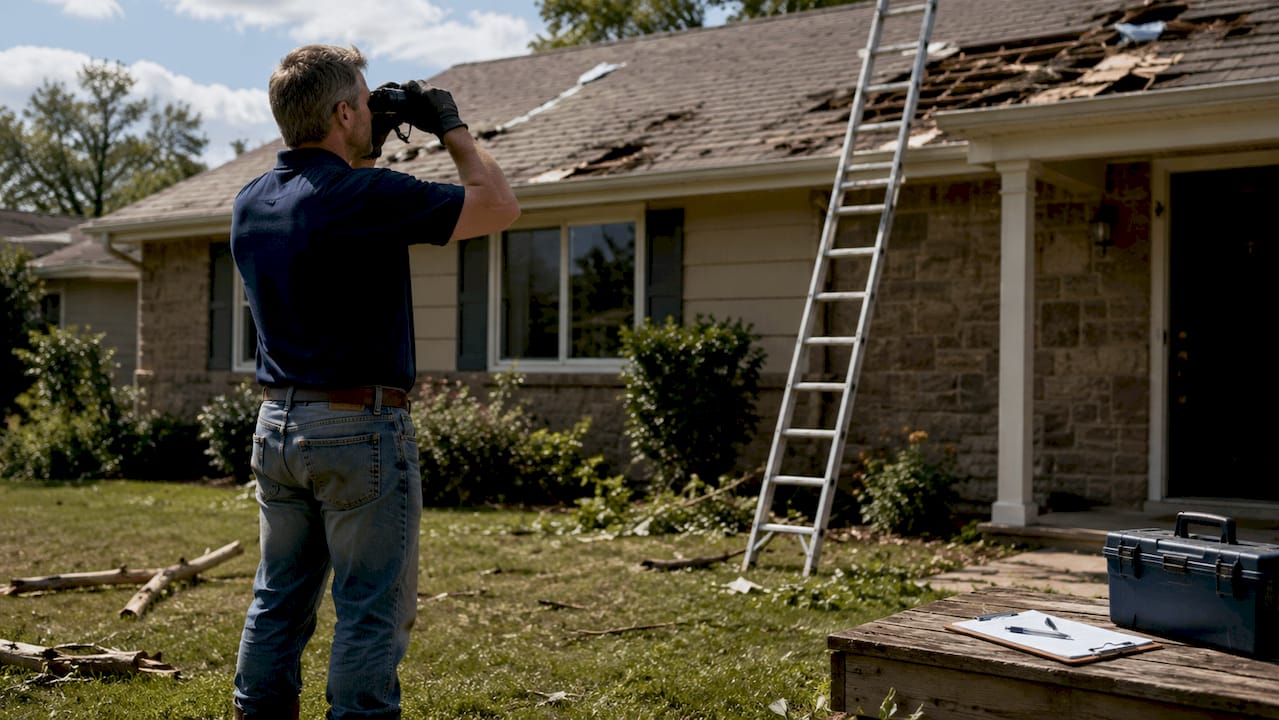
A professional roof inspection is the single most powerful tool you have in the insurance claims process. Independent inspection establishes date-stamped evidence that forms the foundation of a strong claim. Without it, your insurer controls the narrative.
Timing is everything. Homeowners should schedule professional inspections within 24–72 hours of a storm event. Delays give insurers grounds to attribute damage to pre-existing wear rather than the storm itself.
A thorough inspection covers far more than the obvious damage. A qualified inspector will:
- Photograph every roof zone, including undamaged areas, to establish a complete baseline.
- Document roof dimensions, material types, and the full scope of damage.
- Create annotated damage maps showing the location and severity of each impact.
- Compile measurement summaries and cost scopes that align with insurance adjuster expectations.
- Use aerial imaging and drone technology to capture precise measurements and damage visualization.
Zone-by-zone documentation of both damaged and undamaged areas prevents insurers from accusing you of cherry-picking evidence. Adjusters respond better to a systematic, complete report than to selective photos of only the worst spots.
“A comprehensive inspection report submitted before you contact your insurance company greatly strengthens your position. It shifts the conversation from ‘prove it’ to ‘here are the facts.’ Homeowners who skip this step often accept settlements far below what their damage warrants.”
Aerial measurements and detailed photo documentation accelerate claim approvals. Inspectors using drone technology deliver more precise data than manual measurement alone, and insurers process those reports faster. Griffith roofing uses this approach on every post-storm inspection to give homeowners the strongest possible claims foundation.
How do insurance claims work for DFW spring storm damage?
Homeowners insurance typically covers sudden storm damage from hail, wind, and falling debris, but excludes gradual wear and neglect. Understanding that distinction before you file saves you from a denied claim.
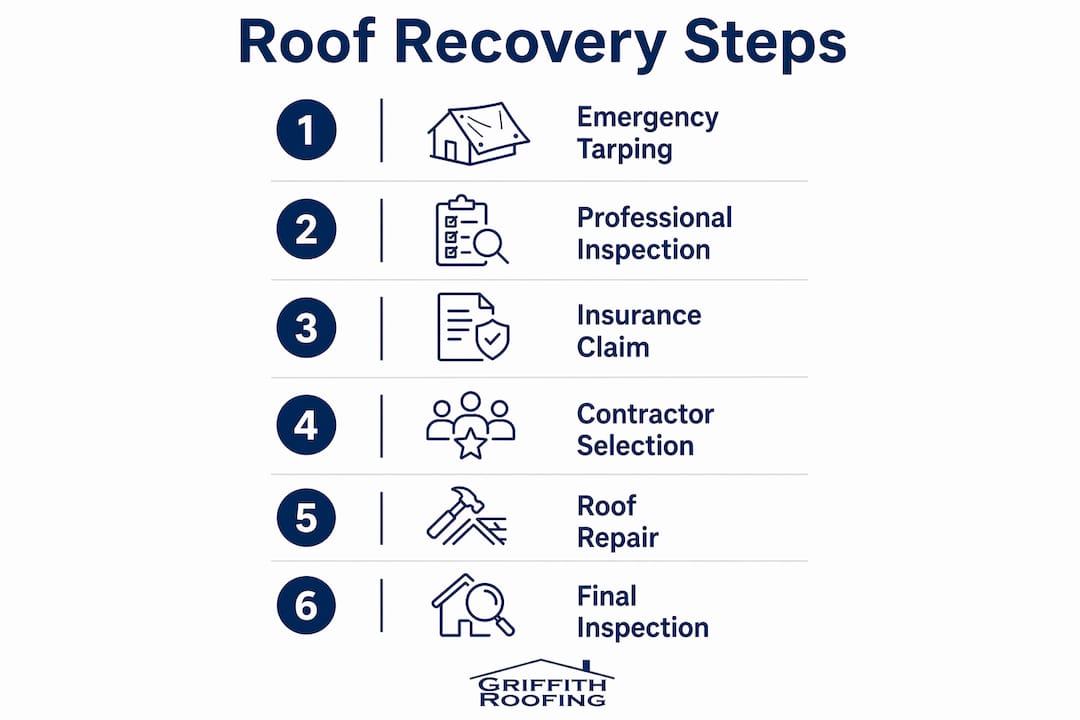
The claims process follows a clear sequence. First, document everything before any repairs begin. Then notify your insurer promptly and request an adjuster visit. Your professional inspection report should be in hand before that adjuster arrives.
Watch for these common pitfalls:
- Filing too late: Most Texas policies require you to report storm damage within a specific window, often one year from the storm date, but earlier is always better.
- Accepting the first offer: Initial adjuster estimates frequently undervalue damage. A detailed contractor scope of work gives you grounds to negotiate.
- Skipping temporary repairs: Failing to prevent further damage after a storm can void coverage for secondary losses.
- Choosing an unlicensed contractor: Insurers may reject repair invoices from contractors who lack proper Texas licensing.
Review your Texas insurance policy coverage before storm season starts. Knowing your deductible, coverage limits, and any exclusions puts you in a stronger position when you need to file.
Pro Tip: Request a copy of your insurer’s claim file, including the adjuster’s notes and damage estimate. You have the right to review this documentation, and it often reveals line items that were missed or undervalued.
Understanding how much insurance pays for roof replacement in Texas helps you evaluate whether an adjuster’s offer is fair. Griffith roofing works directly with insurance adjusters on your behalf to close the gap between initial offers and actual repair costs.
How do you choose a trustworthy roofing contractor in DFW?
Choosing the right contractor after a storm is as important as filing the right claim. Post-storm roofing scams in Texas are common, and unlicensed contractors often target neighborhoods immediately after severe weather events.
Look for these qualifications before signing anything:
- Texas roofing license and liability insurance: Verify both directly, not just from the contractor’s word.
- Local DFW experience: A contractor familiar with North Texas weather patterns understands the specific damage profiles your roof faces.
- Verifiable references: Ask for references from recent storm repair jobs in your area and follow up on them.
- Written, itemized estimates: Vague quotes protect the contractor, not you. Every material, labor cost, and timeline should be in writing.
- No demand for full payment upfront: Legitimate contractors require a deposit, not full payment before work begins.
Red flags include door-to-door solicitation immediately after a storm, pressure to sign contracts on the spot, and quotes that seem dramatically lower than others you receive. Common roofing scams after Texas storms often involve inflated material costs, substandard installation, or contractors who disappear after collecting payment.
Griffith roofing has served DFW homeowners since 2001. That track record means local knowledge, established insurance relationships, and accountability that out-of-state storm chasers cannot offer.
What is the step-by-step DFW spring storm roof recovery process?
Storm restoration in DFW follows a defined sequence. Skipping steps creates gaps in your documentation and can cost you money on your claim.
- Secure your home immediately. If the storm created open gaps in your roof, emergency tarping prevents further water intrusion. Emergency tarping requires 6-mil polyethylene tarps with wood battens fastened at specific intervals to withstand wind and UV exposure.
- Schedule a professional inspection within 72 hours. Contact a licensed roofing contractor to conduct a full zone-by-zone assessment with photos and a written report.
- File your insurance claim with documentation in hand. Submit your inspection report, photos, and a contractor’s preliminary scope of work before the adjuster visits.
- Meet with the insurance adjuster. Have your contractor present during the adjuster visit to answer technical questions and advocate for a complete damage assessment.
- Select your contractor and begin repairs. Once your claim is approved, schedule repairs promptly. Delays allow secondary damage to develop.
- Conduct a final inspection. Walk through the completed work with your contractor and verify that every item in the repair scope was addressed.
Emergency tarping costs are typically covered by homeowners insurance when properly documented and authorized. Keep all receipts and photos of the tarping work.
| Recovery Stage | Key Action | Timeline |
|---|---|---|
| Immediate | Emergency tarping if needed | Within 24 hours |
| Assessment | Professional inspection and report | Within 24–72 hours |
| Claims | File with insurer, submit documentation | Within 72 hours |
| Adjuster meeting | Contractor present for adjuster visit | Within 1–2 weeks |
| Repair | Begin approved repairs | As soon as claim is settled |
| Final check | Verify completed scope of work | Upon project completion |
Pro Tip: Keep a dedicated folder, physical or digital, for every document related to your storm claim. Include the inspection report, adjuster correspondence, contractor estimates, and all receipts. This record protects you if a dispute arises months later.
Key Takeaways
Effective DFW spring storm roof recovery requires acting within 72 hours, documenting every detail, and choosing a licensed local contractor who understands Texas insurance procedures.
| Point | Details |
|---|---|
| Act within 72 hours | Schedule a professional inspection before evidence degrades and insurers shift blame to pre-existing wear. |
| Document everything | Zone-by-zone photos, damage maps, and aerial measurements strengthen claims and reduce denial risk. |
| Know your coverage | Texas policies cover sudden storm damage but exclude gradual wear; review your policy before filing. |
| Vet your contractor | Verify Texas licensing, local DFW experience, and written itemized estimates before signing any contract. |
| Emergency tarping counts | Properly documented tarping is typically covered by insurance and prevents costly secondary water damage. |
What I have learned from 25 years of DFW storm seasons
After more than two decades of inspecting roofs across the Dallas-Fort Worth area, the pattern I see most often is not dramatic. It is a homeowner who waited a week to call, accepted the first adjuster offer, and ended up paying out of pocket for damage their policy should have covered.
The biggest mistake I see is treating documentation as an afterthought. Your inspection report is your strongest asset. Homeowners who have a detailed, date-stamped report in hand before they call their insurer consistently receive better settlements than those who rely on the adjuster’s assessment alone. The adjuster works for the insurance company. A professional inspector works for you.
DFW’s spring storm season is unlike anywhere else in the country. We see hail that ranges from marble-sized to baseball-sized, often within the same storm cell. That variability means damage patterns on DFW roofs are complex. A contractor who has only worked in mild climates will miss the bruising on a shingle that looks intact from the ground but has lost its structural integrity.
My honest advice: do not let urgency push you toward the first contractor who knocks on your door after a storm. Take 24 hours to verify credentials, read reviews, and get a second opinion on any estimate that seems too low. A quote that undercuts the market by 30% is not a deal. It is a warning sign. The DFW climate puts real demands on roofing materials, and only a contractor who understands those demands will install a roof that lasts.
— Mark Griffith
Griffith roofing is ready to help you recover
When a spring storm leaves your roof battered, you need a team that knows DFW weather, Texas insurance procedures, and what a proper repair looks like from start to finish.
Griffith roofing has been restoring DFW roofs since 2001. Every inspection includes zone-by-zone documentation, aerial imaging, and a detailed report built to support your insurance claim. The team works directly with adjusters to close the gap between initial offers and actual repair costs. Whether you need emergency storm damage repair or a full residential roof replacement, Griffith roofing handles every step with the care your home deserves. Contact Griffith roofing today for a free post-storm inspection and let the team put 25 years of DFW roofing experience to work for you.
FAQ
How soon should I inspect my roof after a DFW spring storm?
Schedule a professional inspection within 24–72 hours of the storm. Delays weaken your evidence and give insurers grounds to deny your claim.
Does homeowners insurance cover spring storm roof damage in Texas?
Texas homeowners insurance covers sudden storm damage from hail, wind, and falling debris, but excludes gradual wear. Thorough documentation and timely filing are required to meet policy terms.
What is emergency tarping and is it covered by insurance?
Emergency tarping uses 6-mil polyethylene tarps to seal open roof damage and prevent water intrusion. Insurance typically covers tarping costs when the work is properly documented and authorized by your insurer.
How do I avoid roofing scams after a Texas storm?
Verify Texas licensing and insurance before signing any contract. Post-storm scams often involve inflated costs, unlicensed contractors, and pressure to sign on the spot.
How long does a DFW roof typically last after storm damage?
Most DFW roofs last 15–25 years under normal conditions, with asphalt shingles on the lower end. Unrepaired storm damage can significantly shorten that lifespan, making prompt repair critical to protecting your investment.


