

When a North Texas Storm Hits: What Frisco Homeowners Need to Know First
Frisco wind damage repair is something thousands of local homeowners face every year — and knowing exactly what to do in the first few hours can make a huge difference in cost, safety, and your insurance payout.
If your home was just hit by a storm, here’s what to do right now:
- Stay safe — don’t go on the roof yourself
- Document everything — take photos and video of all visible damage
- Call a licensed local roofer for an emergency inspection and temporary tarping
- Contact your insurance company to open a claim as soon as possible
- Don’t throw away damaged materials — your adjuster will need to see them
North Texas sees over 200 wind storms every year. Nearly half of those storms push winds between 45 and 65 mph — strong enough to rip shingles off your roof. About 30% reach 80 mph. Frisco sits squarely in Tornado Alley, meaning these aren’t rare events. They’re a regular part of life here.
The damage can happen fast. And the problems that follow — leaks, mold, structural rot — can be far more expensive than the original repair if you wait.
I’m Mark Griffith, founder of Griffith Roofing, and since 2001 I’ve helped Frisco homeowners navigate frisco wind damage repair after hundreds of storms across the DFW Metroplex — replacing over 3,000 roofs and guiding families through the insurance process every step of the way. In this guide, I’ll walk you through everything you need to know, from spotting damage to getting your home fully restored.
Identifying Common Signs of Wind Damage in Frisco
Identifying wind damage isn’t always as simple as seeing a giant tree limb resting in your living room. In Frisco, wind damage is often subtle, hiding in plain sight until the next heavy rain reveals a ceiling leak. Because North Texas is part of Tornado Alley, our homes are subjected to “straight-line winds” and microbursts that can be just as destructive as a twister.
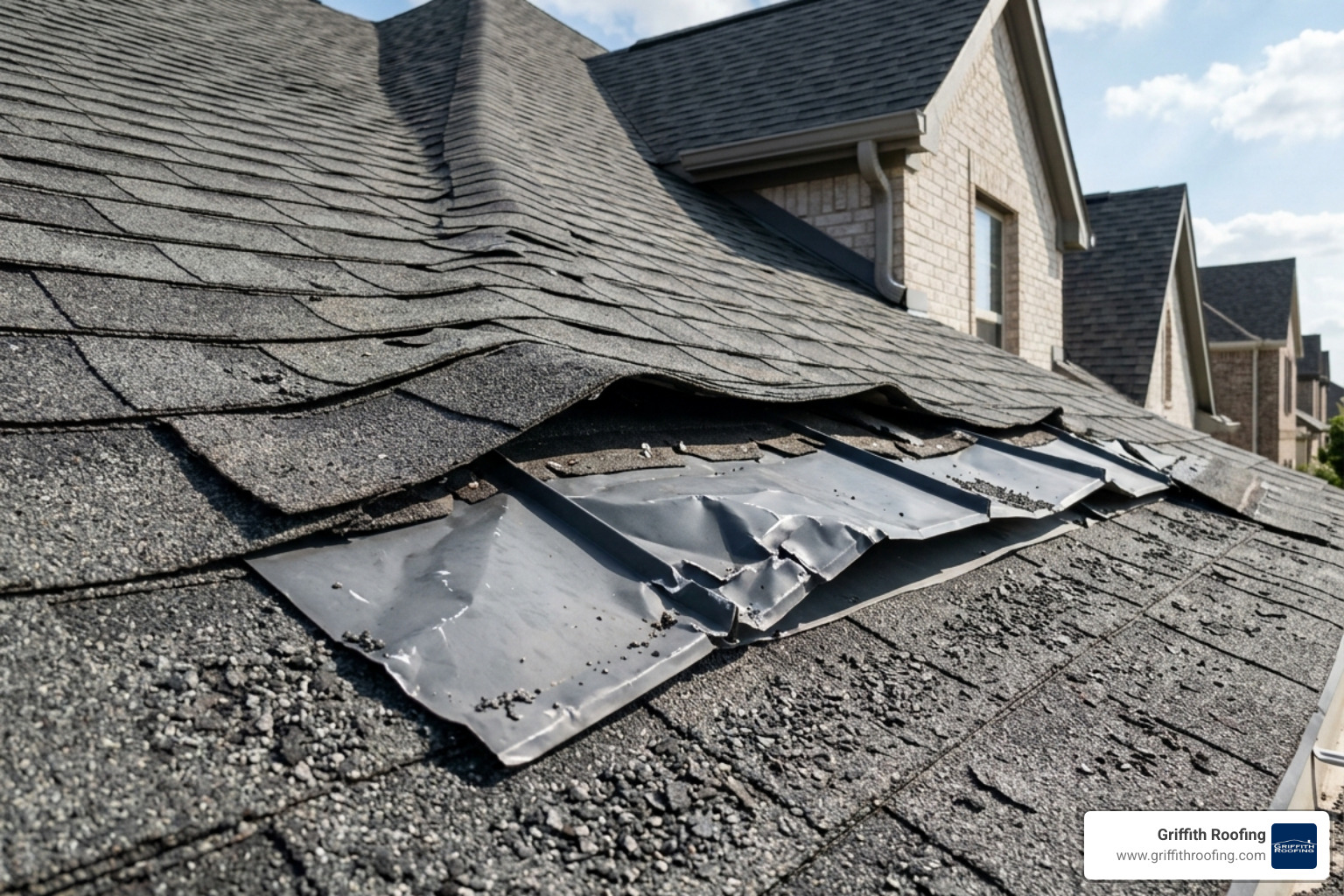
When we perform an inspection, we look for several key indicators. Missing shingles are the most obvious, but we also look for “lifted” shingles. This happens when the wind gets underneath the shingle and breaks the sealant strip. Even if the shingle settles back down, the seal is gone, leaving your roof vulnerable to the next gust.
Other signs include:
- Granule Loss: If you see piles of sand-like material in your downspouts, your shingles have lost their protective coating.
- Creased Tabs: High winds can fold shingles back, creating a permanent crease that weakens the fiberglass mat.
- Gutter Misalignment: Strong gusts can literally pull gutters away from the fascia board.
- Chimney Flashing: Wind can loosen the metal “apron” around your chimney, a common source of mysterious leaks.
If you suspect your home has been hit, checking our Storm Damage Portfolio can help you visualize what professional-grade restoration looks like.
Common Types of Frisco Wind Damage
In our two decades serving the Frisco area, we’ve categorized wind damage into a few primary types:
- Shingle Uplift and Seal Failure: This is the “silent killer” of roofs. The wind lifts the shingle, breaks the bond, and allows rain to blow underneath.
- Debris Impact: North Texas winds turn patio furniture, tree branches, and even loose shingles into projectiles.
- Structural Destabilization: In extreme cases, high-velocity winds can put enough pressure on the roof’s frame to cause shifting.
You can see examples of how we handle these specific issues in our Residential Roofing Portfolio.
Hidden Damage and Interior Indicators
Sometimes the roof looks okay from the curb, but the damage is lurking inside. We use advanced tools like moisture mapping and infrared detection to find wet spots that haven’t turned into drips yet. If your insulation feels damp or you notice new cracks in your drywall or “popped” nails in the ceiling, those are major red flags that your roof’s integrity has been compromised.
Immediate Steps for Frisco Wind Damage Repair
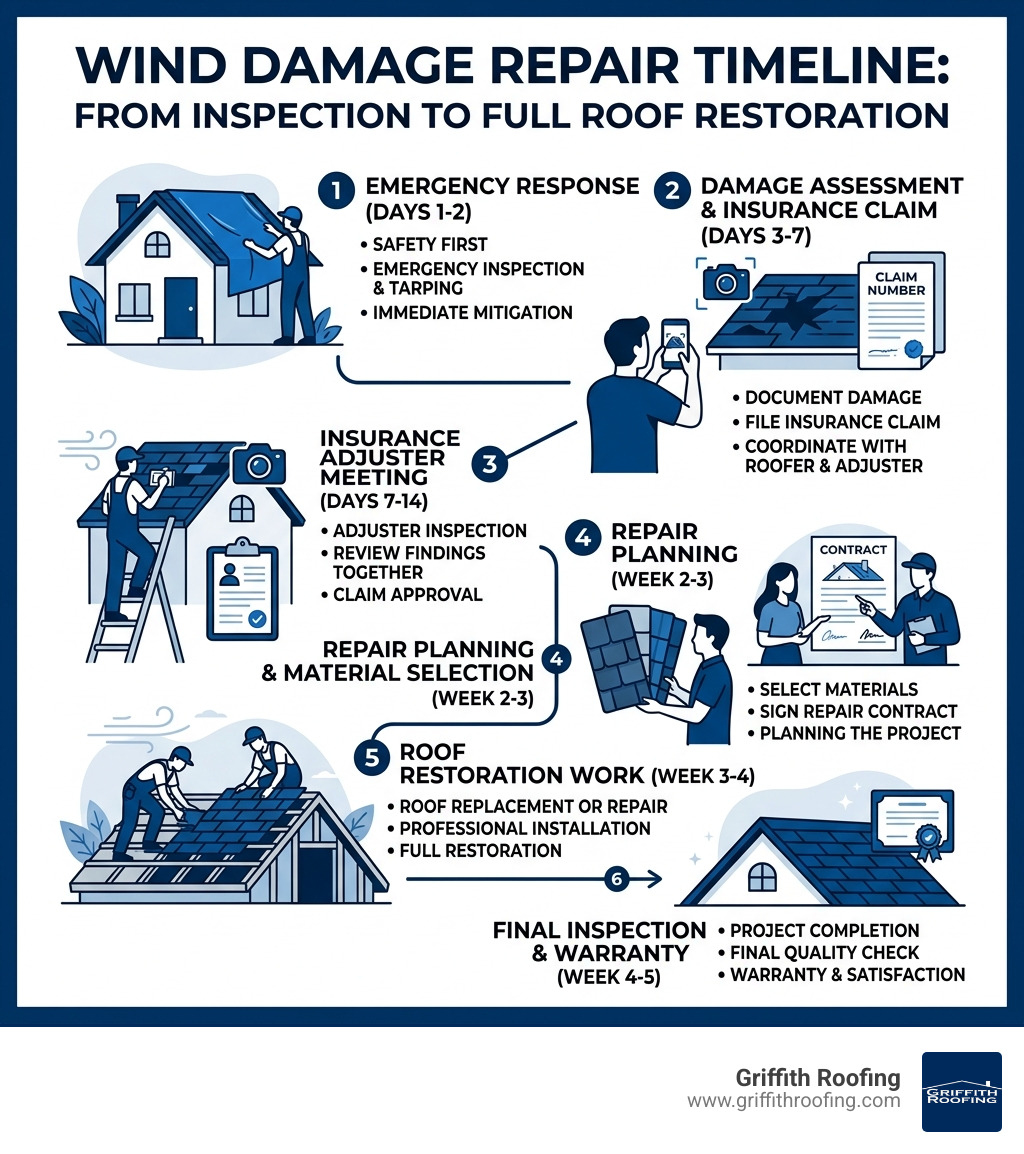
The moments following a storm are critical. Your primary goal is “mitigation” — a fancy insurance word for “stopping things from getting worse.”
First, perform a safety assessment. Check for downed power lines or leaning trees. Once you’re sure it’s safe to be outside, start your documentation. Take photos from the ground of every side of your house.
We provide specialized Roof Repair services that begin with emergency stabilization. This often includes:
- Temporary Tarping: Using heavy-duty, professional-grade tarps to cover exposed decking.
- Board-up Services: If a window or door was broken by debris, it needs to be secured immediately to prevent theft or animal entry.
- Debris Removal: Clearing the roof of branches and trash so a proper inspection can happen.
Professional vs. DIY Frisco Wind Damage Repair
I get it — Texans are handy. But frisco wind damage repair is not a Sunday DIY project. Climbing a ladder after a storm is incredibly dangerous; shingles can be slippery with granules or moisture, and structural damage might make the decking unstable.
Furthermore, DIY repairs often void your manufacturer’s warranty. If you nail down a few shingles yourself and the roof fails two years later, the manufacturer may deny your claim because the repair wasn’t performed by a certified professional. Our Roof Repair Portfolio showcases the precision that only specialized equipment and training can provide.
Why Prompt Frisco Wind Damage Repair is Critical
In the North Texas climate, “later” is a dangerous word. A small leak today becomes a mold colony in 48 hours thanks to our humidity. Prompt repair prevents:
- Structural Rot: Water sitting on your wooden rafters will cause them to soften and fail.
- Secondary Damage: A roof leak can destroy electronics, heirloom furniture, and expensive flooring.
- Insurance Deadlines: Most policies have a “statute of limitations” on when you can file a claim. If you wait six months, your insurer might argue the damage was caused by neglect, not the storm.
To understand more about how these elements interact, read our guide on Hail and Storms Impact.
Navigating the Insurance Claim and Restoration Process
Dealing with insurance adjusters can feel like learning a foreign language. That’s why we often meet the adjuster on-site to ensure they don’t miss the subtle signs of wind lift.
The process typically follows this flow:
- Inspection: We document the damage with photos and measurements.
- Claim Filing: You call your carrier with the date of the storm.
- Adjuster Review: The insurance company sends their representative. We aim to be there to advocate for you.
- Itemized Estimate: The adjuster provides a “scope of work.”
- Supplement Requests: If the adjuster missed something (like local building codes), we submit a “supplement” to get it covered.
Our Storm Damage experts are seasoned in this “insurance maze,” ensuring you get every penny you’re entitled to.
Maximizing Your Wind Damage Claim
To get the most out of your claim, documentation is king. Keep receipts for any temporary repairs you paid for. Understand the difference between Replacement Cost Value (RCV) and Actual Cash Value (ACV). RCV pays to replace the roof at today’s prices, while ACV subtracts for the age of the roof. Most modern Residential Roofing policies in Frisco are RCV, but you must complete the work to get the full payout.
The Full Restoration Workflow
Once the claim is approved, we move into the restoration phase. This isn’t just slapping on new shingles. We look at the whole system:
- Material Selection: Choosing shingles that match your HOA requirements and offer better wind resistance.
- Construction: Our crews work efficiently to minimize disruption to your life.
- Final Walkthrough: We check every ridge cap and valley.
- Site Cleanup: We use magnetic sweeps to ensure your yard is free of nails.
You can explore the full breadth of Our Services to see how we handle everything from gutters to ventilation.
Understanding Costs and Building Codes for Frisco Repairs
How much does frisco wind damage repair cost? It depends on the scale.
| Repair Type | Estimated Cost Range |
|---|---|
| Minor Shingle Replacement | $300 – $1,500 |
| Moderate Wind Damage Repair | $1,000 – $5,000 |
| Full Roof Replacement | $10,000 – $25,000+ |
| Gutter Repair/Replacement | $200 – $1,500 |
Note: These are estimates. Factors like roof steepness and material choice (standard asphalt vs. premium metal) will shift these numbers.
Frisco has strict building codes. As of April 2026, we follow the 2021 International Residential Code (IRC) and International Building Code (IBC). The City of Frisco also has specific “wind load” requirements. This means your roof must be engineered to withstand specific wind speeds, which often dictates how many nails we use per shingle. We handle all the permitting and inspections across our Service Areas.
Factors Influencing Repair Pricing
Every home is a unique project. We look at:
- Roof Pitch: Steeper roofs require more safety equipment and take longer to navigate.
- Square Footage: The size of the “roofing square” (a 10×10 area).
- Accessibility: Can we get our trucks close to the house, or is it a tight squeeze?
Browse our Portfolio to see the variety of homes we’ve serviced, from sprawling estates to cozy suburban bungalows.
Preventing Future Storm Damage to Your North Texas Home
While we can’t stop the wind from blowing in Frisco TX, we can certainly make your home a harder target.
Investing in Class 4 Impact-Resistant Shingles is the best move a Frisco homeowner can make. Not only do they stand up better to wind and hail, but many insurance companies offer a significant discount on your premiums for having them.
Other prevention tips include:
- Tree Trimming: Keep branches at least 10 feet away from your roofline.
- Secure Flashing: Ensure your “soft metals” are thick enough to resist denting.
- Annual Inspections: We catch small sealant failures before they become big wind-lift problems.
- Reinforced Garage Doors: High winds often enter the home through the garage, creating internal pressure that can blow the roof off from the inside.
Frequently Asked Questions about Frisco Wind Damage Repair
How long do I have to file a wind damage claim in Texas?
While Texas law generally allows up to two years, most insurance policies have a “prompt notice” clause. We recommend filing within 30 to 60 days of the storm to avoid any disputes about when the damage occurred.
Can wind damage be invisible from the ground?
Absolutely. “Wind lift” is almost impossible to see from the driveway. You need a pro to get on the roof and physically check the bond of the shingles. If the seal is broken, your roof is technically damaged, even if it looks perfect.
Does insurance cover temporary emergency repairs like tarping?
Yes! In fact, most policies require you to take reasonable steps to prevent further damage. The cost of professional tarping is typically covered as part of your claim.
Conclusion
At Griffith Roofing, we don’t just fix roofs; we restore peace of mind. Since 2001, we’ve built our reputation on the idea that “good enough” never is. Whether you need a few shingles replaced or a full storm restoration, our team provides the expert craftsmanship and insurance assistance you need to get your life back to normal.
Don’t let a North Texas storm have the last word. If you’re worried about your home, Contact us today for a free, no-obligation inspection. We are your local experts for Emergency Frisco Wind Damage Repair, and we’re ready to help you protect what matters most.


