

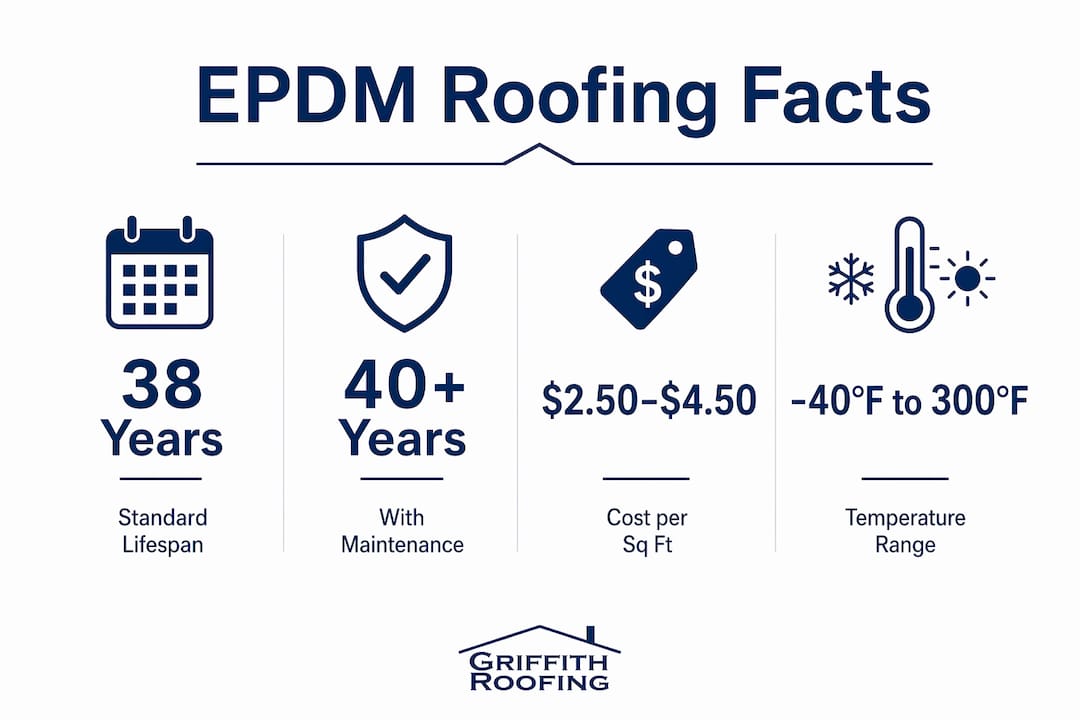
EPDM roofing is defined as a synthetic rubber membrane made from ethylene propylene diene monomer, used primarily on flat and low-slope roofs. You may have heard it called “rubber roofing.” That label is accurate: over 95% of rubber roofs in the U.S. are EPDM. The National Roofing Contractors Association (NRCA) and the EPDM Roofing Association both recognize it as the dominant single-ply membrane in commercial construction, holding 25–30% of the U.S. market. With an industry-standard service life of approximately 38 years, EPDM delivers long-term value that few roofing materials can match.
What is EPDM roofing made of?
EPDM is a thermoset rubber. That means its polymer chains are permanently cross-linked through a process called vulcanization, the same chemistry that makes car tires tough and resilient. The three building blocks are ethylene, propylene, and a diene monomer. Each one contributes something specific: ethylene and propylene form the backbone, while the diene monomer creates the cross-linking sites that give the material its strength.
The physical properties that result from this chemistry are remarkable for a roofing membrane:
- Temperature range: EPDM stays flexible from -40°F to 180°F, covering virtually every climate in the continental U.S.
- Elongation: The membrane stretches up to 300% and returns to its original shape, which means it handles building movement without cracking.
- UV and ozone resistance: The thermoset structure resists ultraviolet degradation and ozone attack far better than thermoplastic alternatives.
- Hail and impact resistance: The rubber absorbs impact energy rather than fracturing, a real advantage in hail-prone regions like the Dallas-Fort Worth Metroplex.
The thermoset versus thermoplastic distinction matters for performance. Thermoplastic membranes like TPO and PVC soften when heated and can be re-welded. EPDM cannot be re-melted once cured. That permanence is a strength, not a limitation. It means the membrane holds its shape and properties across decades of thermal cycling.
Pro Tip: If you are evaluating a flat roof in a cold climate, ask specifically whether the membrane is thermoset. Thermoplastic membranes can become brittle in freeze-thaw cycles, while EPDM’s cross-linked structure prevents cracking even at extreme low temperatures.
How is EPDM roofing installed?
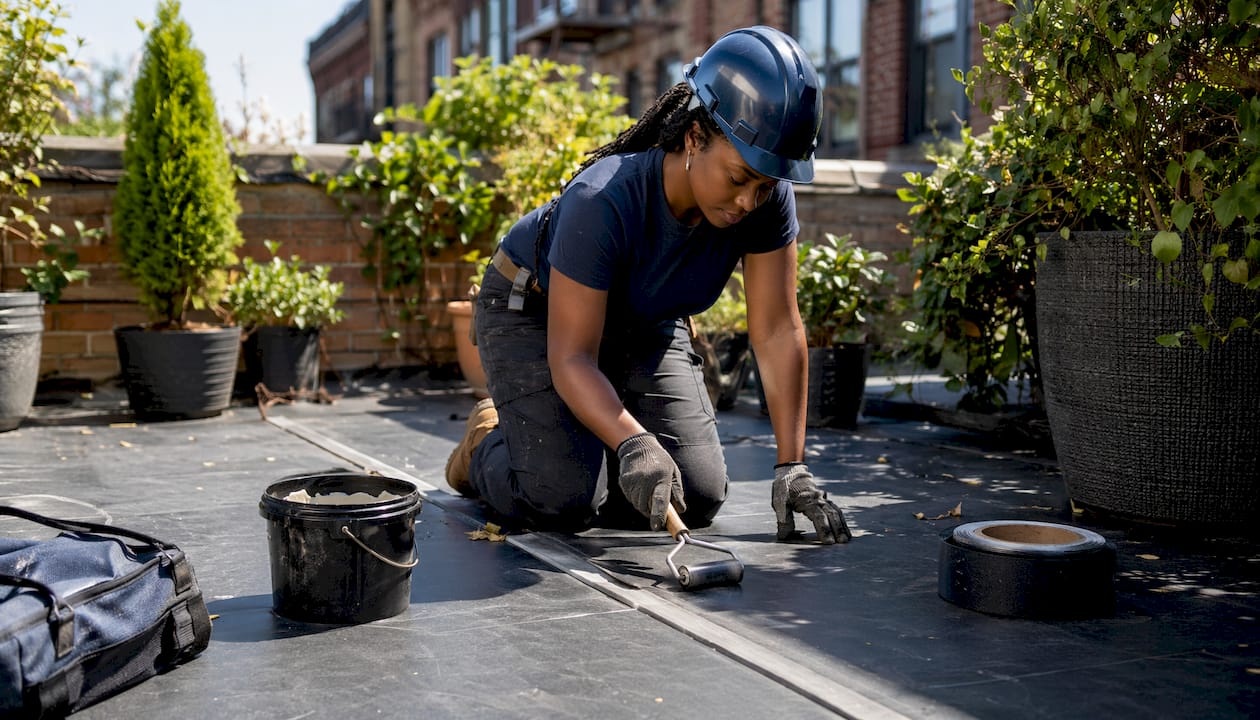
EPDM installation follows one of three methods, and the choice affects both upfront cost and long-term performance.
-
Fully adhered. The membrane is glued directly to the roof deck or insulation board using a contact adhesive. This method produces the cleanest finish, resists wind uplift most effectively, and is the preferred choice for most residential and commercial applications.
-
Mechanically fastened. Fasteners and plates secure the membrane through the insulation into the deck. This method is faster and less expensive than fully adhered, but the fastener points can become stress concentrations over time. It works well on large commercial roofs where wind uplift calculations allow it.
-
Ballasted. The membrane is laid loosely and held down by river stone or pavers. No adhesive or fasteners penetrate the membrane, which means the membrane itself stays intact. The trade-off is significant added weight, so the roof structure must be engineered to carry it.
One of EPDM’s most practical advantages is how its seams are bonded. Rather than requiring hot-air welding equipment like TPO or PVC installations, EPDM seams use adhesive tape or liquid adhesive. That simplicity lowers installation costs and makes field repairs far more accessible.
Pro Tip: For residential flat roofs or low-slope additions, request the fully adhered method. It adds a modest cost premium over mechanical fastening but produces a tighter, more wind-resistant system that holds up better over the roof’s full service life.
Repairs follow the same logic. A damaged section of EPDM can be patched with a peel-and-stick EPDM patch kit. No torch, no welder, no specialized equipment. A skilled contractor can complete most repairs in under an hour. That accessibility keeps maintenance costs low across the roof’s lifespan. For a detailed look at the repair process in the DFW area, the EPDM repair workflow guide from Griffith roofing walks through each step.
What are the benefits and drawbacks of EPDM roofing?
EPDM’s strongest selling point is cost. Installation runs $2.50–$4.50 per square foot, making it the most budget-friendly single-ply option available. That price advantage compounds over time because repairs are inexpensive and the membrane rarely needs full replacement before the 30-year mark.
The other major benefits include:
- Proven longevity. A 38-year average service life is backed by decades of field data, not just manufacturer claims.
- Flexibility for complex geometry. EPDM wraps around curbs, drains, and penetrations without the cracking risk you get from rigid materials.
- Climate versatility. The membrane performs in Phoenix heat and Minnesota winters without reformulation.
- Compatibility with green roofs and solar. EPDM works under vegetative roof assemblies and around solar panel mounting systems.
The drawbacks deserve honest attention. EPDM is almost always black, which absorbs heat rather than reflecting it. For property owners in hot climates focused on cooling costs, that color matters. However, the EPDM Roofing Association’s research shows that insulation level, not roof color, is the primary driver of energy efficiency in most U.S. climate zones. A well-insulated EPDM roof outperforms a poorly insulated white membrane roof on energy bills.
Seam longevity is the other honest concern. Adhesive-bonded seams can lift over time if they were not applied correctly or if the substrate was not properly cleaned before installation. Ponding water, where water pools on the roof surface for more than 48 hours, accelerates seam stress. Proper drainage design eliminates most of this risk before it starts. You can learn more about how EPDM fits within the broader commercial roofing options available to property owners.
How long does EPDM roofing last?
The industry-standard service life for EPDM is approximately 38 years, with well-maintained roofs regularly reaching 40–50 years. That figure assumes proper installation and proactive maintenance. A roof that is installed correctly and inspected regularly will consistently outperform one that is ignored until a leak appears.
The weak points on any EPDM roof are predictable: seams and flashings. Seams are where two sheets of membrane meet. Flashings are where the membrane meets a vertical surface like a parapet wall or roof penetration. Both locations concentrate stress and are the first places water finds a path inside.
Recommended maintenance practices include:
- Biannual inspections. Inspect in spring and fall, after the seasons most likely to cause thermal stress or storm damage.
- Seam checks. Look for lifting edges, bubbles, or gaps. Address them immediately with compatible adhesive or tape.
- Flashing inspections. Check that flashing is fully adhered and has not pulled away from the wall or curb.
- Drain clearing. Keep roof drains and scuppers clear to prevent ponding water from sitting against seams.
- Surface cleaning. Remove debris, leaves, and standing water that accelerate membrane degradation.
Proactive maintenance targeting seams and flashings can significantly extend EPDM roof life. Neglect at these points is the leading cause of premature failure. Catching a lifted seam in year five costs a fraction of what a full membrane replacement costs in year fifteen.
How does EPDM compare with other roofing materials?
EPDM’s value proposition becomes clearest when you compare it directly against the alternatives available for flat and low-slope roofs.
| Category | EPDM | TPO | PVC |
|---|---|---|---|
| Cost per sq ft | $2.50–$4.50 | Higher | Highest |
| Seam method | Adhesive or tape | Hot-air welded | Hot-air welded |
| Cold weather performance | Excellent | Moderate | Moderate |
| Repair complexity | Low | Moderate | Moderate |
| Color options | Primarily black | White or gray | White or gray |
| Typical service life | 38+ years | 20–30 years | 20–30 years |
EPDM costs less than TPO and PVC partly because installation requires fewer specialized tools. Hot-air welding equipment for TPO and PVC adds both equipment cost and labor time. EPDM’s adhesive seaming system is simpler to execute and simpler to repair.
Cold weather performance is where EPDM pulls furthest ahead. Thermoplastic membranes can become brittle in sustained freezing temperatures. EPDM’s thermoset structure prevents that brittleness entirely. For property owners in northern states or at elevation, that difference is significant.
The energy efficiency question is more nuanced than the color debate suggests. White TPO and PVC membranes reflect more solar energy in summer. But insulation is more effective for energy savings than surface reflectivity across ASHRAE Climate Zones 4–8, which covers most of the U.S. Adding R-value beneath a black EPDM membrane delivers better year-round energy performance than a white membrane with minimal insulation.
Pro Tip: When comparing bids for a flat roof, ask each contractor to specify the insulation R-value included in their proposal. A lower-cost bid with thin insulation will cost you more in energy bills over ten years than a higher bid with proper insulation.
For a broader look at how EPDM fits within the full range of flat roof systems, the commercial roofing systems guide is a useful reference for property owners evaluating their options.
Key Takeaways
EPDM is the most cost-effective and durable single-ply membrane for flat and low-slope roofs, with a proven service life of approximately 38 years when properly installed and maintained.
| Point | Details |
|---|---|
| Material composition | EPDM is a thermoset rubber that stays flexible from -40°F to 180°F and elongates up to 300%. |
| Installation methods | Fully adhered, mechanically fastened, and ballasted options suit different roof types and budgets. |
| Cost advantage | At $2.50–$4.50 per square foot, EPDM costs less than TPO or PVC and requires fewer specialized tools. |
| Lifespan and maintenance | Average service life is 38 years; biannual seam and flashing inspections are the single most effective maintenance practice. |
| Energy efficiency | Insulation R-value drives energy savings more than roof color, making EPDM competitive with reflective membranes. |
What 23 years of roofing taught me about EPDM
I have installed and repaired more EPDM roofs across the Dallas-Fort Worth area than I can count. My honest view: EPDM is the most underrated roofing material in residential construction. Homeowners see “black rubber roof” and assume it is a budget compromise. It is not. It is a deliberate engineering choice.
The misconception I hear most often is that a white roof is always more energy-efficient. That idea sounds logical, but the data does not support it in most U.S. climates. What I have seen in practice matches what the research confirms: a properly insulated EPDM roof keeps energy bills lower than a white membrane roof with inadequate insulation beneath it. The color debate distracts from the insulation conversation, and that is where the real money is.
The other thing I tell every property manager who calls me about a flat roof: your seams are your roof. The membrane itself almost never fails. What fails is the bond at the seams and the flashing at the edges. If you inspect those two things twice a year and address anything that looks lifted or soft, your EPDM roof will outlast your expectations. I have seen roofs installed in the 1980s still performing well because the owner treated maintenance as a priority, not an afterthought.
EPDM also fits the direction the industry is heading. It is compatible with vegetative roof assemblies, works around solar panel mounting systems without special modification, and its long service life means less material going to landfill over time. For property owners thinking about sustainability, the durability argument for EPDM is as strong as any environmental certification.
— Mark Griffith
Griffith roofing’s flat roof services for DFW property owners
Griffith roofing has served homeowners and property managers across the Dallas-Fort Worth Metroplex since 2001. EPDM installation, repair, and maintenance are core parts of that work.
Whether you are replacing an aging flat roof, patching a lifted seam, or evaluating your options for a new low-slope addition, Griffith roofing’s team brings over two decades of hands-on experience to every project. The process starts with a thorough assessment of your existing roof and ends only when you are satisfied with the result. Visit the residential roofing services page to learn what Griffith roofing offers, or reach out directly to schedule a professional evaluation of your property.
FAQ
What does EPDM stand for in roofing?
EPDM stands for ethylene propylene diene monomer, a synthetic rubber compound used to manufacture flat and low-slope roofing membranes. It is the most widely used single-ply rubber roofing material in the U.S.
How long does an EPDM roof last?
EPDM roofing has an industry-standard service life of approximately 38 years, with well-maintained roofs regularly lasting 40–50 years. Proactive seam and flashing inspections are the most effective way to reach that upper range.
Is EPDM roofing good for residential homes?
EPDM is an excellent choice for flat or low-slope residential roofs, including garage roofs, additions, and low-pitch sections of a home. Its flexibility, low repair cost, and long lifespan make it a practical option for homeowners.
What is the difference between EPDM and TPO roofing?
EPDM is a thermoset rubber membrane bonded with adhesive, while TPO is a thermoplastic membrane welded with hot air. EPDM costs less, performs better in cold climates, and is easier to repair. TPO offers a white surface that reflects more solar heat in hot climates.
How do you maintain an EPDM roof?
Inspect seams and flashings twice a year, clear drains and scuppers after storms, and patch any lifted edges immediately with compatible EPDM adhesive or tape. Addressing small issues early prevents the leaks that lead to costly structural repairs.


