

Choosing the right contractor to protect your home or business starts long before anyone climbs onto your roof. When you need to select a roofing company in Tarrant County, the stakes are real. The Texas Attorney General’s office has sued Dallas-Fort Worth roofing companies for taking payments and abandoning jobs, leaving homeowners with damaged roofs and empty bank accounts. Storm chasers show up after every major weather event, and pressure tactics are common. This guide cuts through the noise and gives you a clear, practical process for finding a licensed, trustworthy contractor who will actually finish the job.
Table of Contents
- Key takeaways
- How to select a roofing company in Tarrant County
- Essential criteria for evaluating contractors
- A step-by-step process for comparing and hiring
- How to monitor work quality and protect yourself
- My honest take on what separates good roofers from risky ones
- Griffith Roofing: trusted roofing services across Tarrant County
- FAQ
Key takeaways
| Point | Details |
|---|---|
| Verify licenses and insurance first | Never hire a contractor who cannot provide proof of a Texas roofing license and general liability coverage. |
| Tie payments to milestones | A written scope with milestone-based payments is your strongest defense against incomplete or abandoned work. |
| Use third-party ratings | Resources like Diamond Certified go beyond star ratings and verify contractor eligibility through background checks. |
| Watch for red flags | Pressure to sign fast or file insurance claims you did not initiate are warning signs of a scam. |
| Document everything | Keep written records of all communications, inspections, and approvals throughout the project. |
How to select a roofing company in Tarrant County
Before getting into the selection process, it helps to understand what you are actually buying. Roofing is not a single service. It is a category of work that spans inspections, minor repairs, full replacements, storm damage restoration, and new construction installations. The contractor you need for a small leak repair is not necessarily the same one equipped to handle a commercial flat roof replacement.
Residential vs. commercial roofing
Residential roofing in Tarrant County typically involves asphalt shingles, though metal roofing has grown significantly in popularity because of its durability against North Texas hail. Commercial buildings often use TPO, EPDM, or modified bitumen systems for flat or low-slope roofs. Each material type requires different installation expertise, so confirming a contractor’s specialty before hiring matters more than most homeowners realize. You can learn more about North Texas roofing materials to make a more informed choice before you even start calling contractors.
Services you should expect from local roofers
Reputable Tarrant County roofing contractors offer a full range of services, including:
- Roof inspections: Routine and post-storm assessments to identify damage before it spreads
- Roof repairs: Patching leaks, replacing damaged shingles, fixing flashing, and addressing ventilation issues
- Full replacements: Tear-off and reinstallation of the entire roofing system
- Storm damage restoration: Coordinating with your insurance adjuster and repairing hail or wind damage
- New installations: Building out roofing systems for new construction or additions
- Metal roofing: Long-life metal roofing solutions that handle Texas weather with less maintenance
Many contractors also offer warranty-backed service and post-job support. If a contractor cannot clearly explain what happens after installation, that is a gap worth probing.
Essential criteria for evaluating contractors
This is where most homeowners make their biggest mistake. They collect a few quotes, pick the lowest number, and assume the job will get done. That assumption has cost Tarrant County residents hundreds of thousands of dollars in recent years.
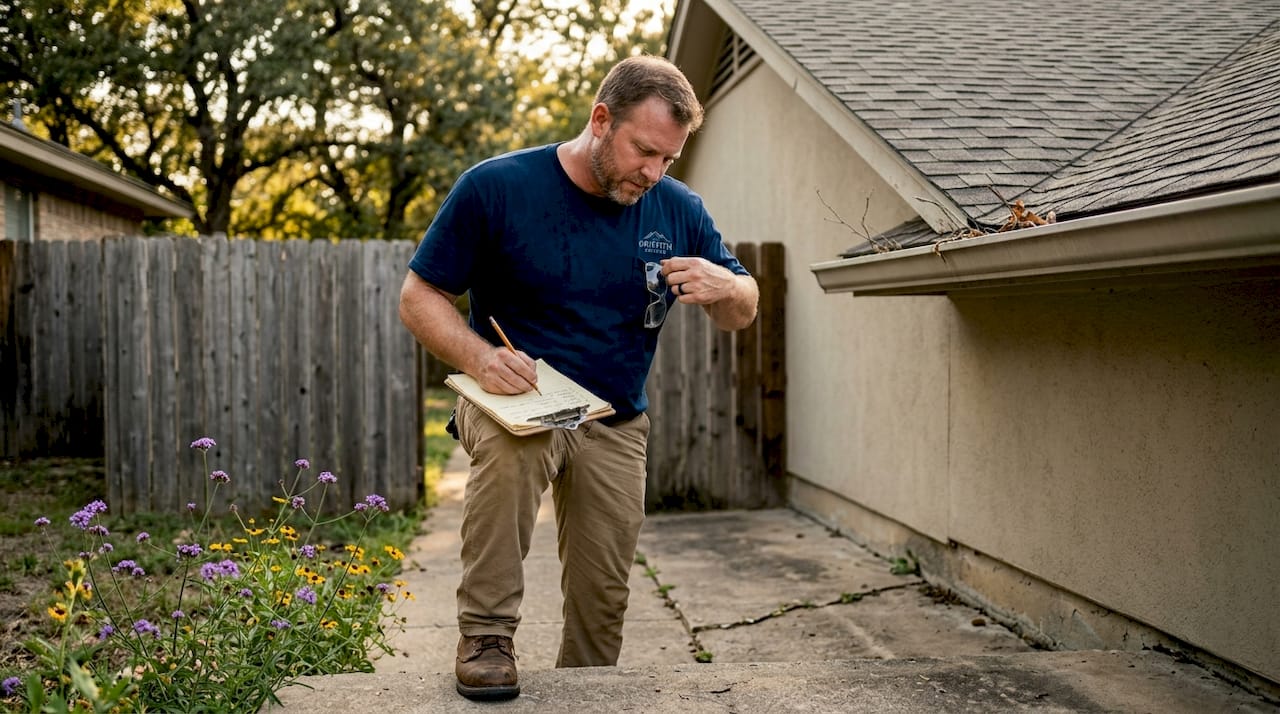
The Texas AG’s lawsuit against Rubinsky Roofing revealed a pattern that should put every homeowner on alert. One customer paid $24,000 for a roof replacement that was delayed five months and then abandoned entirely. Another handed over $10,000 in insurance proceeds and received no work for six months. These were not careless homeowners. They were people who hired a company that looked legitimate on the surface.
Here is what to check before signing anything:
- Texas contractor license: Verify the license number through the Texas Department of Licensing and Regulation. Do not take a contractor’s word for it.
- General liability and workers’ compensation insurance: Ask for certificates of insurance naming you as an additional insured. If a worker is injured on your property and the contractor has no coverage, you may be liable.
- Manufacturer certifications: Certifications from brands like GAF or Owens Corning indicate the contractor has been trained to install specific products correctly, which also affects your material warranty.
- Complaint history: Check the Better Business Bureau, the Texas AG’s consumer protection database, and Google reviews. Look for patterns, not just one-off complaints.
- Third-party verification: Diamond Certified evaluated 27 roofing companies serving Tarrant County using a rigorous five-step process that includes license verification and background checks. That kind of vetting goes well beyond a five-star average.
Pro Tip: Ask every contractor for their Texas license number and look it up yourself before the first meeting ends. It takes two minutes and immediately tells you whether you are dealing with someone operating legally.
Consumers in Tarrant County should rely on verifiable credentials rather than marketing claims or star ratings alone. A polished website and a handful of glowing reviews do not replace a clean license record and verified insurance.
A step-by-step process for comparing and hiring
Finding the right contractor takes more than a Google search. Here is a process that actually works.
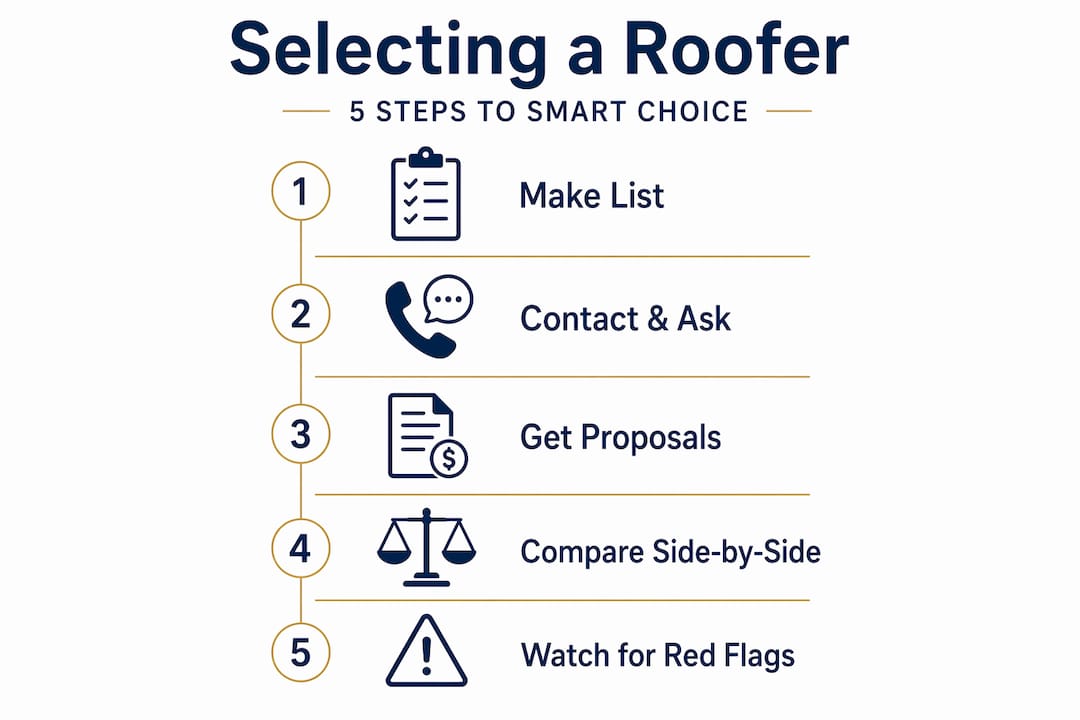
Step 1: Build your candidate list from multiple sources.
Checking multiple directories reduces your reliance on marketing-only information. Use manufacturer contractor finders, local directories, peer recommendations, and third-party rating sites to build a list of five to seven candidates.
Step 2: Make initial contact and ask qualifying questions.
Call each contractor and ask: Are you licensed in Texas? Can you provide proof of insurance? Do you use subcontractors, and if so, are they also licensed and insured? How long have you been operating in Tarrant County? Their answers, and how they answer, tell you a lot.
Step 3: Request written proposals from your top three.
A written proposal should include materials specified by brand and grade, labor costs broken out separately, a project timeline, and a payment schedule tied to milestones. If a contractor hands you a single-line quote with a total price and nothing else, walk away.
Step 4: Compare proposals side by side.
| Criteria | What to look for |
|---|---|
| Materials specified | Brand name, product line, and color listed explicitly |
| Payment schedule | Tied to project milestones, not arbitrary dates |
| Warranty coverage | Both manufacturer and workmanship warranties stated |
| Timeline | Start date and completion estimate in writing |
| Permit handling | Contractor pulls permits, not the homeowner |
Step 5: Watch for red flags during negotiation.
Aggressive sales tactics and pressure to sign contracts were central to the Rubinsky Roofing lawsuit. The same lawsuit alleged the company pressured customers to file insurance claims they may not have needed. If a contractor pushes you to sign the same day they arrive, or encourages you to file a claim before you have had an independent inspection, treat that as a serious warning.
Pro Tip: Never pay more than 10 to 15 percent upfront. Legitimate contractors have the financial stability to begin work without requiring half the project cost before a single shingle is removed.
How to monitor work quality and protect yourself
Signing a contract is not the finish line. The real test of a contractor’s character is what happens after you have paid a deposit.
Schedule a brief walkthrough at each project milestone before releasing the next payment. You do not need to be a roofing expert to do this. You just need to show up, ask questions, and compare what you see to what the contract says. Contractors who know you are paying attention tend to stay on schedule and on spec.
Keep a running file with the following:
- Copies of the signed contract and all change orders
- Photos of the roof before work begins and at each stage
- Written confirmations of any verbal agreements or changes
- Inspection reports from any third-party reviews
- All payment receipts tied to specific milestones
If work stalls or the contractor becomes difficult to reach, act quickly. Documenting all communications and requesting milestone-based payments give you legal standing under the Texas Deceptive Trade Practices Act if you need to pursue recourse.
“Tying payments to a written detailed scope with clear milestones is the most effective protection against incomplete roofing work, especially during Tarrant County storm season.”
Understand your warranty before the crew packs up. Manufacturer warranties cover defective materials, while workmanship warranties cover installation errors. Both matter. A contractor who refuses to put their workmanship warranty in writing is signaling something about their confidence in the work they are about to do.
My honest take on what separates good roofers from risky ones
I have seen the full spectrum of roofing contractors operating in the DFW area, and the pattern is consistent. The disputes do not usually start during the sales process. They start after the first payment clears.
A contractor who seems professional, responsive, and reasonably priced can turn into someone who stops returning calls the moment they have your money. The 2026 Texas AG case against a DFW roofing company is not an isolated story. It is the documented version of something that happens quietly to homeowners across Tarrant County every storm season.
What I have found actually separates reliable roofers from risky ones is not their marketing. It is their willingness to put specifics in writing before work begins. A contractor who pushes back on a detailed scope of work or milestone payments is telling you something important about how they operate.
The homeowners who come out of roofing projects feeling good are almost always the ones who stayed engaged, asked hard questions, and treated the contract as a living document rather than a formality. Being informed is not paranoia. It is the most practical thing you can do to protect your home.
— Ronkot
Griffith Roofing: trusted roofing services across Tarrant County
If you are ready to move from research to action, Griffith Roofing has served the Dallas-Fort Worth Metroplex since 2001 with the kind of track record this guide describes. Licensed, insured, and experienced across both residential and commercial work, Griffith Roofing handles everything from routine inspections to full storm damage restoration.
Whether you need residential roofing services after a hail event, a detailed inspection before buying a property, or a professional roof repair that gets done right the first time, Griffith Roofing brings over two decades of local expertise to every job. The team also serves homeowners in Fort Worth and Arlington throughout Tarrant County. Contact Griffith Roofing for a free quote and see why so many Tarrant County homeowners trust them to protect what matters most.
FAQ
How do I verify a roofing contractor’s license in Texas?
You can verify any Texas roofing contractor’s license through the Texas Department of Licensing and Regulation website. Search by company name or license number before signing any contract.
What are the biggest red flags when hiring a roofer in Tarrant County?
Pressure to sign the same day, requests for large upfront payments, and encouragement to file insurance claims you did not initiate are the most common warning signs of a scam reported in local cases.
How much should I pay upfront to a roofing contractor?
A reputable contractor typically requires no more than 10 to 15 percent upfront. Milestone-based payments tied to completed work phases protect you if the contractor delays or abandons the project.
What is the difference between a manufacturer warranty and a workmanship warranty?
A manufacturer warranty covers defective roofing materials, while a workmanship warranty covers errors made during installation. You need both in writing before work begins.
How do I find the best roofing companies in Tarrant County beyond Google reviews?
Use third-party verification services like Diamond Certified, manufacturer contractor finders, and the Better Business Bureau alongside peer recommendations to build a vetted candidate list.


