

Commercial metal roofing is defined as a roofing system made from fabricated steel, aluminum, copper, or zinc panels engineered specifically for durability, energy efficiency, and long-term cost-effectiveness on commercial properties. Understanding what is metal roofing for business means recognizing it as a fundamentally different product from residential roofing. It covers offices, warehouses, schools, and healthcare facilities. Systems like standing seam and through-fastened R-panels each serve distinct commercial needs. With a service life of 40–70 years and energy savings of up to 40%, commercial metal roofing is one of the highest-performing investments a facility manager can make.
What types of metal roofing systems are used in commercial buildings?
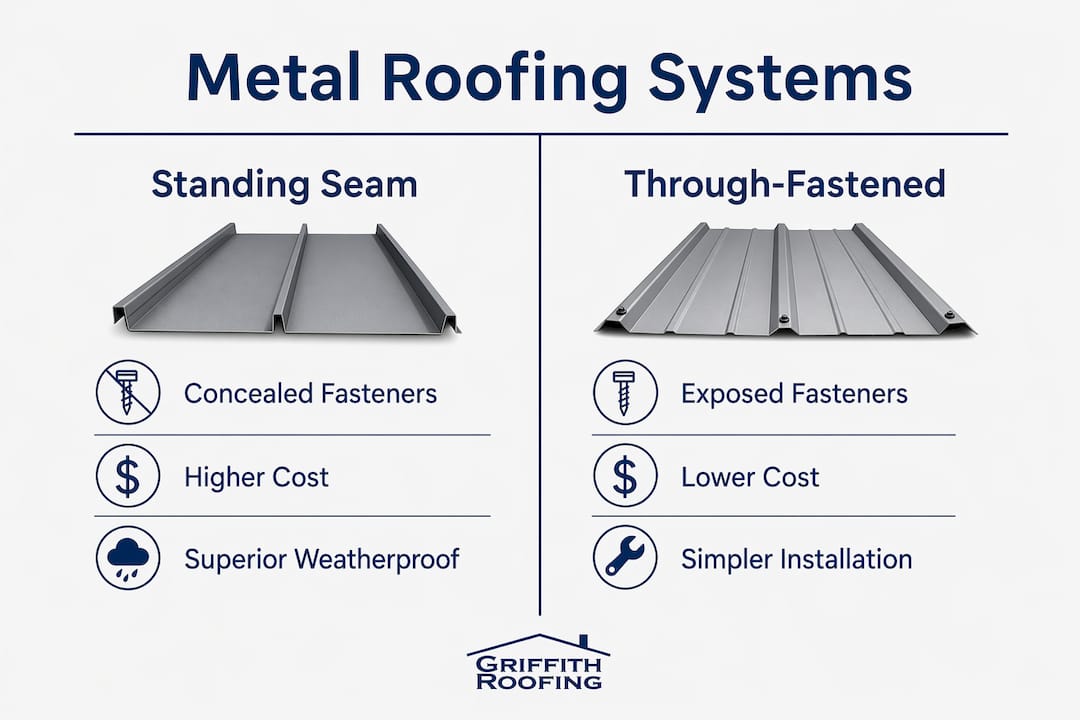
Two primary categories define the commercial metal roofing market: standing seam systems with concealed fasteners and through-fastened structural panels with exposed fasteners. Each serves a different building type, budget, and performance requirement. Choosing the wrong category for your facility is one of the most common and costly mistakes business owners make.
Standing seam systems
Standing seam metal roofing uses raised interlocking seams to connect panels, hiding all fasteners beneath the surface. This design eliminates exposed penetrations, which are the most common source of leaks in any roofing system. Standing seam is the premium choice for office buildings, medical facilities, and any property where aesthetics and long-term watertight performance are non-negotiable. You can read a detailed breakdown of panel options in this standing seam property guide from Griffith roofing.
Through-fastened structural panels
Through-fastened panels, commonly called R-panels or corrugated metal panels, use exposed screws driven directly through the metal surface. They cost significantly less to install and are the standard choice for warehouses, agricultural buildings, and industrial facilities where budget takes priority over aesthetics. The trade-off is that exposed fasteners require more frequent inspection and sealant maintenance over time.
Material options: steel, aluminum, copper, and zinc
Steel is the most widely used material in commercial metal roofing because of its strength and relatively low cost. Galvalume-coated steel resists corrosion well in most climates. Aluminum is lighter and naturally corrosion-resistant, making it the preferred choice for coastal properties. Copper and zinc are premium materials used on high-end commercial or institutional buildings where longevity beyond 100 years is the goal. Understanding panel gauge differences helps you specify the right material thickness for your building’s structural loads.
Standing seam vs. through-fastened: a direct comparison
| Feature | Standing seam | Through-fastened panels |
|---|---|---|
| Fastener exposure | Concealed | Exposed |
| Typical cost | Higher upfront | Lower upfront |
| Best use case | Offices, medical, retail | Warehouses, industrial |
| Maintenance frequency | Lower | Higher |
| Aesthetic appeal | High | Moderate |
What are the key benefits of metal roofing for commercial properties?
The metal roofing advantages for commercial properties go well beyond durability. The financial case is built on lifecycle cost, not purchase price. Business owners who focus only on upfront cost consistently underestimate the total value of a metal roof over 30 to 50 years.
Lifespan that outlasts the competition
Commercial metal roofing systems last 40–70 years, with premium copper and zinc systems reaching 100 years or more. Traditional TPO and EPDM membrane roofs typically require full replacement every 15–25 years. That means a business installing a membrane roof today may face two or three full replacements before a metal roof installed at the same time needs attention.
Energy savings that show up on your utility bill
Metal roofs reduce cooling costs by 15–40% through reflective coatings that push solar reflectance up to 90%. That figure matters most in high-sun climates like Texas, where cooling loads drive commercial energy costs from May through September. A 50,000-square-foot warehouse with a reflective metal roof can see meaningful reductions in HVAC demand year over year.
Lower lifecycle cost despite higher upfront price
Metal roofing lowers long-term costs through fewer repairs, longer replacement cycles, and reduced maintenance labor. Business owners who focus only on initial outlays miss the full picture. Spread the cost of a metal roof across 50 years and the annual cost per square foot is often lower than any competing system.
Additional metal roofing benefits worth noting:
- Fire resistance: Most commercial metal roofing carries a Class A fire rating, the highest available.
- Pest and rot resistance: Metal does not support mold growth or insect infestation.
- Wind and impact resistance: Properly engineered systems withstand hurricane-force winds and hail events.
- Insurance advantages: Many carriers offer premium reductions for Class A fire-rated and impact-resistant roofing systems.
How are commercial metal roofing installations managed and engineered?
Metal roof installation for businesses is a specialized process that goes far beyond what a residential roofing crew handles. The engineering requirements, code compliance demands, and operational logistics of an active commercial site require a contractor with specific commercial experience.
Engineering for thermal movement and wind uplift
Thermal expansion and contraction across long metal panels require precisely engineered fastener systems and clip designs to prevent panel buckling or premature fastener failure. Wind uplift calculations must comply with ASCE 7 standards, which specify the minimum uplift resistance required based on building height, location, and roof geometry. Skipping this step is not a cost-saving measure. It is a liability.
Phased installation to protect your operations
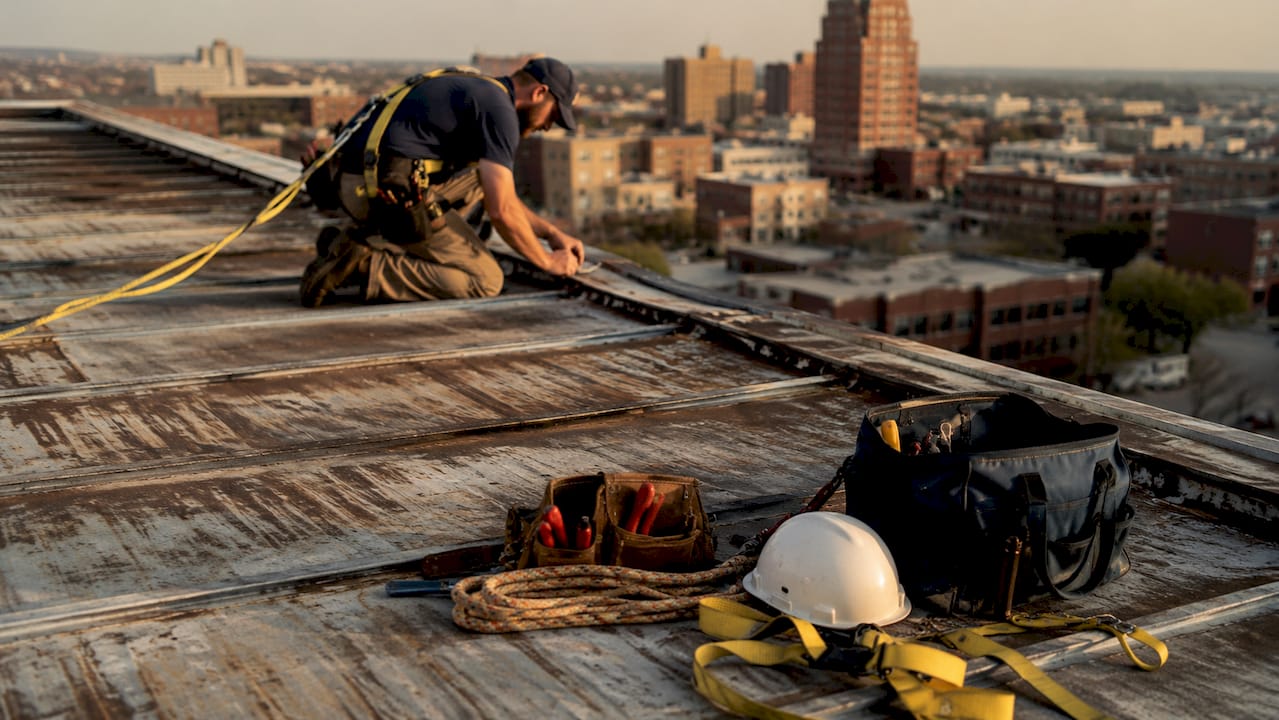
Phased installation plans allow an active commercial facility to remain weather-tight and operational throughout the project. A skilled contractor sequences work in sections, maintaining a dry, secure envelope over occupied or active areas at all times. This approach reduces noise, dust, and debris risks for employees and customers.
Key installation considerations for facility managers:
- Verify the contractor carries commercial general liability and workers’ compensation insurance.
- Confirm the system meets International Building Code (IBC) requirements for your occupancy type.
- Request documentation of wind uplift testing for the specific panel system being installed.
- Coordinate with your insurance carrier before work begins to confirm coverage continuity.
Pro Tip: Ask your contractor for a written phasing plan before signing any contract. A phased schedule protects your business from weather exposure and gives you a clear accountability framework if delays occur.
What maintenance practices maximize commercial metal roof performance?
Metal roofing maintenance tips for commercial properties are straightforward, but they require consistency. The most common reason a metal roof underperforms is not material failure. It is neglected maintenance that voids warranties and allows small problems to become expensive ones.
Follow a structured inspection schedule
Biannual visual inspections every spring and fall, combined with a professional assessment every 3–5 years, form the foundation of any commercial metal roof maintenance program. Spring inspections catch damage from winter ice and debris. Fall inspections prepare the roof for cold-weather stress. Professional assessments identify coating degradation, fastener fatigue, and sealant failure before they cause interior damage.
- Clear debris from gutters and drains after every major storm to prevent water pooling.
- Inspect all penetrations and flashings around HVAC units, skylights, and vents for sealant cracking.
- Check fasteners and seams for signs of backing out, corrosion, or separation.
- Examine coatings for chalking, fading, or peeling that signals UV degradation.
- Document every inspection with dated photos to support warranty claims and insurance records.
Use only the right cleaning products
Cleaning with pH-neutral, manufacturer-approved products is non-negotiable. Dish soaps and household detergents contain salts that accelerate steel corrosion. Pressure washing at high PSI strips protective coatings. The wrong cleaner on a Galvalume steel roof can void the manufacturer’s warranty in a single cleaning cycle.
Pro Tip: Keep a maintenance log in a shared digital folder accessible to your facilities team. Log every inspection date, contractor name, findings, and photos. This record is your first line of defense in a warranty dispute or insurance claim.
Selecting the right commercial roofing system requires evaluating building structure, local climate, wind loads, insurance requirements, and your ownership timeline. A 20-year lease holder and a building owner planning to hold for 40 years should not be installing the same roof.
Key Takeaways
Commercial metal roofing delivers the lowest lifecycle cost per year of any major roofing system when properly installed and maintained.
| Point | Details |
|---|---|
| Lifespan advantage | Metal roofs last 40–70 years, far outlasting membrane alternatives that need replacement every 15–25 years. |
| Energy cost reduction | Reflective coatings cut cooling costs by 15–40%, with the greatest impact in high-sun climates like Texas. |
| System selection matters | Standing seam suits offices and medical facilities; through-fastened panels fit warehouses and industrial buildings. |
| Maintenance drives ROI | Biannual inspections and pH-neutral cleaning preserve warranties and prevent costly premature failures. |
| Installation requires expertise | Phased commercial installation and ASCE 7 engineering compliance protect both the building and business operations. |
Why I think most businesses get the metal roofing decision wrong
After more than two decades working on commercial roofs across the Dallas-Fort Worth area, I have seen the same mistake repeat itself. A business owner gets three bids, picks the lowest number, and installs a through-fastened panel system on a building that needed standing seam. Five years later, they are calling us to fix fastener leaks and re-seal penetrations that should not have been there in the first place.
The real cost of a commercial roof is not the invoice you sign on day one. It is the sum of every repair call, every energy bill, every insurance claim, and every disruption to your operations over the next 30 years. When you run those numbers honestly, metal roofing is rarely the expensive option. It is usually the cheapest one.
I also want to push back on the idea that metal roofing is a “set it and forget it” system. It is not. The businesses that get the most out of their metal roofs are the ones with a maintenance schedule on the calendar before the installation crew packs up. Skipping inspections does not save money. It converts small, inexpensive fixes into large, disruptive ones.
The other factor most facility managers underestimate is how roof choice affects insurance. A Class A fire-rated, impact-resistant metal roof can reduce your commercial property premium in ways that meaningfully offset the upfront cost difference. If you have not had that conversation with your carrier, start there before you finalize your roofing decision.
— Mark Griffith
How Griffith roofing supports your commercial metal roofing project
Griffith roofing has served commercial clients across the Dallas-Fort Worth Metroplex since 2001, delivering metal roofing installations, repairs, and maintenance programs built for the Texas climate. Whether you are replacing an aging membrane system or installing metal roofing on a new facility, the team at Griffith roofing manages every phase from engineering review to final inspection.
Griffith roofing’s metal roofing solutions cover standing seam systems, through-fastened panels, and full maintenance programs designed to protect your investment for decades. If your current roof is showing its age, the commercial restoration vs. replacement guide is a strong starting point for understanding your options. Contact Griffith roofing today to schedule a commercial roof assessment.
FAQ
What is the lifespan of a commercial metal roof?
Commercial metal roofing systems last 40–70 years, with premium copper and zinc systems reaching 100 years. This far exceeds the 15–25 year lifespan of standard membrane roofing systems.
How much does commercial metal roofing cost for businesses?
Metal roofing costs more upfront than membrane alternatives, but its lower maintenance requirements and longer lifespan produce a lower cost per year over a 30–50 year ownership period.
What is the best metal roofing option for a commercial building?
Standing seam is the best choice for offices, medical facilities, and retail buildings where watertight performance and aesthetics matter. Through-fastened R-panels are the cost-effective standard for warehouses and industrial facilities.
How often should a commercial metal roof be inspected?
Facility managers should conduct visual inspections every spring and fall, with a professional assessment every 3–5 years to maintain warranty coverage and catch early signs of fastener or coating failure.
Does metal roofing reduce energy costs for businesses?
Yes. Reflective coatings on commercial metal roofing reduce cooling costs by 15–40%, with the largest savings in high-sun regions like Texas where HVAC demand peaks during long summer months.


