

Commercial roof replacement is defined as a full-scale removal and reinstallation of a building’s roofing system while the property remains occupied and operational. For property managers and business owners, the real challenge is not the roofing work itself. It is keeping your business running while that work happens above your head. Comprehensive project planning can reduce overall project duration by 15–20%, which directly cuts the window of operational risk. The strategies that make roof replacement minimize business disruption are phased zone work, precise scheduling, and continuous stakeholder communication. Get all three right, and your tenants barely notice the project.
What are the essential planning steps to minimize disruption during roof replacement?
Pre-construction planning is the single most powerful tool for protecting your operations. A project that starts without a documented plan almost always runs longer, costs more, and generates more tenant complaints than one that begins with a clear roadmap.
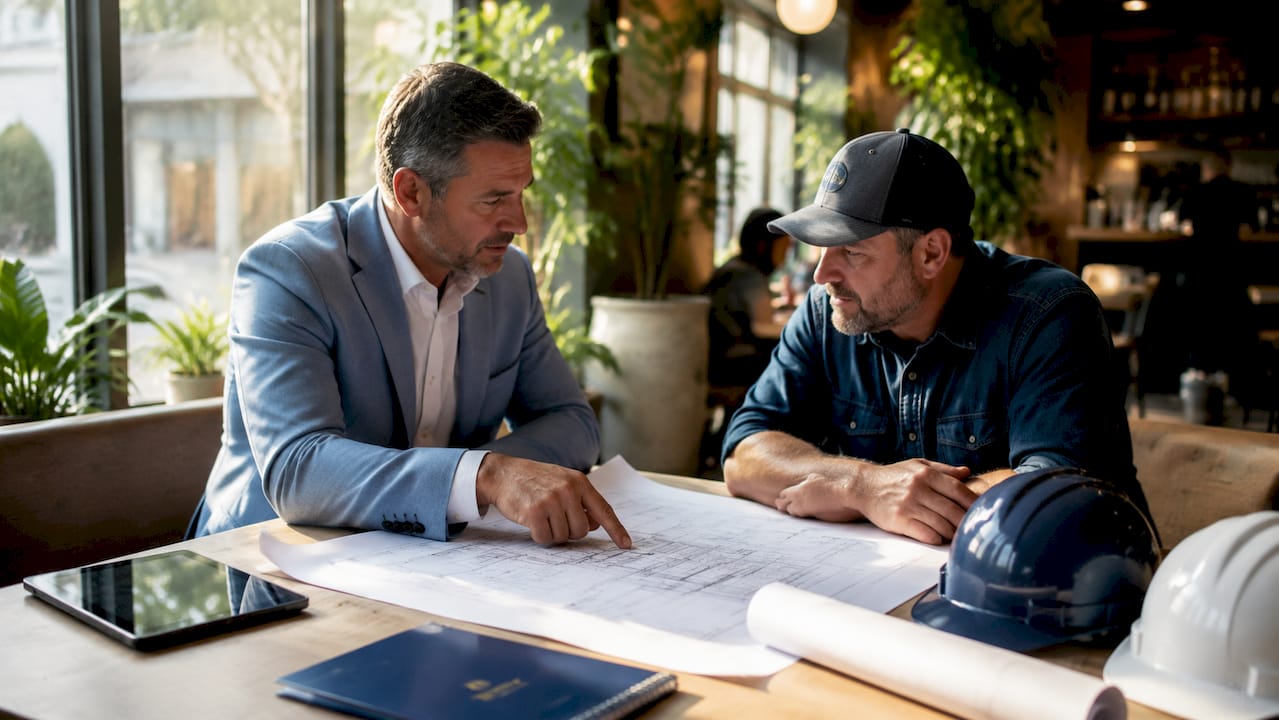
Effective project documentation must include defined start windows and durations, noise period estimates, site maps with access restrictions, and weather interruption contingencies. Each of these elements gives your tenants and staff something concrete to plan around. Uncertainty is what drives frustration, not the noise itself.
A strong pre-construction plan covers:
- Logistics and material staging: Identify where materials will be stored and how they will move on and off the roof without blocking tenant access or loading docks.
- Permit timeline: Pull permits before the project starts, not during. Permit delays mid-project are one of the most common causes of extended downtime.
- Noise period mapping: Identify which tasks generate the most noise, such as tear-off and fastening, and document exactly when they will occur.
- Tenant impact map: Create a floor-by-floor or zone-by-zone map showing which areas will experience the most disruption on which days.
- Weather contingency windows: Build buffer days into the schedule for rain delays, especially in the Dallas-Fort Worth area where spring weather shifts quickly.
- Stakeholder contact list: Assign a single point of contact for tenant questions and document that person’s availability hours.
Pro Tip: Involving your roofing contractor in operational scheduling before construction starts yields far better disruption control than waiting until the crew arrives on day one. The earlier they understand your business rhythms, the better they can plan around them.
A well-built plan also accounts for subcontractor coordination. Reviewing how crews are managed across a commercial project, including sequencing and handoffs, can prevent the kind of scheduling gaps that leave a section of roof exposed overnight.
How do work zones reduce downtime during roofing projects?
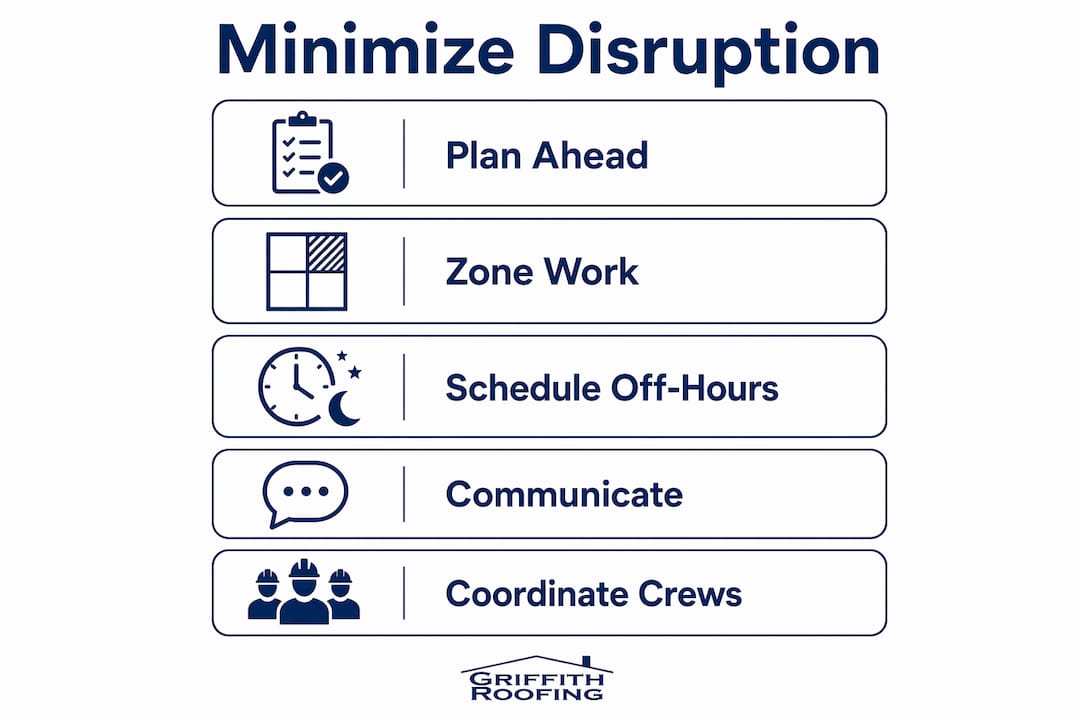
Dividing the roof into controlled work zones is the most effective technique for keeping a business operational during a full replacement. The concept is straightforward: replace one section at a time rather than stripping the entire roof at once.
Phased replacements with daily dry-in conditions prevent the entire building from being exposed to weather at any point during the project. At the end of each shift, the active zone is sealed and made watertight before the crew leaves. That single discipline protects your inventory, your equipment, and your tenants regardless of what the weather does overnight.
The table below compares two common approaches to commercial roof replacement:
| Approach | Disruption level | Weather risk | Tenant impact |
|---|---|---|---|
| Full tear-off at once | Very high | High exposure across entire roof | Major, building-wide |
| Phased zone replacement | Controlled and predictable | Limited to active zone only | Localized and manageable |
Phased zone work also isolates noise and dust to specific areas. A tenant on the east side of the building does not need to tolerate demolition noise while the crew works on the west wing. That spatial separation is something a single-phase project simply cannot offer.
Safety protocols matter just as much as sequencing. Each active zone should have clear physical barriers, signage, and restricted access points so that neither tenants nor their customers accidentally enter a hazardous area. Griffith roofing builds these controls into every commercial project plan from the start.
Pro Tip: The fastest roof completion is not always the least disruptive option. Sectional phasing with dry-in at each shift end is the preferred method for occupied buildings because it trades raw speed for predictability and safety.
Before committing to a replacement approach, reviewing a commercial roof restoration vs replacement guide can help you confirm that full replacement is the right call for your building’s condition and budget.
When should noisy roof work be scheduled to protect business hours?
Scheduling is where good intentions either succeed or fail. A phased plan with excellent zone control still causes real damage to your business if demolition starts at 8 a.m. on a Monday when your call center opens.
Scheduling high-noise tasks during early mornings, weekends, or after-hours significantly reduces the impact on tenants and employees. The key is identifying which tasks are genuinely disruptive and which ones are not. Tear-off, pneumatic fastening, and core drilling are loud. Membrane installation and flashing work are comparatively quiet and can happen during normal business hours without significant complaint.
A practical scheduling sequence for a commercial re-roofing project looks like this:
- Audit tenant operating hours before building the schedule. Know which tenants run early shifts, which have customer-facing hours, and which have noise-sensitive operations like recording studios or medical offices.
- Assign loud tasks to off-peak windows. Early morning start times before 7 a.m. or weekend slots are ideal for tear-off and mechanical fastening.
- Reserve quiet tasks for business hours. Membrane rolling, insulation placement, and detail work can proceed during the day without disrupting most operations.
- Build in a daily schedule update. Send a brief note each morning confirming what work will happen that day and when the loudest activity is expected.
- Adjust for weather and permitting changes immediately. Do not let a rain delay silently push a noisy task into a peak business hour without notifying tenants first.
Understanding DFW roofing season timing also helps property managers choose the right project window. Scheduling a replacement during a historically dry and mild period reduces weather delays and keeps the project on its original timeline.
Pro Tip: When overnight or weekend work is not feasible, use a hybrid approach. Complete the noisiest 90 minutes of each day’s work before 7:30 a.m., then shift to quieter tasks. Most tenants can tolerate a short early burst far better than four hours of mid-day demolition noise.
What communication strategies keep tenants and stakeholders informed?
Unpredictability is the primary source of tenant frustration during a roof project. Clear, repeated communication about noisy periods and access restrictions gives tenants the ability to plan around disruptions rather than react to them. That shift from reactive to proactive changes the entire tone of the project.
Continuous communication throughout the project builds trust in a way that a single pre-construction meeting never can. Tenants who receive regular updates feel respected. Tenants who receive no updates after the kickoff meeting feel ignored, and that feeling turns into complaints quickly.
Effective communication during a commercial roof project uses multiple channels:
- Pre-project letter or email: Send a detailed notice at least two weeks before work begins. Include the project timeline, the zones affected each week, and the name and phone number of the on-site contact.
- Physical signage: Post clear signs at building entrances, stairwells, and affected zones. Update them daily to reflect current work areas.
- Weekly status emails: Send a brief update every monday morning covering what was completed the prior week and what is planned for the current week.
- Dedicated contact line: Provide a single phone number or email address for tenant questions and complaints. Respond within two hours during business days.
- Real-time alerts: For unexpected changes, such as a schedule shift or a weather delay, send a same-day notification rather than waiting for the next scheduled update.
A documented tenant impact map paired with this communication cadence is the combination that eliminates most noise complaints and access disputes. The map tells tenants what to expect spatially. The communication cadence tells them what to expect in time. Together, they remove the uncertainty that causes conflict.
Key Takeaways
Phased zone replacement combined with precise scheduling and continuous communication is the most reliable method for keeping a commercial building operational during a full roof replacement.
| Point | Details |
|---|---|
| Plan before construction starts | Comprehensive pre-project documentation reduces project duration by 15–20% and cuts operational risk. |
| Use phased zone replacement | Replace one section at a time with daily dry-in to limit weather exposure and localize disruption. |
| Schedule noise strategically | Assign loud tasks to early mornings, weekends, or after-hours to protect peak business operations. |
| Communicate continuously | Regular multi-channel updates eliminate tenant uncertainty and reduce complaints throughout the project. |
| Choose contractors with disruption plans | A low bid without a disruption-control plan creates hidden costs from lost sales and tenant complaints. |
What I have learned after two decades of commercial roofing in DFW
The projects that go smoothly are not always the ones with the biggest budgets or the most experienced crews. They are the ones where the property manager and the roofing contractor agreed early on that this project would be managed as an operations-protection effort, not just a construction job.
I have seen property managers accept the lowest bid and then spend the next three weeks fielding calls from furious tenants because nobody told them the parking lot would be blocked every morning. A low bid without a disruption-control plan always costs more in the end. The hidden costs show up as lost sales, damaged tenant relationships, and sometimes lease terminations.
The insight that changed how I approach every commercial project is this: the fastest completion is not the least disruptive completion. Speed matters, but predictability matters more to the people working inside that building. When tenants know exactly when the noise will start and when it will stop, they adapt. When they do not know, they escalate.
My strongest advice is to treat the tenant impact map as a living document, not a one-time deliverable. Update it as zones shift and schedules change. Pair it with a daily morning update, even if that update is just three sentences. That combination of spatial clarity and time clarity is what separates projects that finish with strong tenant relationships from projects that finish with legal disputes.
— Mark Griffith
How Griffith roofing keeps your business running during roof replacement
Griffith roofing has served commercial property owners across the Dallas-Fort Worth Metroplex since 2001, and disruption management is built into every project plan from day one.
Griffith roofing specializes in phased commercial roof replacement for occupied properties, including scheduling coordination, tenant communication support, and zone-by-zone dry-in sequencing. The team also offers metal roofing solutions built for long-term durability that reduce future maintenance cycles and the disruption that comes with them. For property managers evaluating contractor qualifications, the commercial roofing contractor guide explains exactly what to look for before signing a contract. Contact Griffith roofing to build a phased replacement plan tailored to your building’s operations and tenant needs.
FAQ
What is the best way to minimize disruption during roof replacement?
The most effective approach combines phased zone replacement with strategic scheduling of noisy tasks during off-peak hours and continuous tenant communication. Planning before construction begins can reduce overall project duration by 15–20%.
Can a commercial roof be replaced without closing the business?
Yes. Phased replacement techniques allow one section to be completed and sealed each day while the rest of the building remains fully operational and protected from weather exposure.
How far in advance should tenants be notified about roof work?
Tenants should receive written notice at least two weeks before work begins, followed by weekly status updates and same-day alerts for any schedule changes.
What tasks cause the most disruption during a commercial roof replacement?
Tear-off, pneumatic fastening, and core drilling generate the most noise and dust. Scheduling these tasks before 7 a.m. or on weekends significantly reduces their impact on building occupants.
Why does a low roofing bid sometimes cost more in the long run?
A contractor without a disruption-control plan often creates hidden costs through tenant complaints, lost sales, and damaged inventory. The roofing price alone does not reflect the full operational cost of a poorly managed project.


