

Roof storm damage signs are the visible and hidden indicators on your shingles, gutters, flashing, and attic that confirm a storm has compromised your roofing system. In the Dallas-Fort Worth Metroplex, where hail, high winds, and severe thunderstorms are a regular reality, recognizing these signs early is the difference between a straightforward repair and a full roof replacement. The industry term for this process is post-storm roof assessment, and it covers everything from ground-level visual checks to attic moisture inspections. Knowing what to look for after a storm protects your home’s structural integrity, keeps your insurance claim on solid ground, and saves you from repair bills that compound quietly over months.
What are the most common roof storm damage signs to look for?
Missing, lifted, or cracked shingles are the most recognizable storm damage indicators, caused by high winds and hail prying shingles loose or fracturing their surface. Once a shingle is gone or cracked, water has a direct path into your roof deck. That path widens with every subsequent rain.
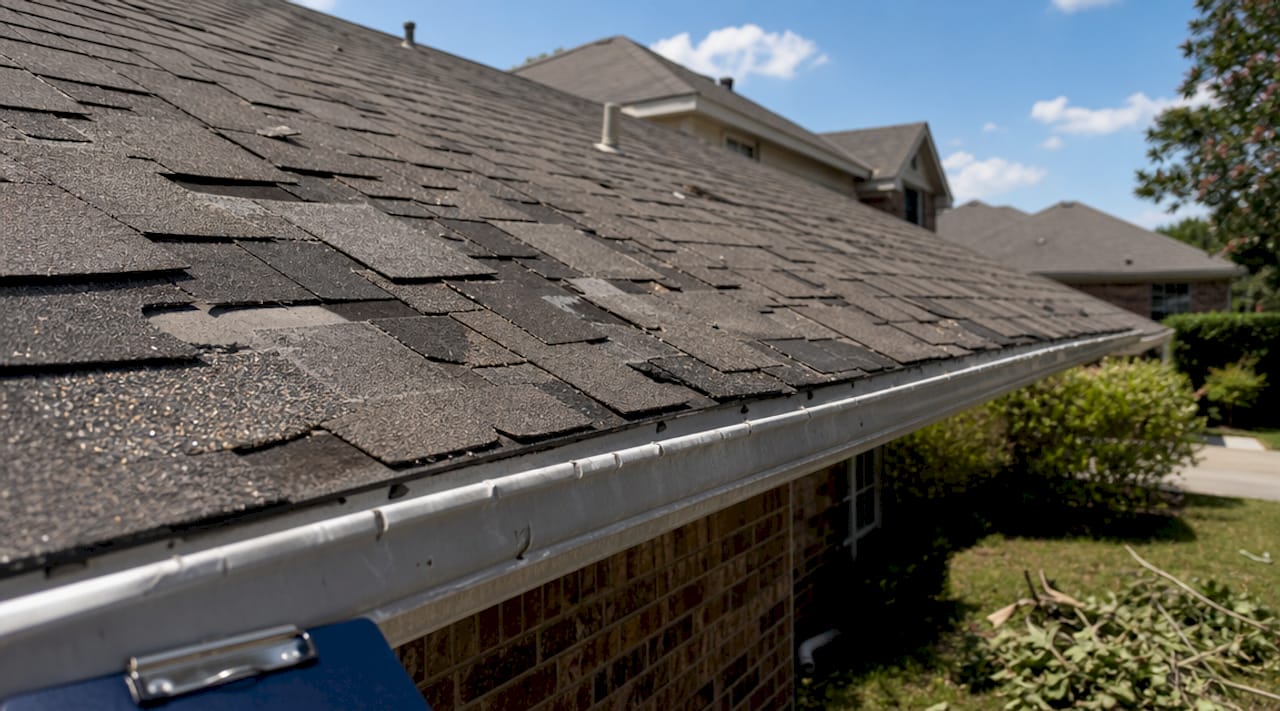
Granule loss is the subtler scar that homeowners miss most often. Hail pummels the protective granule coating off asphalt shingles, and those granules wash into your gutters and downspouts. Granule buildup in gutters signals UV protection compromise, meaning your shingles are aging faster than they should. Check your gutters after any significant storm. If you find a layer of gritty, sand-like material, that is hail damage evidence even when the roof surface looks intact from the ground.
Beyond shingles, look for these common roof damage signs:
- Dents on metal components. Gutters, downspouts, vents, and flashing absorb hail impact directly. Soft metal dents easily, and those dents tell inspectors exactly where hail struck.
- Damaged or lifted flashing. Flashing seals the joints around chimneys, skylights, and roof valleys. Wind and hail can shift or loosen it, creating leak points that may not show up for weeks.
- Bruised or soft spots on shingles. Press gently on a shingle after a hail storm. A spongy feel indicates the underlying mat has been fractured, even if the surface looks fine.
- Cracked or broken ridge caps. Ridge caps sit at the roof’s peak and take the full force of wind. Cracked caps are a clear sign of wind damage.
- Damaged fascia and soffits. These boards along the roof edge protect the rafters. Dents, cracks, or paint peeling after a storm indicate impact damage.
Pro Tip: Check your air conditioning unit and any rooftop equipment for dents after a hail storm. If soft metals on the ground level show impact marks, your roof almost certainly does too. This is one of the fastest ways to confirm hail hit your property.
How to conduct a systematic roof storm damage inspection
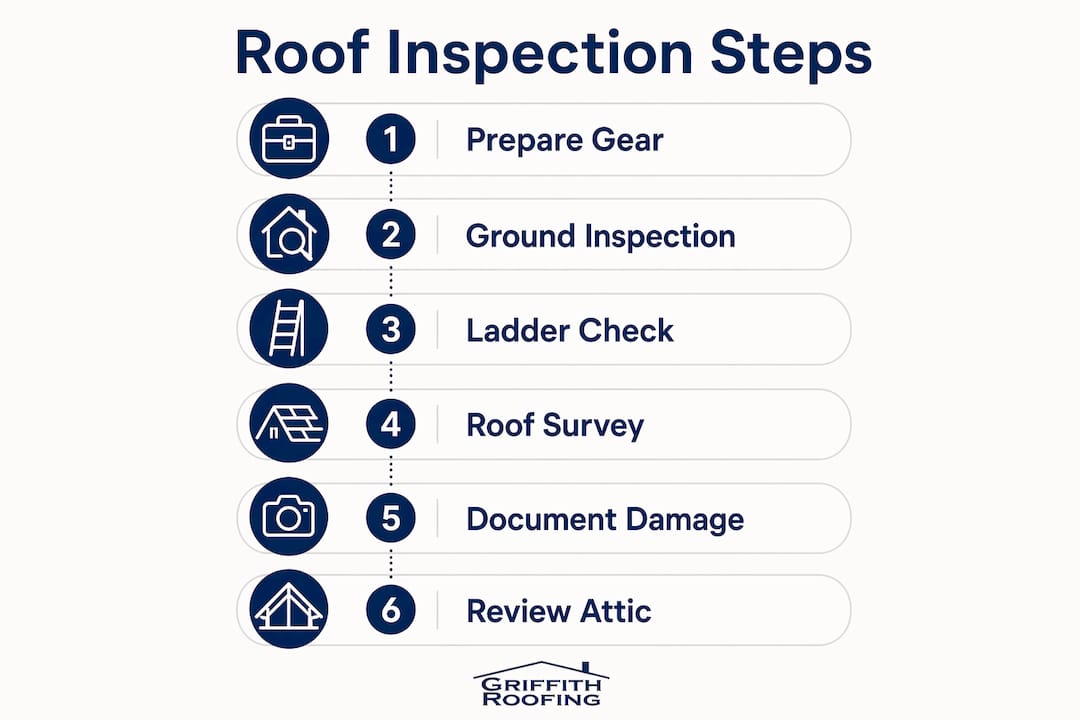
A proper inspection workflow starts at ground level and works inward, keeping you safe while capturing the most useful evidence. Never climb onto a wet or storm-damaged roof. The risk of injury is real, and walking on compromised shingles can worsen the damage.
Follow this sequence after any significant DFW storm:
- Walk the perimeter from the ground. Look at each roof plane for obvious missing shingles, debris impact zones, or sagging areas. Use binoculars to scan shingle surfaces, ridge lines, and roof edges for dents or cracks you cannot see with the naked eye.
- Inspect your gutters and downspouts. Check for dents along the gutter body and look inside for granule accumulation. Granules in gutters are hail damage evidence even when the roof surface appears intact from below.
- Examine roof penetrations and flashing. From the ground or a ladder positioned safely at the eave, look at the flashing around your chimney, skylights, and pipe boots. Any separation, lifting, or visible gaps are potential leak points.
- Check the attic. Go inside with a flashlight and look for water stains, damp insulation, or daylight showing through the decking. Attic moisture or stains often reveal hidden damage before ceiling leaks appear downstairs.
- Document everything. Photograph each area of concern with timestamps before any cleanup begins. This documentation is your insurance claim’s foundation.
- Call a professional for follow-up. A DIY ground inspection is helpful but must be complemented by a professional assessment to uncover damage that is not visible from the ground.
Pro Tip: Take your photos in the same lighting conditions, ideally overcast daylight. Direct sunlight creates glare on shingles that hides granule loss and surface fractures. Overcast light shows surface texture clearly.
Why hidden and delayed roof damage matters
The most expensive roof repairs in DFW are not caused by the storm itself. They are caused by hidden damage that goes undetected for months. Seams, flashings, and roof penetrations are the most vulnerable points, and damage to these components often leads to water intrusion that appears long after the storm has passed.
Hail and wind can break the sealant bonds around pipe boots and skylights without leaving an obvious visual mark. A flashing that looks intact from the ground may have shifted just enough to allow water under it during the next heavy rain. By the time you see a water stain on your ceiling, the moisture has likely been sitting in your roof deck or insulation for weeks.
“Inspections conducted promptly after storms provide stronger evidence for insurance claims and repairs. Timing matters because storm damage and normal wear can look similar once weathering begins.” — Intertek Building & Construction
The attic is your early warning system. Discoloration on the underside of the decking, damp insulation, or a musty smell after a storm all point to moisture intrusion before it reaches your living space. Catching it at this stage means a targeted repair rather than replacing decking, insulation, and drywall together.
For homeowners filing insurance claims, timing is critical. Post-storm inspections conducted soon after the event capture evidence that distinguishes storm damage from pre-existing wear, which is exactly the distinction your insurance adjuster will scrutinize.
Comparing roof storm damage signs by storm type
Recognizing distinct damage patterns from hail, wind, and debris simplifies accurate identification and guides the right repair strategy. DFW homeowners deal with all three regularly, often in the same storm.
| Storm type | Typical damage signs | What it means |
|---|---|---|
| Hail | Dents on metal, granule loss, bruised or cracked shingles, small punctures | Widespread surface impact; UV protection compromised across the roof |
| High wind | Missing, lifted, torn, or curled shingles; damaged ridge caps; lifted flashing | Shingle adhesion failed; water entry risk at exposed areas |
| Falling debris | Localized impact marks, holes, cracked decking, broken shingles in one zone | Structural damage possible; concentrated repair needed |
Hail damage tends to be distributed across the entire roof surface because hailstones fall at an angle and cover a wide area. Wind damage is directional. You will typically see the worst shingle loss on the side of the roof facing the prevailing wind. Debris impact is the most localized of the three. A fallen tree branch leaves a clear strike zone with surrounding intact shingles.
Here is what to look for when sorting damage by type:
- Hail indicators: Circular dents on gutters and vents, thin horizontal indented lines on shingles, granule-filled gutters, and a speckled appearance on the roof surface.
- Wind indicators: Shingles missing in rows or sections, curled shingle edges, exposed nail heads, and lifted flashing along roof edges.
- Debris indicators: A concentrated area of broken or punctured shingles, visible holes, or displaced roofing material clustered in one spot.
Understanding which storm type caused your damage helps you communicate clearly with your roofing contractor and insurance adjuster, which speeds up both the repair and the claim process.
What steps should you take after identifying roof storm damage signs?
Acting quickly after spotting storm damage roof repairs are needed protects both your home and your insurance claim. Documenting damage immediately, before any cleanup, preserves the evidence that differentiates storm damage from routine wear.
Follow these steps in order:
- Photograph everything before touching it. Capture wide shots of each roof plane, close-ups of individual damage points, and photos of your gutters and downspouts. Include something for scale, like a coin next to a dent.
- Apply temporary protection if safe to do so. A waterproof tarp secured over exposed areas prevents additional water intrusion while you wait for professional repairs. Do not attempt permanent repairs yourself.
- Contact your insurance company promptly. Report the damage and ask about your claim timeline. Bring your timestamped photos and any inspection reports to support your claim.
- Hire a reputable local roofing contractor. Choose a DFW-based company with verifiable experience in storm damage roof repairs and insurance claim support. Ask for a written inspection report you can share with your adjuster.
- Get the repair done before the next storm season. In DFW, storm seasons stack quickly. A roof compromised by one storm is far more vulnerable to the next.
Delaying action is the most common and costly mistake DFW homeowners make. What starts as a missing shingle or a lifted flashing seal can become rotted decking and mold within a single wet season.
Key takeaways
Identifying roof storm damage signs early is the single most effective way to prevent minor storm scars from becoming major structural repairs.
| Point | Details |
|---|---|
| Start with a ground inspection | Use binoculars to scan shingles, vents, and edges before considering any ladder work. |
| Gutters reveal hail damage | Granule buildup in gutters confirms hail impact even when the roof surface looks intact. |
| Hidden damage is the costliest | Flashing, seams, and penetrations fail silently; check the attic for moisture before ceiling leaks appear. |
| Document before cleanup | Timestamped photos taken immediately after the storm are your strongest insurance claim evidence. |
| Match damage to storm type | Hail spreads across the roof; wind damage is directional; debris impact is localized. |
Why I tell every DFW homeowner to inspect within 48 hours
After more than two decades of inspecting roofs across the Dallas-Fort Worth Metroplex, the pattern I see most often is not dramatic storm destruction. It is the quiet damage that homeowners walk past for months. A slightly lifted flashing here, a few missing granules there. Nothing that looks urgent from the driveway. Then the first heavy rain of the following season turns a $400 flashing repair into a $4,000 decking replacement.
DFW storms are particularly deceptive because they move fast. A hail cell can cross your neighborhood in 20 minutes and leave damage that takes a trained eye to spot. I have seen roofs that looked completely fine from the ground but had dozens of bruised shingles and a compromised pipe boot seal. The homeowner had no idea until water appeared on their living room ceiling six weeks later.
The mistake I see most often is waiting to see if a problem develops. That approach works for minor issues in other parts of your home. It does not work for roofs. Water finds every weakness, and it does not wait for a convenient time.
My honest advice: treat every significant DFW storm as a reason to inspect. You do not need to climb on the roof yourself. Walk the perimeter, check your gutters, look at your attic. Then call a professional if anything looks off. The cost of a professional inspection is a fraction of what delayed repairs will run you. Your roof is one of your home’s most valuable assets. Treat it that way.
— Mark Griffith
Get a professional storm damage inspection from Griffith Roofing

Griffith Roofing has served Dallas-Fort Worth homeowners since 2001, and storm damage assessment is one of our core specialties. After a severe storm, our team conducts thorough inspections covering shingles, flashing, gutters, penetrations, and attic conditions. We document every finding in a written report you can use directly with your insurance adjuster. Whether you need a quick post-storm check or full residential roof repair after significant damage, Griffith Roofing delivers the expertise and local knowledge DFW homeowners rely on. Contact us today to schedule your inspection and protect your home before the next storm season arrives.
FAQ
What are the first signs of roof damage after a storm?
The first signs are typically missing or lifted shingles, dents on gutters and vents, and granule accumulation in downspouts. Checking your attic for moisture or discoloration immediately after a storm can reveal hidden damage before it reaches your ceiling.
How do I know if hail damaged my roof?
Look for circular dents on metal gutters, vents, and flashing, along with granule loss visible in your gutters. Hail damage signs on shingles include bruised or soft spots and thin indented lines across the surface.
How soon should I inspect my roof after a storm?
Inspect within 48 hours of the storm passing. Prompt post-storm inspection preserves evidence that distinguishes storm damage from normal wear, which is critical for insurance claims and accurate repair estimates.
Can roof storm damage be hidden?
Yes. Damage to flashing, seams, and roof penetrations often shows no visible exterior signs but allows water intrusion during subsequent rains. Checking your attic for stains, damp insulation, or musty odors is the most reliable way to catch hidden damage early.
Do I need a professional inspection if my roof looks fine?
A ground-level check is a useful starting point, but a professional roof assessment is the only way to confirm whether subtle or hidden damage exists. Many insurance claims are supported by professional findings that a homeowner would never spot from the driveway.


