

A roofing tear-off process is defined as the complete removal of all existing roofing materials down to the bare structural deck before a new roof is installed. Industry professionals call this a “full tear-off” or “complete removal,” and it stands apart from an overlay, where new shingles go directly over old ones. The residential roof replacement process begins with this step because it is the only way to inspect the deck for hidden damage, replace deteriorated flashing, and meet both building code requirements and manufacturer warranty conditions. Skipping it is rarely a shortcut worth taking.
What is a roofing tear-off process, step by step?
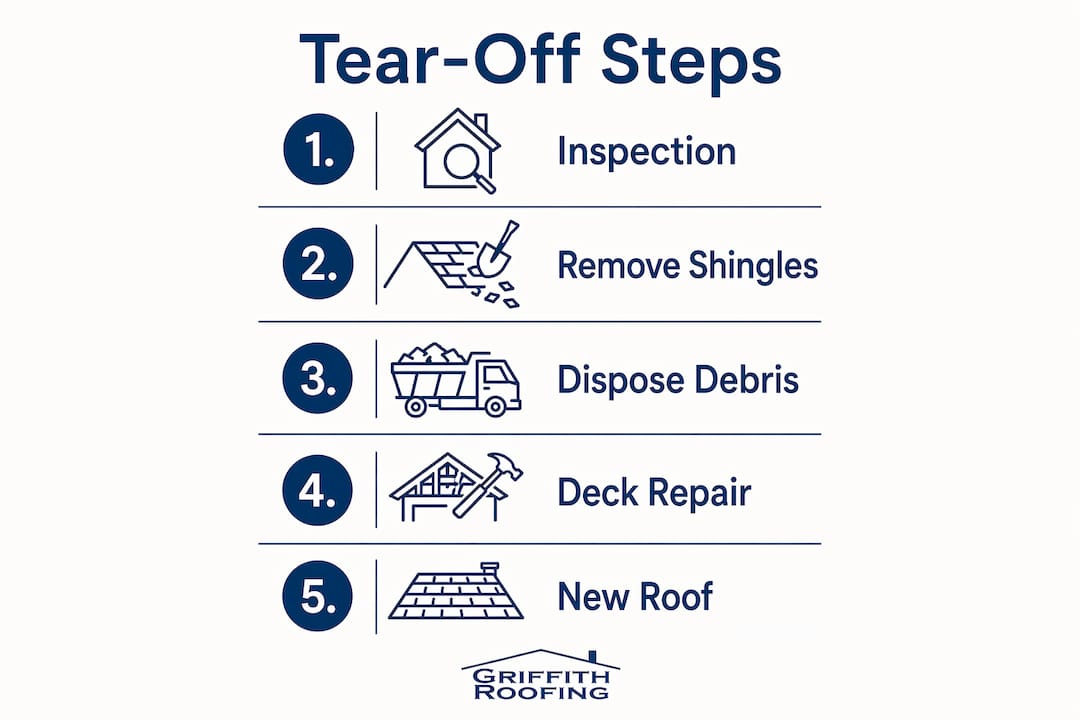
A full tear-off follows a clear sequence. Each step protects the structure beneath and sets up the new roof for a long service life.
-
Prepare the property. Before any shingles come off, the crew covers landscaping, air conditioning units, and windows with heavy tarps. Plywood sheets protect decks and patios from falling debris. This prep work prevents damage that would otherwise cost you money after the job is done.
-
Set up safety equipment. Workers wear fall harnesses, non-slip boots, safety glasses, and gloves. Ladders are secured, and roof jacks are installed on steep pitches. No reputable contractor skips this step.
-
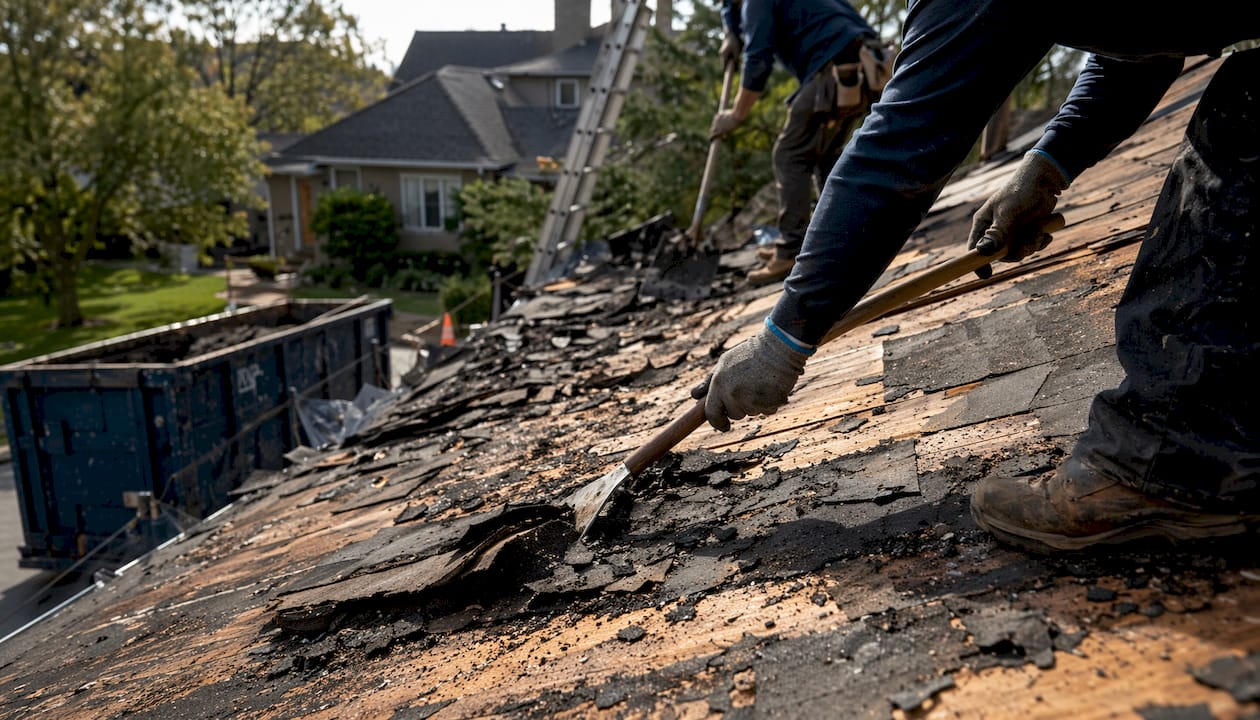
Start at the ridge and work down. Roofers use roofing shovels and pry bars to strip shingles from the peak downward. Working with gravity reduces fatigue and keeps debris from sliding under already-removed sections. Tearing off shingles in cooler weather or during early morning hours makes the work easier because heat softens asphalt and increases the effort required to pry materials free.
-
Remove old flashing and underlayment. Once shingles are gone, the crew pulls up the felt or synthetic underlayment and removes all metal flashing around chimneys, vents, and valleys. Old flashing cannot be reused reliably. Reusing old flashing is a leading cause of roof leaks, and replacement with new metal flashing is the industry standard.
-
Inspect and repair the roof deck. With the deck exposed, the crew checks every board for soft spots, rot, and fastener failure. Damaged sheathing gets replaced before anything else goes on. This is the step that makes a full tear-off worth every dollar.
-
Perform a nail cleanup pass. A magnetic roller pass is required after material removal to collect stray nails that remain embedded in the deck surface. Leftover fasteners can puncture new underlayment and create leak points before the first rain.
-
Clear and haul debris. All materials go into a dumpster staged at the property. Continuous cleanup throughout the day keeps the site safe and speeds up the final walkthrough.
Pro Tip: Ask your contractor to walk the deck with you after inspection. Seeing the condition of your sheathing firsthand helps you understand any additional repair costs before they appear on the invoice.
Why is a full tear-off necessary instead of an overlay?
Building codes set a hard limit on roofing layers. IRC guidelines restrict most residential roofs to two asphalt shingle layers. Once a roof already has two layers, a full tear-off is legally required before any new material goes on. Some local jurisdictions are stricter and allow only one layer, so checking with your municipality before planning a project matters.
Manufacturer warranties add another layer of pressure. Most shingle manufacturers require a full tear-off for their warranty to apply. Installing new shingles over old ones voids coverage in most cases, which means you carry all the risk if the new roof fails early.
The structural argument is equally strong. Old layers add significant weight to the framing. Two layers of asphalt shingles can weigh 500 to 700 pounds per square (100 square feet). Adding a third layer pushes framing beyond design loads in many homes. A tear-off eliminates that risk entirely.
Here is a direct comparison of the two approaches:
| Factor | Full tear-off | Overlay installation |
|---|---|---|
| Building code compliance | Required when 2+ layers exist | Only allowed with 1 existing layer |
| Manufacturer warranty | Typically required for full coverage | Often voids warranty |
| Deck inspection | Full access to identify damage | No deck access |
| Roof lifespan | Maximum potential lifespan | Reduced due to trapped moisture |
| Upfront cost | Higher | Lower |
The roofing warranty benefits tied to a full tear-off protect your investment for decades. An overlay saves money on day one and costs more over the life of the roof.
How long does the roofing tear-off take, and what does it cost?
Most homeowners want a clear timeline before they commit. A full roof tear-off typically takes 1–2 days for most residential roofs. Smaller single-story homes can be completed in as little as 4–6 hours with an experienced crew. That timeline shifts based on roof size, pitch, weather conditions, and the number of layers being removed.
Debris disposal is a real cost that surprises many homeowners. Dumpster rentals for roofing debris typically run $300–$500 for a 20-cubic-yard container. For guidance on choosing the right bin size, the dumpster sizing guide from A to Z Construction breaks down options clearly. Permits, deck repairs, and additional labor for steep or complex roofs add to the total, so build a buffer into your budget.
Pro Tip: Schedule your tear-off and new roof installation back to back. Leaving the bare deck exposed overnight is acceptable, but leaving it open for multiple days during storm season in Texas invites water damage that erases any savings.
For a detailed look at what to expect from start to finish, the Texas roof replacement timeline guide covers the full sequence specific to DFW conditions.
What safety and property protection measures matter most?
A tear-off is physically demanding and carries real fall risk. Professional crews follow OSHA fall protection standards, which require harnesses and anchor points on roofs with a pitch above 4:12. Homeowners watching from the ground should stay clear of the drop zone on all sides of the house.
Property protection follows a specific checklist:
- Cover all landscaping, shrubs, and flower beds with heavy tarps before work begins.
- Place plywood sheets over decks, patios, and any outdoor furniture that cannot be moved.
- Close all windows and doors to keep dust and debris out of the home.
- Move vehicles out of the driveway and away from the work area.
- Protect air conditioning units and utility meters with plywood or tarps.
Debris containment and continuous cleanup throughout the workday are not optional. A clean job site protects both workers and your property. Nails scatter widely during removal, and a single missed fastener in the driveway can flatten a tire or injure a child.
Weather timing matters too. Wet decking is slippery and dangerous. Reputable contractors check forecasts and will not start a tear-off if rain is expected before the new underlayment can go down.
How does a tear-off affect roof longevity and warranty eligibility?
The tear-off is where the real value of a roof replacement gets built. Without a full tear-off, hidden issues like dry rot, soft spots, and fastener failure stay buried under new shingles. Those problems do not disappear. They grow, and they shorten the life of the new roof above them.
Replacing all flashing during the tear-off is equally critical. Old flashing reuse often leads to premature roof failure because micro-damage in aged metal creates leak paths that new caulk cannot seal permanently. New step flashing, valley flashing, and boot flashing around every penetration give the new roof a clean, watertight foundation.
Understanding roof decking helps here. The deck is the structural layer that holds every fastener in the new roof. If it is compromised, the shingles above it will not perform to their rated lifespan regardless of quality.
“Professional roofers consistently identify the primary benefit of a full tear-off as complete deck access. That access is the only way to find and fix the damage that would otherwise cause leaks and costly repairs within years of a new installation. Skipping it trades a short-term saving for a long-term liability.”
Manufacturer warranties for premium shingle lines from brands like GAF and Owens Corning require full tear-off installation for their strongest coverage tiers. A contractor who recommends an overlay when two layers already exist is not protecting your investment.
Key Takeaways
A full roofing tear-off is the only method that exposes the deck for inspection, meets building code layer limits, and satisfies manufacturer warranty requirements for maximum coverage.
| Point | Details |
|---|---|
| Full removal is often required by code | IRC limits most roofs to two asphalt shingle layers; a third requires complete tear-off first. |
| Deck inspection prevents future leaks | Hidden rot and soft spots only become visible after all old materials are stripped away. |
| Flashing must always be replaced | Reusing old flashing is a leading cause of leaks; new metal flashing is the industry standard. |
| Timeline is typically 1–2 days | Most residential tear-offs finish in one to two days, with small homes done in 4–6 hours. |
| Debris disposal adds $300–$500 | Budget for a 20-cubic-yard dumpster rental as part of your total replacement cost. |
What I’ve seen after 20+ years of tear-offs in DFW
Every homeowner I talk to wants to know if they can save money with an overlay. My honest answer is always the same: you can, but you are borrowing against your roof’s future. In over two decades of roofing in the Dallas-Fort Worth area, I have pulled off overlays and found decking so saturated with trapped moisture that it crumbled in my hands. The homeowner had no idea. The previous overlay had sealed that damage in like a lid on a pot.
The other thing I tell people is this: DIY tear-offs are genuinely dangerous. I have seen homeowners attempt them on a Saturday morning and end up in the emergency room by noon. A steep pitch with loose shingles underfoot is not a forgiving surface. The cost of a professional crew is not just labor. It is fall protection, insurance, and two decades of knowing exactly where to step.
What I have also learned is that the tear-off is where you separate a good contractor from a cheap one. A contractor who rushes the nail cleanup pass or skips the deck inspection is cutting corners you will pay for in three to five years. Ask to see the deck before underlayment goes down. Any contractor worth hiring will welcome that conversation.
— Mark Griffith
Griffith roofing’s approach to residential tear-offs in DFW
Griffith roofing has handled residential roof replacements across the Dallas-Fort Worth Metroplex since 2001. Every project starts with a thorough tear-off, full deck inspection, and new flashing installation before a single new shingle goes on.

Our crews follow IRC guidelines and manufacturer installation requirements on every job, which means your new roof qualifies for the warranty coverage you are paying for. We handle debris removal, permits, and scheduling so you do not have to coordinate moving parts during a stressful project. If cost is a concern, financing options are available to spread the investment over time. Contact Griffith roofing to schedule a residential roofing consultation and get a clear, honest quote for your tear-off and replacement project.
FAQ
What is the difference between a tear-off and an overlay?
A tear-off removes all existing roofing materials down to the bare deck, while an overlay installs new shingles directly over the old ones. Building codes typically prohibit overlays once a roof already has two existing shingle layers.
How long does a residential roof tear-off take?
Most residential tear-offs take 1–2 days, with smaller single-story homes completed in as little as 4–6 hours by an experienced crew.
Does a tear-off void my shingle warranty?
No. A full tear-off is what most manufacturers require to activate their strongest warranty tiers. Installing new shingles over old ones often voids manufacturer coverage.
How much does debris disposal cost after a tear-off?
Dumpster rentals for roofing debris typically run $300–$500 for a standard 20-cubic-yard container, and this cost is usually separate from the contractor’s labor quote.
Can I stay in my home during a roof tear-off?
Yes. A tear-off does not require you to vacate, but expect significant noise throughout the workday. Keep children and pets away from the exterior of the home during active removal.


