

Storm damage to Dallas roofs falls into four primary categories: hail impact, wind uplift, water intrusion, and debris damage. Each type leaves distinct scars on your roof and demands a different repair response. The Dallas-Fort Worth area sits in one of the most storm-active corridors in the United States, where EF-2 tornado winds reaching 135 mph and large hail events are seasonal realities. Knowing the types of storm damage Dallas roofs face is the first step toward protecting your home and making confident repair decisions.
1. What are the most common types of hail damage on Dallas roofs?
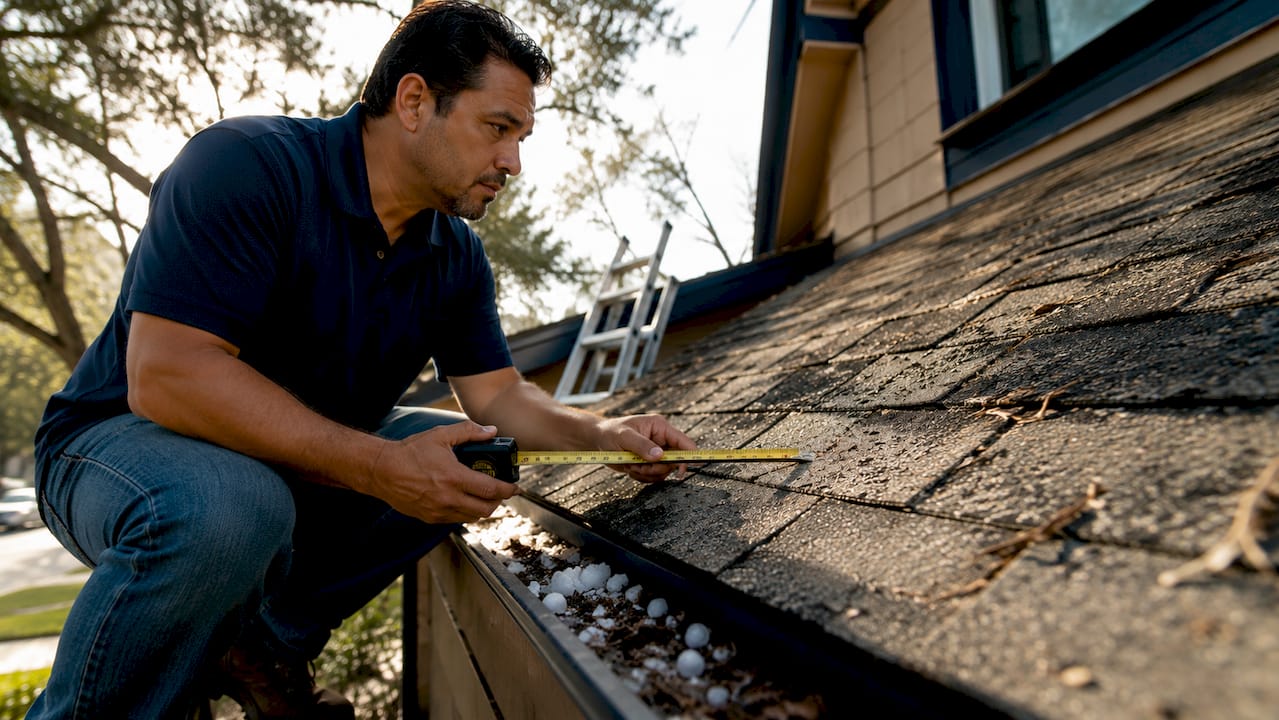
Hail is the most frequent cause of roof damage across North Texas. When hailstones pummel asphalt shingles, they knock loose the protective granule coating, bruise the fiberglass mat underneath, and sometimes crack the shingle surface entirely. On metal roofing, hail leaves visible dents that compromise the panel’s structural integrity over time.
The signs of hail damage are specific and worth knowing:
- Granule loss: Granules collect in gutters and downspouts after a hail event. Granules in gutters are one of the clearest early indicators of hail impact.
- Bruised shingles: Press a shingle and it feels soft or spongy in the impact zone. This bruising weakens the shingle’s ability to shed water.
- Cracked or fractured shingles: Larger hailstones crack shingles outright, creating immediate leak pathways.
- Dented metal components: Gutters, flashing, and metal vents show circular dents that confirm hail size and storm intensity.
- Punctured single-ply membranes: On flat roof sections, hail can fracture the membrane and expose the decking below.
One fact that surprises most homeowners: repeated hail impacts weaken a shingle’s internal fiberglass matting over time, causing roofs to fail even without visible leaks after a single storm. Damage is often cumulative. A roof that looks fine after one storm may be structurally compromised after the second or third hit.
Pro Tip: Schedule a professional inspection within 48 hours of any hail event, even if you see no obvious damage from the ground. Early detection prevents small bruises from becoming full leaks.
2. How does wind damage show up on Dallas roofs after storms?
Wind damage is the second most common storm roof damage type in the Dallas area, and it shows up in predictable patterns. Strong winds attack roofs at their weakest points first: edges, corners, and ridge lines. Here is how wind damage typically progresses:
- Shingle uplift: Wind gets under shingle tabs and lifts them. Once the seal strip breaks, the shingle flaps in subsequent winds and eventually tears free.
- Missing shingles: Fully detached shingles expose the underlayment and decking to rain immediately.
- Displaced flashing: Metal flashing around chimneys, skylights, and vents pulls away from its sealed position, creating open gaps.
- Damaged ridge caps: Ridge cap shingles sit at the roof’s peak and take the full force of wind. They are often the first to go.
- Structural framing stress: In tornado-level events, wind uplift creates suction forces that can twist roof framing and shift the entire structure.
Wind commonly lifts and peels roofing materials at edges and corners first, which is why post-storm inspections should start at the roof perimeter. North Texas tornado roof damage explained by roofing professionals consistently points to edge failures as the entry point for broader structural loss.
Pro Tip: After any storm with winds above 60 mph, walk your yard and look for shingle tabs or ridge cap pieces on the ground. Finding even one piece means your roof needs a professional inspection that same day.
3. What types of water damage follow storm roof damage in Dallas?
Water damage is the consequence of every other storm damage type left unaddressed. Once hail, wind, or debris opens a gap in your roof, water finds it. Interior leaks follow roof openings created by hail or wind damage, and the internal destruction often costs far more than the original roof repair.
Watch for these water damage signs inside your home:
- Dark ceiling spots: Brown or gray stains on drywall or ceiling tiles indicate active or past water intrusion.
- Softened roof decking: Water-saturated plywood decking feels spongy underfoot and loses its structural strength quickly.
- Mold growth: Mold appears within 24–72 hours of sustained moisture. It spreads through attic insulation and framing if not caught early.
- Damaged insulation: Wet attic insulation loses its R-value and becomes a breeding ground for mold and rot.
The most dangerous water damage is the kind you cannot see. Water travels along rafters and decking before it drips through your ceiling, so the visible stain is rarely directly above the actual leak point. A thorough roof storm damage inspection traces water paths from the entry point through the attic structure.
4. How does debris impact add to storm damage on Dallas roofs?
Falling debris is a serious and often underestimated source of roof damage during Dallas storms. Tree limbs, branches, and airborne objects carried by tornado-level winds can strike a roof with enough force to cause immediate structural damage.
Falling limbs during high winds are a frequent cause of roof punctures and surface damage in Dallas storms. Debris damage typically includes:
- Punctures: Heavy branches drive through shingles and decking, creating large open holes that require immediate patching.
- Surface scratches: Dragging branches strip granules and gouge shingle surfaces, accelerating weathering.
- Displaced materials: Impact can shift ridge caps, push flashing out of position, and knock gutters loose.
- Compounded damage: Debris that lands and sits on the roof traps moisture, accelerating rot in the decking below.
Preventive tree trimming is the most effective way to reduce debris damage risk. Branches that overhang your roof by more than a few feet become projectiles in a 70 mph wind event. After any storm, remove debris from the roof surface promptly. Leaving it in place compounds the damage and complicates insurance documentation. For a broader look at common roof issues that overlap with storm damage, understanding the full range of vulnerabilities helps you ask better questions during an inspection.
5. How can Dallas homeowners tell storm damage from normal wear?
Distinguishing fresh storm damage from long-term wear is one of the most consequential skills a homeowner can develop. It directly affects your insurance claim outcome. Insurance carriers often attribute roof failures to pre-existing conditions or wear and tear rather than storm events, creating what claims professionals call “causation battles.”
Fresh storm damage has specific characteristics. Hail impacts create sharp-edged granule loss with exposed mat fibers. Wind damage tears shingles along clean lines. Debris punctures have defined edges. Wear and tear, by contrast, produces gradual granule loss across the entire surface, curling from UV exposure, and cracking from thermal cycling over years.
A qualified roofing consultant’s report that maps damage patterns to specific storm forces is often decisive in insurance claim settlements. Experts correlate uplift patterns, fastener failures, and impact locations to documented weather events. This kind of forensic documentation is the difference between a full claim payout and a denial.
Pro Tip: Take dated photos of your roof every spring before storm season. A clean baseline photo set proves that damage found after a storm did not exist beforehand, which shuts down most insurer causation arguments.
Homeowners must document both hail and wind damage in combined insurance claims to avoid partial claim denials from damage allocation disputes. Combining documentation with forensic pattern analysis is the standard approach for successful Texas storm claims. Understanding lasting repair techniques also helps you evaluate whether a contractor’s proposed fix addresses the root cause or just the surface symptom.
Once you have a clear picture of the damage type, the next decision is whether repair or full replacement makes more sense. The repair vs. replacement decision depends on the extent of damage, the age of the roof, and your insurance coverage.
Key takeaways
Dallas roofs face four distinct storm damage types, and identifying each one correctly determines whether you repair, replace, or file a successful insurance claim.
| Point | Details |
|---|---|
| Hail damage is cumulative | Multiple hail events weaken shingles internally before leaks appear; inspect after every storm. |
| Wind attacks edges first | Missing shingles at roof edges and corners signal broader structural stress that needs immediate assessment. |
| Water damage hides in attics | Ceiling stains appear far from the actual leak point; trace water paths through the attic structure. |
| Debris compounds other damage | Branches and airborne objects puncture decking and displace flashing, worsening existing storm damage. |
| Documentation wins claims | Dated photos and a consultant’s damage pattern report are the strongest tools against insurer causation disputes. |
What I’ve learned after 20+ years of Dallas storm seasons
I’ve been on thousands of roofs across the DFW area since 2001, and the pattern I see most often is this: homeowners wait too long. A storm rolls through, the roof looks fine from the driveway, and nobody calls for an inspection. Then, six months later, a ceiling stain appears and the insurance window has closed.
The most expensive mistake I see is treating storm damage as a visible-only problem. Hail bruising does not always show up as a crack or a leak right away. It shows up as a failed roof two years later, right after the warranty expires or the insurance claim period closes. By then, the homeowner is paying out of pocket for what should have been a covered repair.
My honest advice: treat every significant storm as a reason to get on the phone with a qualified local roofer within 48 hours. Not to file a claim immediately, but to document what is there. A professional inspection report dated close to the storm event is worth more than any amount of after-the-fact evidence. It gives you options. Without it, you are at the mercy of an adjuster who has every incentive to call your damage “pre-existing.”
The DFW area is not going to get less stormy. If anything, the frequency and severity of hail events has increased over the past decade. The homeowners who come out ahead are the ones who treat their roof like any other major asset: they inspect it regularly, document its condition, and act fast when something changes.
— Mark Griffith
Griffith roofing is ready when the next storm hits
When a Dallas storm leaves your roof bruised, torn, or leaking, the clock starts immediately. Griffith roofing has served DFW homeowners since 2001 with storm damage assessments, insurance claim documentation, and full roof repair and restoration services.
Griffith roofing’s team inspects every damage type covered in this article: hail impact, wind uplift, water intrusion, and debris damage. The team works directly with insurance adjusters and provides the forensic documentation that supports your claim. Whether you need targeted residential roof repair or a full replacement assessment, Griffith roofing handles the process from first inspection to final sign-off. Reach out after any storm event and get a professional report while the evidence is fresh.
FAQ
What are the main types of storm damage on Dallas roofs?
The four main types are hail impact, wind uplift, water intrusion, and debris damage. Each type affects different roof components and requires a specific repair approach.
How soon should I inspect my roof after a Dallas storm?
Schedule a professional inspection within 48 hours of any significant storm. Early documentation strengthens insurance claims and catches damage before it leads to interior leaks.
Can hail damage a roof without causing an immediate leak?
Yes. Repeated hail impacts weaken the fiberglass matting inside shingles, causing roofs to fail months or years later without any visible leak after the initial storm.
How do I prove storm damage versus pre-existing wear to my insurer?
A qualified roofing consultant’s report that maps damage patterns to documented storm events is the most effective evidence. Dated baseline photos taken before storm season also help establish that damage is new.
Does wind or hail cause more roof damage in North Texas?
Both are serious, but hail is the more frequent cause of roof damage across the Dallas-Fort Worth area. Wind damage, including north Texas tornado roof damage, tends to be more severe per event but occurs less often than hail storms.


