

Texas freeze roof damage repair is the process of assessing, mitigating, and restoring roof systems compromised by freeze-thaw cycles, ice dams, and related moisture intrusion. When a hard freeze hits the Dallas-Fort Worth area, the damage it leaves behind is rarely obvious from the street. Shingles crack, flashing gaps open, and ice dams force water under your roof’s surface. The longer you wait to act, the more expensive the fix becomes. This guide walks you through every step: spotting damage early, protecting your home immediately after a freeze, filing an insurance claim, and choosing the right contractor for professional repairs.
How does a Texas freeze damage your roof?
Freeze-thaw cycles are the root cause of most ice dam formation and related roof deterioration in Texas. When temperatures drop below freezing overnight and climb back above 32°F during the day, water expands as it freezes and contracts as it thaws. That repeated stress cracks shingles, separates flashing from chimneys and vents, and loosens gutters from their hangers.
Ice dams form when heat escaping from your attic warms the upper roof surface, melting snow or ice that then refreezes at the colder eaves. The resulting dam traps liquid water behind it, and that water has nowhere to go except under your shingles. Freeze-thaw cycles force moisture under shingles and lead to leaks that often don’t appear inside your home until days after the thaw. By then, the water has already traveled through your roof deck and into your insulation.
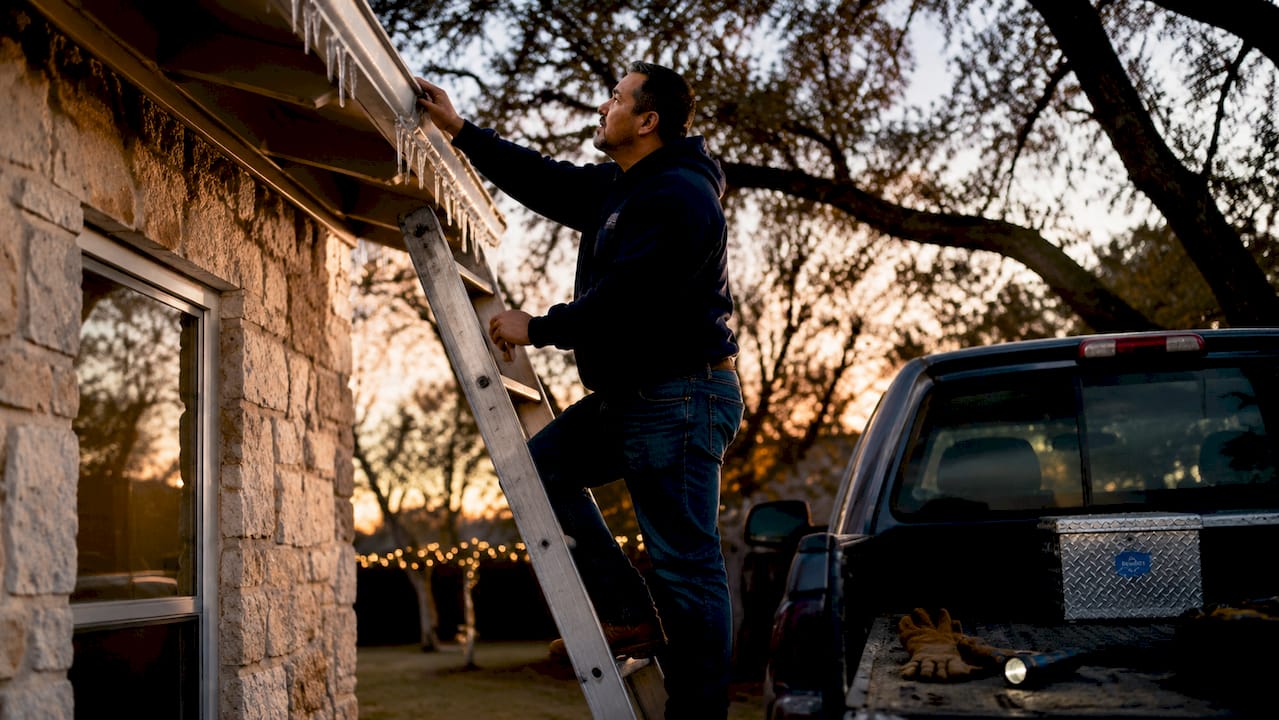
Texas roofs are particularly vulnerable because the state’s climate swings between extremes. A roof designed for hot summers is not built to absorb repeated freeze cycles the way roofs in Minnesota or Colorado are. That mismatch makes early detection and prompt freeze damage roof repair non-negotiable.
Signs of freeze damage to look for:
- Cracked, curled, or missing shingles along the eaves and ridgeline
- Visible ice buildup or icicles hanging from gutters
- Sagging or detached gutters pulling away from the fascia
- Granule loss visible in downspout runoff or on the ground below
- Flashing gaps around chimneys, skylights, or pipe boots
- Water stains on interior ceilings or walls near exterior edges
Pro Tip: Most freeze damage is not visible from the ground. After any hard freeze event, schedule a professional roof inspection after freeze conditions to catch hidden damage before it becomes a structural problem.
What should you do immediately after a Texas freeze event?
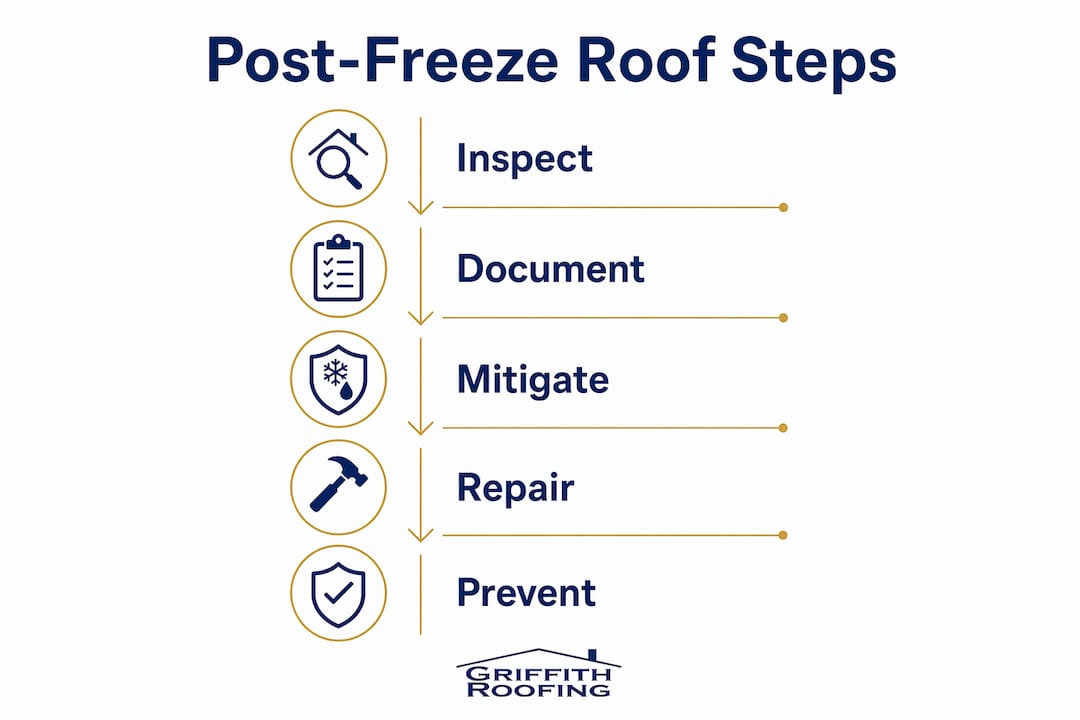
Speed matters more than most homeowners realize. Ignoring ice dam water intrusion risks mold, mildew, and major structural damage. Mold can begin growing within 24 to 48 hours of water intrusion, and structural wood rot follows within weeks. Emergency roof repair in Texas starts with a safe, methodical response.
Follow these steps in order:
- Stay off the roof. Ice and wet surfaces are extremely dangerous. Assess from the ground or from upper-floor windows first.
- Check your attic and ceilings. Look for active dripping, water stains, or sagging drywall. These are signs of active water entry that require immediate attention.
- Cover damaged areas with tarps. If you can safely access the roof or hire a professional to do so, heavy-duty polyethylene tarps secured over damaged sections stop additional water from entering. This step is critical for your insurance claim.
- Document everything before any cleanup. Take dated photos and videos of all exterior damage, including cracked shingles, ice dams, and gutter damage, as well as interior water stains or mold. Capturing exterior and interior evidence with dates is vital for strong insurance claims and helps contractors accurately scope repairs.
- Call a licensed roofing contractor for emergency mitigation. Prompt professional help limits further damage and reduces mold risk. Do not wait for the ice to fully melt before making the call.
- Notify your insurance company. File your claim as soon as possible. Delayed reporting can complicate or reduce your payout.
Pro Tip: Keep a folder, physical or digital, with your roof’s installation date, previous repair receipts, and any inspection reports. This documentation proves your roof was properly maintained and directly counters insurance denial arguments based on wear and tear.
A common mistake Texas homeowners make is waiting for ice dams to melt on their own before calling for help. Prompt mitigation reduces water intrusion and downstream mold and structural damage far more effectively than a passive approach. Every hour of delay adds to the repair bill.
How do you file an insurance claim for freeze roof damage in Texas?
Most standard Texas homeowners insurance policies cover sudden freeze-related roof damage, provided the homeowner maintained the roof adequately before the event. The key word is sudden. Insurance carriers scrutinize timing and damage cause. Sudden freeze events are covered whereas gradual deterioration is not. That distinction is the difference between a full payout and a denied claim.
Here is what strengthens your claim:
- Dated photo and video documentation of all damage, both exterior and interior
- Proof of prior maintenance, including inspection reports and repair receipts
- Mitigation records, such as receipts for tarps, emergency services, or temporary repairs
- A written contractor estimate from a licensed roofing professional that itemizes the damage
Under Texas Insurance Code §542, insurers must acknowledge your claim within 15 calendar days and pay promptly after acceptance. Late payments carry financial penalties for the insurer. Knowing this timeline gives you leverage if your carrier drags its feet.
| Claim stage | What to do |
|---|---|
| Immediately after freeze | Document damage with dated photos and videos indoors and outdoors |
| Within 24 to 48 hours | File claim with insurer and begin mitigation with tarps or emergency repairs |
| Adjuster inspection | Be present, walk the adjuster through every damaged area, and provide your contractor’s written estimate |
| After adjuster visit | Compare adjuster’s report to your contractor’s scope; dispute underpayments in writing |
The most common reasons Texas insurers deny freeze damage claims are pre-existing wear and tear and failure to mitigate. Both are avoidable. Maintain your roof annually, act fast after a freeze, and document every step. For a detailed breakdown of how Texas insurance payouts are calculated, Griffith Roofing’s guide on Texas roof insurance payouts covers the process in depth.
What repair options exist for freeze-damaged roofs in Texas?
Professional freeze damage roof repair in Texas covers a range of services depending on what the freeze destroyed. Shingle replacement addresses surface cracking and granule loss. Flashing repair seals the gaps around chimneys, vents, and skylights that freeze cycles pry open. Gutter restoration reconnects or replaces gutters that ice weight has pulled from the fascia. Each repair type requires a licensed contractor who understands both the damage mechanism and Texas building code requirements.
One of the most important code-driven protections is ice and water shield underlayment. Building codes require ice and water membranes extending at least 24 inches inside the exterior wall line to prevent ice dam water backup. Skipping this layer can void manufacturer warranties and weaken insurance claims. Any contractor who does not mention ice and water shield during a repair estimate is not giving you a complete solution.
| Repair type | What it addresses |
|---|---|
| Shingle replacement | Cracked, curled, or missing shingles from freeze-thaw stress |
| Flashing repair or replacement | Gaps around chimneys, vents, and skylights opened by ice expansion |
| Ice and water shield installation | Protects eaves and valleys from ice dam water backup per building code |
| Gutter restoration | Reattaches or replaces gutters damaged by ice weight |
| Attic insulation and ventilation upgrade | Corrects heat loss that causes ice dams to form in the first place |
Repeat repairs without addressing attic heat loss often fail. Surface-level fixes like shingle replacements without thermal control lead to recurring ice dams and leaks. The most durable winter roof repairs in Texas combine surface restoration with attic insulation and ventilation upgrades that stop ice dams from forming again.
Pro Tip: Ask every contractor you interview whether their repair plan includes an attic thermal assessment. If they only quote shingles and flashing without evaluating your insulation and ventilation, you are paying for a partial fix that will likely fail in the next freeze.
When selecting a contractor, verify their Texas roofing license, check that they carry general liability and workers’ compensation insurance, and ask specifically about their experience with ice barrier installation. Get at least two written bids and compare the scope of work, not just the price.
Which preventive steps reduce future freeze roof damage?
Prevention costs far less than repair. The goal is to stop ice dams from forming and to catch minor damage before a freeze turns it into a major failure. Proper attic insulation and ventilation prevent the uneven roof temperatures that create ice dams, addressing the root cause rather than the symptom.
Annual maintenance checklist for Texas homeowners:
- Schedule a professional roof inspection every fall before freeze season and every spring after it
- Clean gutters in October and install gutter guards to prevent ice buildup at the eaves
- Have an insulation contractor assess your attic’s R-value and ventilation balance
- Inspect and reseal flashing around all roof penetrations before temperatures drop
- Remove debris from the roof surface that can trap moisture and accelerate freeze damage
- Address any minor shingle damage or granule loss before winter arrives
Heat cables installed along vulnerable eave sections provide an additional layer of protection for homes that have experienced recurring ice dams. They are not a substitute for proper insulation and ventilation, but they work well as a supplemental measure in particularly exposed areas. Safe snow removal using a roof rake with a telescoping handle, never a metal shovel, can also reduce ice dam formation after heavy snowfall without damaging your shingles.
Pro Tip: The best time to schedule a preventive roof inspection is late October or early November. Contractors are less busy than after a storm, and you have enough time to complete any repairs before the first hard freeze hits.
Key takeaways
Texas freeze roof damage repair requires fast action, thorough documentation, and repairs that address both surface damage and the underlying attic heat loss driving ice dam formation.
| Point | Details |
|---|---|
| Act within 24 to 48 hours | Tarp damaged areas and document everything before mold and structural damage set in. |
| Document for insurance success | Dated photos of exterior and interior damage directly support Texas insurance claims and counter denial arguments. |
| Know your legal rights | Texas Insurance Code §542 requires insurers to acknowledge claims within 15 days and pay promptly after acceptance. |
| Demand ice and water shield | Building code requires this membrane at eaves and valleys; any repair that omits it is incomplete. |
| Fix the attic, not just the shingles | Insulation and ventilation upgrades stop ice dams from recurring and protect your repair investment. |
What I’ve learned after 20-plus years of freeze damage repairs in Texas
After more than two decades with Griffith Roofing, the pattern I see most often is this: a homeowner calls us after a freeze, we find significant damage, and then they tell us they noticed something off weeks earlier but assumed it would be fine. That delay almost always doubles the repair cost. Water does not wait, and neither should you.
The insurance side of freeze damage surprises a lot of homeowners. Texas policies do cover sudden freeze events, but carriers are trained to look for any evidence of pre-existing neglect. I have seen legitimate claims denied because the homeowner could not produce a single inspection record. A $200 annual inspection can protect a $15,000 claim. That math is hard to argue with.
The repair advice I give every homeowner is the same: do not let a contractor sell you shingles alone. I have seen roofs repaired three times in five years because nobody fixed the attic. Partial fixes without addressing the eave and attic thermal pathway cause recurring freeze damage and waste money on repeated repairs. A real fix addresses the surface, the flashing, the ice barrier, and the thermal performance of the attic together. That is the only repair that holds.
Being proactive before freeze season is the single most cost-effective thing a Texas homeowner can do. Clean gutters, a fall inspection, and a quick attic check take a few hours and cost a fraction of emergency repairs. After two decades of seeing what freezes do to roofs in the DFW area, I can tell you with confidence: the homeowners who prepare are the ones who come through a hard winter without a crisis.
— Mark Griffith
How Griffith Roofing helps after a Texas freeze
When a hard freeze leaves your roof damaged, you need a team that knows exactly what to look for and how to fix it right the first time.
Griffith Roofing has served Dallas-Fort Worth homeowners since 2001, and freeze damage repair is one of our core specialties. We offer emergency tarping and mitigation to stop water intrusion immediately, licensed installation of ice and water shield underlayment per Texas building code, and attic insulation and ventilation assessments that address the root cause of ice dams. Our team also helps you navigate the insurance claim process, from documentation to adjuster meetings, so you receive fair compensation. Explore our residential roof repair services or our full residential roofing solutions to get started with a free inspection and a personalized repair plan.
FAQ
What does Texas freeze roof damage repair typically cost?
Repair costs vary widely based on damage severity, ranging from a few hundred dollars for minor flashing repairs to several thousand for full shingle replacement with ice barrier installation. Most Texas homeowners insurance policies cover sudden freeze damage, which can significantly reduce your out-of-pocket expense.
How soon after a freeze should I get a roof inspection?
Schedule a professional inspection within a few days of a freeze event, even if you see no visible damage from the ground. Freeze-thaw cycles cause hidden leaks that only appear after the thaw, and early detection prevents far more expensive repairs.
Can I repair freeze roof damage myself?
Minor tasks like placing tarps or cleaning gutters are safe for most homeowners, but actual roof repairs require a licensed contractor. DIY shingle patches without proper ice barrier installation and flashing work often mask the damage rather than fix it, leading to recurring leaks.
What is an ice dam and why does it cause roof leaks?
An ice dam is a ridge of ice that forms at the roof’s edge when heat escaping from the attic melts snow above and it refreezes at the colder eaves. The trapped water backs up under shingles and causes leaks that can damage insulation, drywall, and structural framing.
Does Texas homeowners insurance cover freeze roof damage?
Most standard Texas homeowners policies cover sudden freeze-related roof damage. Insurance companies focus on proof that the damage was sudden rather than the result of long-term neglect, so thorough documentation and a maintained roof are critical to a successful claim.


