

A Texas roof replacement follows a defined sequence of phases that typically spans 2–4 weeks from first contact to final walkthrough. That total includes inspection, material selection, permitting, and physical installation. Texas homeowners planning a replacement in 2026 face specific variables: summer heat, active storm seasons, and shifting material availability. Understanding the texas roof replacement timeline expectations before your project starts puts you in control of the schedule rather than at the mercy of it. Griffith roofing has managed this process for DFW homeowners since 2001, and the phases below reflect what actually happens on the ground.
1. How long does the full Texas roof replacement timeline take?
Most residential roof replacements take 2–4 weeks total when you count every phase from inspection through final cleanup. The physical installation is just one to three days of that window. The rest of the time goes to scheduling, permits, material delivery, and weather coordination. Homeowners who understand this avoid the frustration of thinking their project is stalled when it is actually moving through normal administrative steps.
The five major phases are:
- Initial inspection and estimate: 1–3 days after first contact
- Material selection and contract signing: 3–7 days depending on your decision pace
- Permitting and regulatory approval: 5–10 days or longer in some Texas municipalities
- Physical installation: 1–5 days depending on roof size and material type
- Final walkthrough and cleanup: same day as installation completion
Each phase feeds the next. A delay in permitting pushes installation. A slow material decision pushes everything downstream. Knowing the sequence helps you act quickly at each decision point.
2. Initial inspection and estimate: the first 1–3 days
The inspection phase is the fastest part of the project. Most contractors schedule a free inspection within one to three days of your first call, depending on their current workload and your property’s accessibility. Griffith roofing conducts a thorough assessment that identifies damaged decking, flashing issues, and ventilation problems before a single shingle is ordered.
Being present or reachable during the inspection speeds up the process. Contractors need to ask questions about your preferences, budget range, and any known problem areas. Delayed responses add days to the schedule before the project even officially begins.
What happens during a professional inspection:
- Visual assessment of shingles, flashing, gutters, and ridge caps
- Identification of soft spots that signal decking damage
- Measurement of total roof square footage for accurate material estimates
- Notation of roof pitch and complexity factors that affect installation time
- Written estimate delivered within 24–48 hours of the site visit
Pro Tip: Clear your driveway and unlock any gate access before the inspector arrives. A crew that can move freely completes the assessment faster and gives you a more accurate estimate.
3. Material selection, contract signing, and scheduling
Material selection is where homeowners most often slow down their own project. The decision window typically runs 3–7 days, but some homeowners take two weeks to finalize their choice. That delay pushes your installation date back by the same amount of time.

Material type directly affects installation duration. Asphalt shingles install in 1–2 days on a standard home. Metal roofing and tile systems require 2–5 days. Your material choice is not just an aesthetic decision. It is a scheduling decision.
Common material options and their timeline implications:
- Asphalt shingles: Fastest to install, widely available in 2026, lowest disruption window. Review the 2026 shingle options before your appointment to save decision time.
- Metal roofing: Longer install time but superior longevity in Texas heat. See metal roofing solutions for DFW-specific options.
- Tile roofing: Longest installation window and heaviest structural load. Requires decking assessment before ordering.
After you select your material, the contractor prepares the contract, collects a deposit, and places the material order. Delivery timelines vary by supplier. In 2026, supply chain conditions for specialty materials like tile and certain metal profiles remain tighter than pre-2022 norms, so ordering early matters.
Pro Tip: Ask your contractor for the material lead time before you sign. If your preferred product is three weeks out, you can use that window to finalize your permit paperwork and avoid a scheduling gap.
4. Permitting and regulatory approvals in Texas
Permitting is the phase that surprises homeowners most. Permit approvals add 5–10 days to the project in most Texas municipalities, and some DFW cities run longer during peak storm season when permit offices face high volume. Your contractor handles the permit application, but you should know where the project stands at all times.
Texas does not have a single statewide permitting standard. Each city sets its own building code requirements and inspection schedules. Cities like Dallas, Fort Worth, and Plano each have distinct processes. Working with a licensed Texas roofing contractor who knows local requirements prevents application errors that cause resubmission delays.
Key permitting facts for Texas homeowners:
- Most Texas cities require a permit for full roof replacements, not just repairs
- Permit fees vary by municipality and are typically included in your contractor’s quote
- Some cities require a city inspector to visit after installation before the permit closes
- Permit delays are the most common reason a project runs past its original completion date
- Contractors who skip permits expose homeowners to fines and insurance claim complications
| Phase | Typical Duration | Key Variable |
|---|---|---|
| Permit application submission | 1–2 days | Contractor preparation speed |
| Municipal review and approval | 5–10 days | City workload and code complexity |
| Post-installation city inspection | 1–3 days | Inspector availability |
5. Installation day(s): what actually happens on your roof
Installation is the most visible phase and the one that generates the most homeowner questions. Asphalt shingle roofs typically install in 1–2 days. Metal and tile systems run 2–5 days. Large or complex roofs over 3,000 square feet, or those with steep pitches, add time to any material type.
The installation sequence follows a consistent order:
- Tear-off: Old shingles and underlayment are removed. This phase is loud.
- Decking inspection: Exposed wood is checked for rot, soft spots, and structural damage. Repairs here can add 1–6 hours.
- Underlayment installation: A moisture barrier goes down before any shingles are placed.
- Flashing installation: Metal flashing seals valleys, chimneys, and roof penetrations.
- Shingle or panel installation: Material goes on in rows from the eave up to the ridge.
- Ridge cap installation: The peak of the roof is sealed with specialized cap shingles or trim.
- Magnetic nail sweep and cleanup: The crew sweeps the yard and driveway with a magnetic roller to collect loose nails.
The tear-off phase registers at 90–100 decibels and produces vibrations strong enough to rattle wall hangings and cabinet contents. Secure loose items on shelves before the crew arrives. The noise is temporary, usually 3–5 hours, but it is genuinely disruptive.
Texas summer heat creates a real safety risk for roofing crews working on dark surfaces. Responsible contractors schedule early morning start times during july and august to get the most work done before peak heat. This can mean a slightly longer project window as crews take mandatory heat breaks. Extreme heat also softens shingles during installation, which affects how carefully crews must handle them to avoid surface damage.
Even after a professional magnetic sweep, a small number of roofing nails may remain in grass or gravel areas. Do a secondary sweep of your driveway and yard before allowing children or pets outside. This is standard post-installation practice, not a sign of poor workmanship.
Pro Tip: Plan to be home or reachable on installation day. Decking damage discovered mid-project requires your approval before repairs proceed. A delayed response pauses the entire crew.
6. Common delays and seasonal factors in Texas roofing schedules
Texas weather is the wildcard in every roofing project. Late spring and early fall are the preferred windows for roof replacement in Texas because temperatures stay moderate and storm risk is lower than in peak summer or winter. Planning your project for march through may or september through november gives you the best chance of an on-schedule installation.
The most common causes of timeline extension in Texas:
- Storm season backlogs: After a major hail event, contractor schedules fill up for weeks. Material supply chains also tighten as demand spikes across the region.
- Permitting office volume: DFW permit offices process high volumes after storm events, slowing approval times beyond the standard 5–10 day window.
- Unexpected decking damage: Rot or structural damage found during tear-off requires repair before new material goes down. This adds hours or days depending on the extent.
- Material delivery delays: Specialty materials ordered during high-demand periods can take longer to arrive than standard lead times suggest.
- Weather holds: Rain, high winds, or extreme heat can pause installation mid-project. Contractors will not install shingles in wet conditions because moisture trapped under new material causes long-term damage.
Pro Tip: Schedule your roof replacement outside of peak storm season if your roof is functional but aging. You get faster contractor availability, better material lead times, and a smoother permit process. Check the DFW roofing season guide for specific timing recommendations.
Key Takeaways
A Texas roof replacement runs 2–4 weeks total, with physical installation taking just 1–5 days and permitting accounting for the largest administrative delay.
| Point | Details |
|---|---|
| Total project duration | Plan for 2–4 weeks from first contact to final walkthrough. |
| Permitting is the longest wait | Municipal approval adds 5–10 days and is the most common delay source. |
| Material choice drives install time | Asphalt shingles take 1–2 days; metal or tile systems take 2–5 days. |
| Seasonal timing matters | Late spring and early fall offer the best scheduling conditions in Texas. |
| Homeowner responsiveness speeds projects | Being reachable during inspection and installation prevents costly crew pauses. |
What 24 years of Texas roofing taught me about timeline stress
Most homeowners I talk to are not stressed about the cost. They are stressed about the unknown. They want to know when the noise starts, when it ends, and whether that pile of granules in their gutter means something went wrong.
Here is what I have learned after managing hundreds of DFW roof replacements: the homeowners who have the smoothest experience are the ones who ask questions early and stay engaged throughout. Not hovering, just available. A quick phone approval on a decking repair keeps a crew moving. A missed call can pause four workers for half a day.
The granule shedding question comes up constantly. Granules in gutters after a new installation are completely normal. New shingles shed excess granules during the first few weeks as the surface cures and settles. It is not a defect. It is the roof breaking in.
The other thing I tell every homeowner: the permit process is not your contractor dragging their feet. It is a city office working through a queue. A good contractor submits the application immediately after contract signing and follows up proactively. That is what Griffith roofing does on every project. If your contractor cannot tell you exactly where your permit stands on any given day, that is a red flag worth addressing.
— Mark Griffith
Griffith roofing manages your project from inspection to final walkthrough
Replacing a roof is a significant investment, and you deserve a contractor who treats the schedule as seriously as the installation itself.
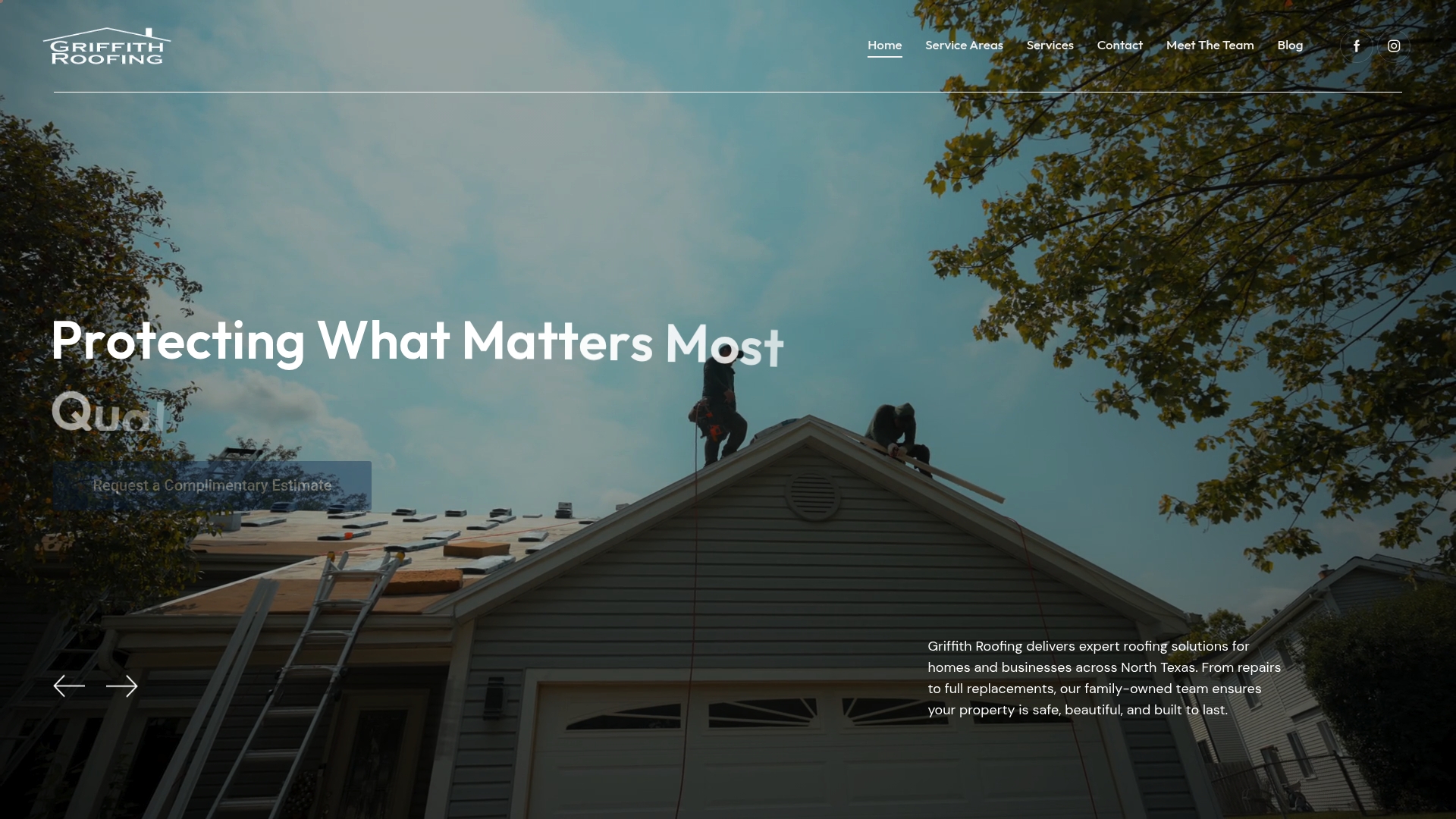
Griffith roofing handles every phase of your residential roof replacement in DFW, from the initial free inspection through permit filing, material sourcing, installation, and final cleanup. You get transparent scheduling updates at every stage, not silence between milestones. For homeowners concerned about upfront costs, flexible financing options are available to spread the investment over time. Call Griffith roofing today to schedule your inspection and get a clear project timeline before any work begins.
FAQ
How long does a roof replacement take in Texas?
Most Texas roof replacements take 2–4 weeks total from first contact to completion. Physical installation runs 1–5 days depending on roof size and material type.
What causes delays in a Texas roofing project?
Permitting backlogs, storm season demand, unexpected decking damage, and material delivery delays are the most common causes. Planning outside peak storm season reduces most of these risks.
What is the best time of year to replace a roof in Texas?
Late spring and early fall offer the most favorable conditions. Mild temperatures support proper sealant curing, and contractor availability is better than during post-storm peak periods.
Will I hear a lot of noise during installation?
The tear-off phase reaches 90–100 decibels and typically lasts 3–5 hours. Secure loose wall hangings and cabinet items before the crew arrives to prevent vibration damage.
Is granule shedding after installation a sign of a defective roof?
Granule shedding in gutters after a new installation is a normal part of the curing process. It settles within a few weeks and does not indicate a product defect.


