

Commercial roofing systems are defined as the complete assembly of materials installed over a commercial building to protect it from weather, moisture, and thermal loss. Choosing the right type among the many commercial roofing options available directly affects your maintenance costs, energy bills, and warranty exposure for decades. The wrong choice can mean premature failure, costly tear-offs, and operational disruption. This guide breaks down every major system type, explains what drives performance, and gives you the selection criteria that experienced property managers actually use.
1. What are the main types of commercial roofing systems?
Commercial roofing systems fall into six primary categories: single-ply membranes, modified bitumen, built-up roofing (BUR), metal roofing, spray polyurethane foam (SPF), and roof coatings. Each category suits different building types, climates, and budget profiles. Understanding the differences prevents costly mismatches between your building and its roof.
Single-ply membranes include TPO, EPDM, and PVC. They are the most widely installed flat roofing systems in the U.S. today. TPO suits warehouse and retail applications well. PVC membranes perform best in chemical or food processing environments where TPO and EPDM degrade faster. EPDM is a synthetic rubber sheet that handles temperature swings well and is one of the more economical roofing solutions for large low-slope roofs.
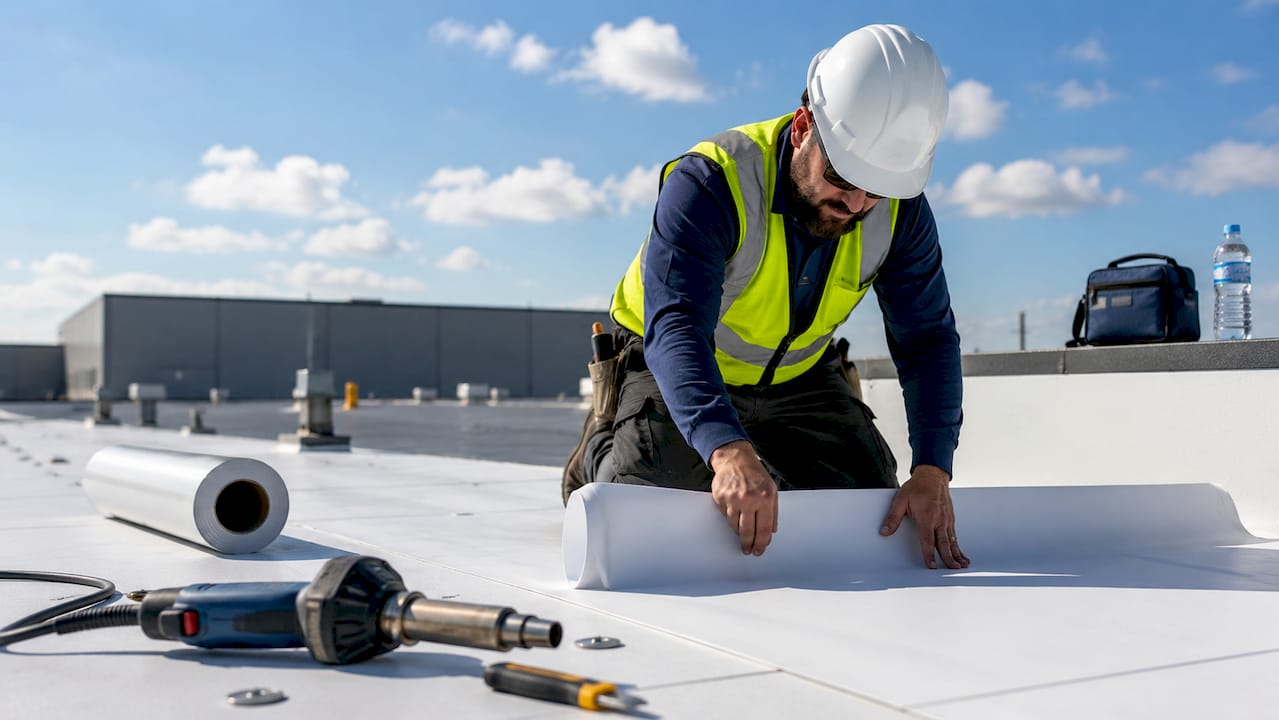
Modified bitumen is asphalt reinforced with polymers, applied in layers using heat or cold adhesive. It performs well on roofs with heavy foot traffic and is a common choice for urban buildings with rooftop mechanical equipment.
Built-up roofing (BUR) is the oldest commercial system still in wide use. It consists of alternating layers of bitumen and reinforcing fabric, topped with aggregate. BUR delivers excellent redundancy, meaning a single puncture rarely causes a leak.
Metal roofing types include standing seam, corrugated panels, and insulated metal panels (IMPs). Standing seam metal roofs offer a service life of 30–70 years, far outlasting most membrane options. That longevity makes metal the strongest long-term investment for commercial properties with the budget for higher upfront costs.
Spray polyurethane foam (SPF) is a liquid applied directly to the roof deck that expands into a solid, seamless layer. It provides both insulation and waterproofing in one pass, which reduces labor time significantly.
Roof coatings are liquid-applied systems including silicone, acrylic, and SEBS formulations. They are not standalone roofing systems but work as restoration layers over existing membranes.
| System | Typical Lifespan | Installed Cost (per sq ft) |
|---|---|---|
| TPO single-ply | 20–30 years | $5.50–$12 |
| EPDM single-ply | 20–30 years | $5.50–$10 |
| PVC single-ply | 20–30 years | $7–$14 |
| Modified bitumen | 15–25 years | $4–$8 |
| Built-up roofing (BUR) | 20–30 years | $5–$10 |
| Standing seam metal | 30–70 years | Up to $30 |
| Spray polyurethane foam | 20–25 years | $4–$7 |
Pro Tip: Never select a membrane in isolation. The best commercial roofing is a complete assembly including deck, vapor barrier, insulation, cover board, and membrane. Skipping any layer shortens the system’s life, especially in high-humidity climates like the Dallas-Fort Worth area.
2. How does roof slope influence your system choice?
Roof slope is the single biggest constraint on material selection for commercial buildings. Most commercial structures fall into three slope categories: flat (less than 1:12), low-slope (1:12 to 2:12), and steep-slope (above 2:12). Each category demands a different approach.
Low-slope roofs cover the majority of U.S. commercial roof area. The International Building Code requires positive drainage on these roofs to prevent ponding water. Ponding is not just a nuisance. Standing water adds over 5 pounds per square foot per inch of depth, stressing both the membrane and the structural deck below.
Here is how slope maps to system compatibility:
- Flat and low-slope (under 2:12): TPO, EPDM, PVC, BUR, modified bitumen, SPF, and silicone coatings all work here. Drainage design is critical.
- Moderate slope (2:12 to 4:12): Modified bitumen and metal panels perform well. Single-ply membranes require additional fastening.
- Steep-slope (above 4:12): Standing seam metal and architectural metal panels are the standard choice. Traditional membrane systems are not rated for these pitches.
Pro Tip: If your building has internal drains, get them camera-inspected before any re-roofing project. Blocked drains are the leading cause of ponding on otherwise well-designed commercial roofs.
Drainage design also affects rooftop equipment placement. Additional HVAC units or solar arrays increase roof load. A structural engineer should review load capacity before adding equipment, especially on older buildings where the deck may already carry maximum design loads.
3. Key factors for selecting the right commercial roofing system
Selecting a commercial roofing system is not just a material decision. It is a systems engineering decision that touches your building’s structure, your maintenance team’s capabilities, and your long-term operating budget.
Environment drives material choice. A warehouse near a chemical plant needs PVC, not TPO. A retail strip center in a hail-prone region like North Texas benefits from metal or a thick BUR system. Material choice should be environment-driven: PVC for chemical exposure, TPO for warehouse applications, and metal for architectural durability.
Deck condition determines system longevity. Inspecting the structural deck before any replacement is non-negotiable. A rusted or structurally compromised deck undermines even the highest-quality membrane installation. Addressing deck damage before re-roofing is not optional. It is the difference between a 25-year roof and a 10-year failure.
The membrane is only one layer. Integrating vapor barriers, insulation, and cover boards is what separates a roof that lasts from one that fails early, especially in climates with humidity or temperature extremes. System integration prevents premature failure where membrane-only thinking falls short.
Additional selection criteria include:
- Maintenance capability: Some systems like BUR and metal require less frequent attention. SPF needs recoating every 10–15 years to maintain its waterproofing layer.
- Restoration potential: If your existing roof is structurally sound, a roof restoration coating may extend its life without a full tear-off, saving significant cost and disruption.
- Warranty requirements: Many manufacturers require certified installers and specific assembly specifications to honor warranties. Verify contractor qualifications before signing any contract.
- Building use: Food processing, healthcare, and data center facilities each have specific membrane requirements tied to chemical exposure, humidity control, and fire ratings.
Working with a contractor who understands commercial roofing contractor qualifications protects you from warranty gaps caused by improper installation.
4. What are the latest trends in commercial roofing?
Commercial roofing is evolving faster than most property managers realize. Several trends are reshaping how buildings are roofed and how long those roofs last.
Insulated metal panels (IMPs) combine structural cladding and thermal insulation in a single factory-built panel. They reduce installation time and deliver superior R-values compared to traditional built-up assemblies. IMPs are gaining ground on distribution centers, cold storage facilities, and modern office buildings.
Green and blue roofs are growing in urban markets. Green roofs use growing media and vegetation to manage stormwater and reduce urban heat. Blue roofs are engineered detention systems that hold and slowly release rainwater, reducing peak runoff loads on municipal systems. Both options add weight, so structural analysis is mandatory before installation.
Roof restoration coatings are the fastest-growing segment in commercial roofing. Liquid-applied coatings can extend roof life by 10–20 years at a fraction of replacement cost, provided the existing substrate is sound. Silicone coatings perform particularly well in ponding water conditions where other coatings fail. This makes restoration a budget-friendly strategy for property managers managing large portfolios. You can read more about when restoration makes sense versus full replacement in Griffith roofing’s restoration vs. replacement guide.
Solar-ready metal roofs are another growing trend. Standing seam metal roofs allow solar panels to be clipped directly to the seams without penetrating the membrane. This eliminates leak risk entirely and makes metal the preferred base for commercial solar installations.
Here is a quick summary of emerging options by priority:
- Insulated metal panels for new construction and major renovations
- Silicone and SEBS restoration coatings for existing sound substrates
- Solar-ready standing seam metal for energy-focused properties
- Green roofs for urban properties with stormwater management requirements
- Blue roof detention systems for properties in flood-prone zones
For a detailed breakdown of metal roofing costs and benefits, Griffith roofing has published a dedicated resource covering material grades, installation variables, and long-term ROI.
Key Takeaways
The best commercial roofing system is a complete assembly, not just a membrane, and its longevity depends on deck condition, drainage design, and proactive maintenance more than brand selection.
| Point | Details |
|---|---|
| System integration matters most | A complete assembly with deck, insulation, and membrane outperforms membrane-only selection every time. |
| Slope dictates material options | Low-slope roofs under 2:12 require positive drainage and limit compatible membrane types. |
| Deck inspection is non-negotiable | A compromised deck will shorten any new membrane’s life regardless of material quality. |
| Coatings extend roof life affordably | Liquid-applied coatings can add 10–20 years to a sound existing roof at far less than replacement cost. |
| Metal offers the longest lifespan | Standing seam metal delivers 30–70 years of service life, the highest of any commercial roofing option. |
What I’ve learned after 20+ years of commercial roofing in DFW
Property managers often come to us focused on membrane brand. They want to know which single-ply product is best. That is the wrong question. After more than two decades working on commercial roofs across the Dallas-Fort Worth area, I can tell you that the membrane brand rarely determines whether a roof succeeds or fails. The deck condition, the drainage design, and the quality of the installation do.
I have seen $30-per-square-foot metal roofs fail in under 10 years because the installer skipped the cover board. I have also seen modest TPO systems last 25 years because the contractor got the drainage right and the building owner did annual inspections. The pattern is consistent. Flat roof longevity depends more on installation quality and proactive maintenance than on membrane choice.
My honest advice: before you spend a dollar on materials, spend time on a proper roof assessment. Get the deck inspected. Map your drains. Understand your building’s actual load capacity. Then choose a system that fits your maintenance team’s capabilities, not just your upfront budget. A system your team cannot maintain will fail faster than a cheaper system they can.
Phased restoration is also underused. If your existing roof is structurally sound, a quality coating system buys you 10–15 more years while you plan a proper capital replacement. That is not cutting corners. That is smart asset management. The property managers who get the most value from their roofs treat them as systems, not surfaces.
— Mark Griffith
Griffith roofing’s commercial roofing expertise
Griffith roofing has served commercial property managers and business owners across the Dallas-Fort Worth Metroplex since 2001. The team handles everything from system selection and full installation to repair and restoration across all major commercial roofing types.
Whether you need a new metal roofing installation for a warehouse, a restoration coating assessment for an aging flat roof, or a complete re-roofing project, Griffith roofing brings the technical depth and local experience to get it right. The company’s work spans TPO, PVC, standing seam metal, and BUR systems, with every project backed by manufacturer-compliant installation standards. If your commercial roof needs attention, connect with the Griffith roofing team for a professional assessment and a clear path forward. You can also explore commercial roofing systems design resources for additional context on system specifications.
FAQ
What are the most common types of commercial roofing systems?
The most common commercial roofing systems are TPO, EPDM, and PVC single-ply membranes, followed by modified bitumen, built-up roofing, and standing seam metal. Single-ply membranes dominate new commercial installations due to their balance of cost, ease of installation, and 20–30 year service life.
How long does a commercial roof typically last?
Lifespan varies by system. Single-ply membranes last 20–30 years with proper maintenance, while standing seam metal roofs can last 30–70 years. Installation quality and regular inspections are the biggest factors in reaching the upper end of any system’s lifespan.
What is the most economical commercial roofing solution?
Modified bitumen and TPO single-ply are among the most economical roofing solutions for low-slope commercial buildings, with installed costs starting around $4–$5.50 per square foot. For existing roofs with sound substrates, liquid-applied restoration coatings offer the lowest cost per year of added life.
When should I restore a commercial roof instead of replacing it?
Restoration makes sense when the existing membrane is structurally sound and the deck shows no signs of rust or damage. Liquid-applied coatings can extend roof life by 10–20 years at a fraction of full replacement cost, making restoration the right call for most roofs that pass a professional inspection.
Does roof slope affect which commercial roofing system I can use?
Yes. Low-slope roofs under 2:12 are compatible with single-ply membranes, BUR, modified bitumen, and SPF. Steep-slope roofs above 4:12 require metal panels or other steep-slope rated systems. Using a flat-roof membrane on a steep-slope application voids most manufacturer warranties.


