

A roofing supplement is a formal, itemized request submitted to your insurance carrier to increase the original claim payout when the initial estimate fails to cover the full cost of repairs. If you’ve ever wondered what is a roofing supplement in Texas, the short answer is this: it’s the mechanism that closes the gap between what your adjuster first approved and what your roof actually needs. Texas hail storms, high winds, and strict local building codes make these requests especially common here. Approximately 78% of initial insurance estimates for roofing claims require a supplement. That number tells you this is not an exception. It’s the rule.
What is a roofing supplement claim and why does it happen?
A roofing supplement claim is a written, documentation-based request that adjusts the scope of your original insurance estimate to reflect actual repair needs. The industry term is “supplement,” and it’s a standard part of the claims process, not a red flag or a dispute.
Initial estimates often miss damage requiring a supplement, especially hidden deck rot and code-required ventilation or flashing upgrades. Most adjusters write their first estimate from a visual inspection before any tear-off occurs. Once your contractor pulls up the old shingles, the real picture emerges.

Texas compounds this problem in a specific way. The state’s severe weather cycle means roofs take repeated punishment from hail, wind, and heat. Each storm can leave damage that isn’t visible from the ground or even from a quick rooftop walk. Add in the fact that Texas building codes require specific upgrades during any full replacement, and the gap between the adjuster’s first number and the actual repair cost grows fast.
Insurance carriers use pricing databases like Xactimate to generate estimates. Those databases don’t always reflect current local labor rates or material costs in the Dallas-Fort Worth Metroplex. That pricing gap alone can justify a supplement before a single hidden defect is even found.
What items are typically included in texas roofing supplements?
Texas roofing supplements cover a predictable set of items that adjusters routinely miss or underprice in their first pass. Knowing these categories helps you have an informed conversation with your contractor and your insurer.
Common supplemented items include:
- Rotted or damaged decking discovered during tear-off that wasn’t visible during the initial inspection
- Code-required ventilation upgrades mandated by Texas building codes when a full replacement is performed
- Ice and water shield required in certain zones and often omitted from initial estimates
- Drip edge flashing along eaves and rakes, which many adjusters leave out entirely
- Permit fees paid to local jurisdictions, which are a recoverable cost in Texas
- Waste percentage adjustments for complex roof geometries with multiple valleys, hips, and dormers
- Haul-away and disposal fees for old materials, especially on steep or multi-story roofs
- Satellite dish or HVAC equipment removal and reinstallation when those items sit on the roof surface
Common supplement triggers in Texas include hidden damage like rotted decking and code upgrades such as ventilation and ice and water shields. These aren’t contractor add-ons. They are legitimate repair requirements that the initial estimate simply didn’t capture.
How do you file a roofing supplement step by step?
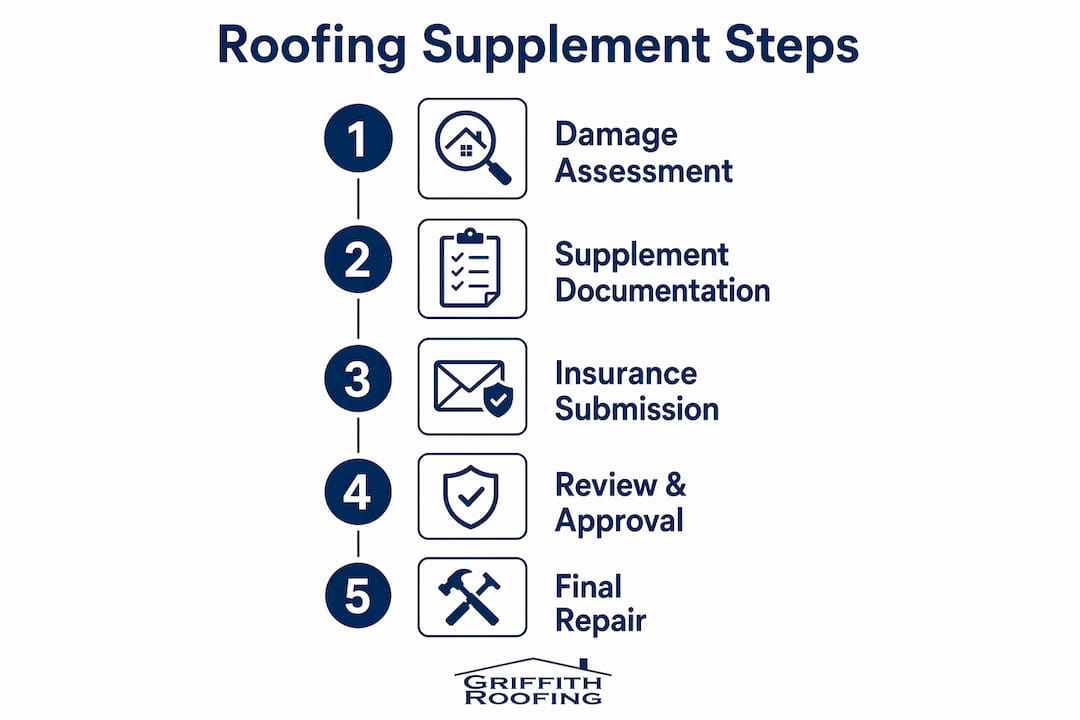
Filing a supplement is a methodical process. A disorganized or vague request gets denied. A well-written roofing supplement is a technical document that bridges the gap between initial estimates and actual repair needs. It’s not adversarial. The goal is to get paid what your policy contractually requires.
Here is the process from start to finish:
- Review the original estimate line by line. Compare every item against your contractor’s scope of work. Note every discrepancy, missing item, and underpriced line.
- Document everything during tear-off. Photograph rotted decking, damaged sheathing, deteriorated flashing, and any other damage that wasn’t visible before work began. Measurements matter. Get them in writing.
- Gather code citations. Pull the specific Texas building code sections and local jurisdiction requirements that mandate the upgrades your contractor is performing. Fort Worth, Dallas, and surrounding municipalities each have their own permit and code requirements.
- Build the supplement package. Your contractor or a supplement specialist will typically use Xactimate to create a revised estimate. Attach photos, measurements, manufacturer specifications, and code references. Quality documentation is the most critical factor in supplement approval. Claims lacking this evidence face high denial rates.
- Submit to the supplement review team. This goes to the carrier’s dedicated supplement desk, not back to the original field adjuster. A supplement is distinct from a re-inspection. It relies on supplied documentation rather than requiring a physical adjuster revisit unless disputes arise.
- Negotiate professionally. Expect a counter-offer. Respond with additional documentation if items are denied. Keep the tone factual and technical.
- Watch your timing. Insurance carriers generally accept supplements within 1–2 years after the loss event, but earlier submission improves success chances. Delays increase difficulty due to adjuster reassignments and archived files.
Pro Tip: Never cash your initial settlement check or sign a final release until your supplement is fully resolved. Filing a supplement after cashing the check complicates or can prevent additional payment. Hold that check until the full scope is settled.
How do roofing supplements affect your insurance payout?
The financial impact of a properly filed supplement is significant. Supplements can increase claim payouts by $6,000 on average or recover 20%–40% of lost revenue. For a mid-range Texas roof replacement costing $15,000–$20,000, that’s not a rounding error. That’s the difference between a complete repair and cutting corners.
The table below shows how the numbers typically stack up on a Texas residential claim:
| Scenario | Estimated Amount |
|---|---|
| Initial adjuster estimate | $9,500 |
| Approved supplement additions | $5,800 |
| Total approved claim after supplement | $15,300 |
| Actual contractor repair cost | $15,100 |
The initial estimate is a draft, not a final verdict. Most homeowners mistakenly assume the adjuster’s first number is final. Adjusters write conservative estimates from limited information. They don’t know what’s under your shingles until your contractor does.
Supplements are a standard, legal part of insurance claims. They help align estimates with repair realities rather than inflate claims. Homeowners who worry that filing a supplement will trigger a denial or a rate spike are working from a misconception. A properly documented supplement is exactly what your policy is designed to accommodate.
Understanding your full Texas roof insurance payout before you sign anything is one of the smartest moves you can make after storm damage.
Texas-specific rules that affect roofing supplements
Texas has several legal and regulatory factors that directly shape how supplements work here. These aren’t details you can afford to skip.
Key Texas-specific considerations include:
- Building code upgrade requirements. Texas requires that any full roof replacement meet current code at the time of installation. That means upgrades to ventilation, flashing, and underlayment are mandatory, not optional. These upgrades are supplementable costs. Review the Fort Worth roofing code requirements if your property sits in Tarrant County.
- Contractor licensing rules. Texas law prohibits roofing contractors from acting as public adjusters. Your contractor can document damage and build a supplement package, but they cannot legally negotiate your claim on your behalf without a public adjuster license. Know the difference.
- Permit fees are recoverable. Texas jurisdictions charge permit fees for roof replacements. These fees are a legitimate supplement item and should appear in your revised estimate.
- Policy deadlines vary. Some Texas homeowner policies include specific deadlines for supplemental claims. Read your policy declarations page carefully. Your agent can clarify the window.
- Timing after a storm. The 2026 storm season in the DFW area has already produced significant hail events. The sooner you document and file, the stronger your position.
Pro Tip: Work with a licensed Texas roofing contractor who has direct experience with supplement documentation. An experienced contractor knows which code sections to cite and which photos to capture during tear-off. That expertise is worth more than any software tool.
Key takeaways
A roofing supplement is the standard, documented process that closes the gap between a conservative initial estimate and the full cost of a code-compliant Texas roof repair.
| Point | Details |
|---|---|
| Supplements are normal | About 78% of Texas roofing claims require a supplement to cover full repair costs. |
| Documentation drives approval | Photos, measurements, and code citations are the deciding factors in supplement success. |
| Timing matters | Submit supplements as early as possible and before cashing any settlement check. |
| Financial impact is real | Approved supplements add an average of $6,000 to claim payouts in Texas. |
| Texas codes create supplement triggers | Mandatory ventilation, flashing, and underlayment upgrades must be included in every full replacement. |
What i’ve learned after 20+ years of texas roofing claims
I’ve been doing this since 2001, and the single biggest mistake I see Texas homeowners make is treating the adjuster’s first estimate as a done deal. It isn’t. It’s a starting point, and often a conservative one.
The second mistake is fear. Homeowners worry that asking for more money will flag their claim, anger their insurer, or somehow backfire. That’s not how it works. A supplement is a professional, technical request backed by evidence. Insurers have entire departments that process them every day. When Griffith roofing submits a supplement package, we’re not picking a fight. We’re presenting facts.
What actually gets supplements denied is poor documentation. Vague descriptions, missing photos, and no code citations give the review team nothing to work with. The carriers aren’t looking for reasons to pay more. You have to give them reasons they can’t ignore.
My advice to every homeowner we work with: stay organized from day one. Keep a folder with your original estimate, every photo from the inspection, your contractor’s scope of work, and every piece of correspondence with your insurer. That folder is your leverage. Protect it.
Supplements aren’t a workaround or a trick. They’re the system working as designed. Use them.
— Mark Griffith
Get expert help with your texas roofing claim
Navigating a supplement claim is far easier with an experienced local contractor in your corner. Griffith roofing has served Dallas-Fort Worth homeowners since 2001, and our team knows exactly how to document damage, cite applicable Texas building codes, and build supplement packages that hold up to insurer scrutiny.

Whether your roof took a beating from this season’s hail or you’re still working through a claim from a previous storm, Griffith roofing is ready to walk you through every step. From the initial inspection to final approval, we don’t consider the job done until you’re fully covered and your roof is fully repaired. Explore our residential roofing services or reach out directly to schedule your assessment today.
FAQ
What is a roofing supplement in texas?
A roofing supplement in Texas is a formal, itemized request submitted to your insurance carrier to increase the original claim payout when the initial estimate misses hidden damage, code-required upgrades, or accurate local pricing. It is a standard and legal part of the claims process.
How long do i have to file a roofing supplement in texas?
Most Texas insurance carriers accept supplements within 1–2 years of the loss event, though earlier submission significantly improves approval odds. Check your specific policy for any stated deadlines, as they vary by carrier.
Will filing a supplement hurt my insurance claim?
No. Supplements are a normal, expected part of roofing insurance claims and do not trigger denials when properly documented. Insurers have dedicated supplement review teams that process these requests routinely.
What documentation do i need for a roofing supplement?
You need photographs of all discovered damage, precise measurements, manufacturer specifications for required materials, and specific building code citations that mandate the upgrades. Missing any of these significantly increases the risk of denial.
Can my roofing contractor file the supplement for me?
Your contractor can prepare and submit the supplement package, including the revised Xactimate estimate and supporting documentation. However, Texas law prohibits contractors from negotiating your claim on your behalf without a licensed public adjuster designation.


