

An asphalt shingle roof is a roofing system built from a fiberglass mat base, coated with waterproofing asphalt, and finished with ceramic-coated mineral granules that block UV radiation and resist fire. This layered construction makes it the most widely used residential roofing material in the United States, covering approximately 75% to 80% of single-family homes according to the Asphalt Roofing Manufacturers Association (ARMA). That dominance is no accident. Asphalt shingles deliver a reliable balance of affordability, durability, and curb appeal that few other materials can match at the same price point. Whether you are buying a home or planning a roof replacement, understanding this system helps you make a confident, informed decision.
What materials and construction define an asphalt shingle roof?
Asphalt shingles are a layered system, not a single material. Each component plays a specific role in protecting your home.
The fiberglass mat base sits at the core of every modern shingle. It provides dimensional stability, meaning the shingle holds its shape under heat, cold, and physical stress. Without it, the shingle would warp and crack far sooner.
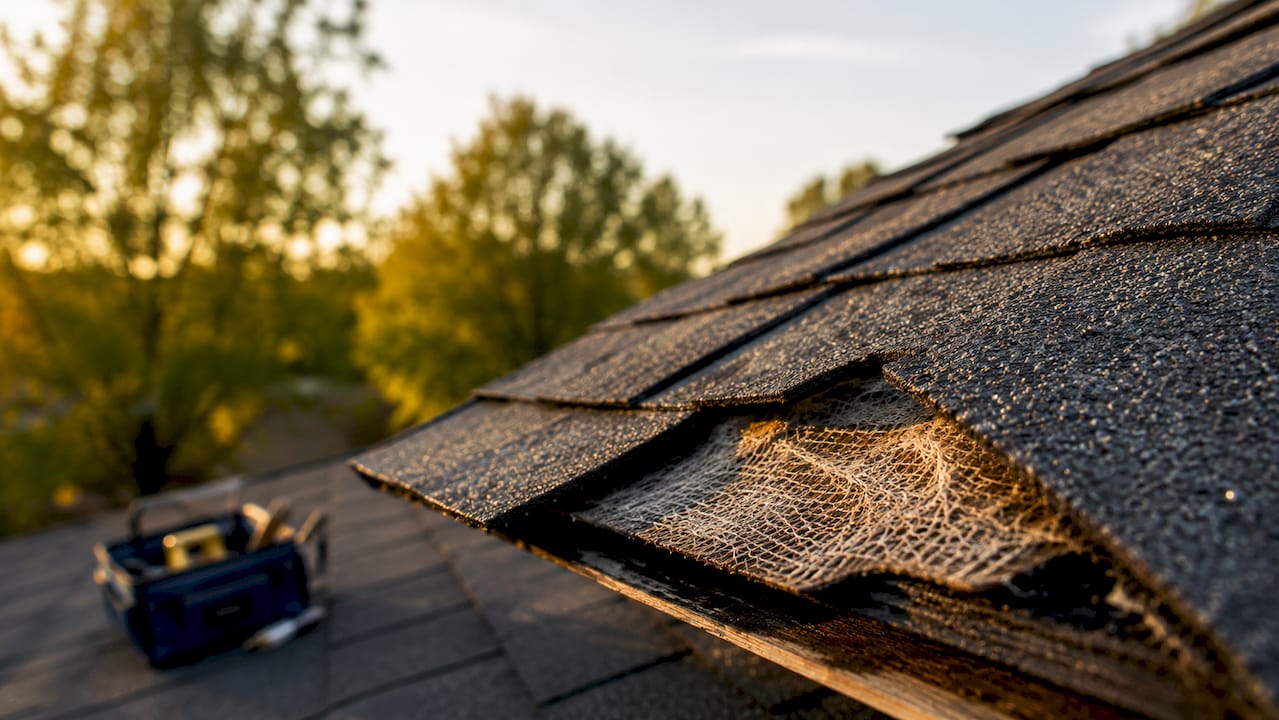
Above the mat sits a thick asphalt coating. This layer is the primary waterproofing agent. It prevents rain and moisture from penetrating the shingle and reaching your roof deck. Premium shingles use polymer-modified asphalt blends, including styrene-butadiene-styrene (SBS) and atactic polypropylene (APP), which improve flexibility and resistance to thermal cracking in extreme climates.
On top of the asphalt coating sit ceramic-coated mineral granules. These granules do two jobs: they block UV radiation that would otherwise degrade the asphalt, and they provide the fire resistance rating required by most building codes. Granule color also determines the shingle’s finished appearance, giving homeowners a wide range of aesthetic options.
The full roofing system extends beyond the shingles themselves. Key components include:
- Underlayment: A water-resistant barrier installed directly on the roof deck beneath the shingles
- Flashing: Metal strips that seal joints around chimneys, vents, and valleys
- Hip and ridge caps: Specially shaped shingles that cover the roof’s peak and edges
- Self-sealing adhesive strips: Built into each shingle to bond rows together and resist wind uplift
- Fastening pattern: Nail placement specified by the manufacturer and required by IRC Section R905.2
Pro Tip: Ask your contractor to show you the underlayment product they plan to use. Synthetic underlayment outperforms traditional felt in moisture resistance and tear strength, and it costs only marginally more.
What are the common types of asphalt shingles?
Three main types of asphalt shingles exist, each with distinct performance characteristics and price points. Choosing the right one depends on your budget, climate, and how long you plan to stay in the home.
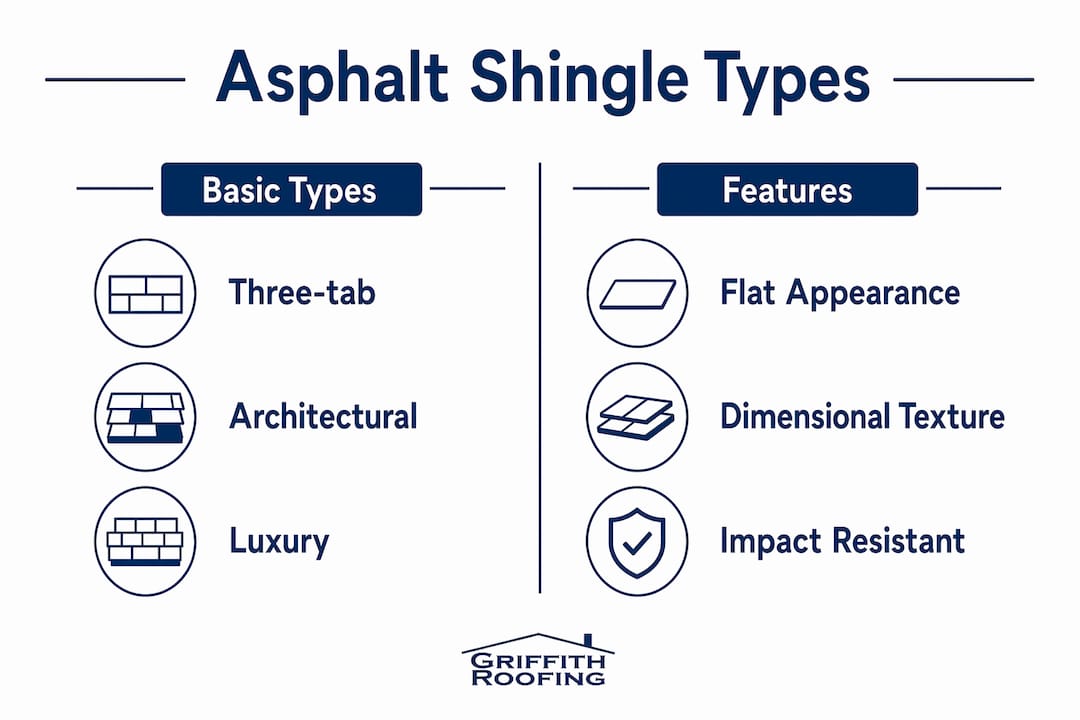
Three-tab shingles are the entry-level option. They have a flat, uniform appearance created by cutouts along the lower edge that make one shingle look like three separate tabs. They are lightweight and affordable, but their single-layer construction limits their lifespan to roughly 15–20 years. Wind resistance is also lower than thicker products.
Architectural shingles, also called dimensional shingles, are the most popular choice for new installations today. They use a laminated, two-layer construction that creates a textured, shadow-effect appearance resembling wood shake or slate. Their added thickness translates directly into better durability, with a typical lifespan of 25–30 years. Most carry wind warranties of 110 mph or higher.
Luxury and designer shingles sit at the top of the product tier. They use advanced granule technology, impact-resistant construction, and larger profiles that closely mimic natural slate or cedar shake. Some carry a Class 4 impact resistance rating under UL 2218, which can qualify you for insurance discounts in hail-prone areas like North Texas.
| Shingle type | Appearance | Typical lifespan | Best for |
|---|---|---|---|
| Three-tab | Flat, uniform | 15–20 years | Budget-focused projects |
| Architectural | Textured, dimensional | 25–30 years | Most residential installs |
| Luxury/Designer | Slate or shake look | 30+ years | Premium aesthetics, impact resistance |
Pro Tip: If you are replacing a roof you plan to sell within five years, architectural shingles offer the best return on investment. They photograph better, appraise higher, and cost only modestly more than three-tab.
Comparing residential roofing materials across product tiers shows that asphalt shingles consistently deliver competitive performance relative to their cost, especially in the architectural and luxury categories.
How long do asphalt shingle roofs typically last?
Typical asphalt shingle roofs last between 15 and 30 years, with three-tab products at the lower end and architectural shingles at the upper end. That range is wide because lifespan depends on more than just the shingle itself.
Installation quality is the single biggest variable. Poor installation causes premature failure even when the shingles are high quality. Incorrect nail placement, insufficient overlap, and skipped underlayment all shorten roof life significantly. IRC Section R905.2 sets the minimum installation standards, and a qualified contractor follows them without cutting corners.
Ventilation is equally critical. Inadequate ventilation traps heat and moisture in the attic, which accelerates shingle degradation from the underside. A properly ventilated roof runs cooler and drier, adding years to the shingle’s service life.
Watch for these early warning signs that your roof is aging:
- Granule loss: Bare patches on shingles or granules collecting in gutters signal UV exposure and wear
- Curling edges: Shingles that cup or claw at the edges indicate moisture imbalance or age
- Cracking: Surface cracks expose the asphalt layer to further UV damage
- Missing shingles: Wind damage that goes unrepaired accelerates deterioration of surrounding shingles
Manufacturer warranties deserve a careful read. Warranties marketed as “lifetime” are typically limited and prorated, meaning coverage decreases significantly after the first 10–15 years. Real-world lifespan aligns more closely with product tier than with the maximum warranty period printed on the package.
For a deeper look at how roofing material lifespan compares across product types, the relationship between maintenance habits and longevity is consistent: roofs that receive annual attention outlast neglected ones by a wide margin.
What maintenance practices keep asphalt shingle roofs lasting longer?
Asphalt shingle roofs reward consistent, low-effort maintenance. The good news is that individual shingles can be replaced without large-scale disruption, making repairs far more affordable and less invasive than with metal or slate roofing. You do not need a full replacement every time something goes wrong.
Follow these steps to protect your investment:
- Inspect twice a year. Walk the perimeter of your home in spring and fall and look for missing, cracked, or curling shingles. Use binoculars if you cannot safely access the roof.
- Clear debris promptly. Leaves, branches, and standing water accelerate granule loss and create conditions for algae growth. Keep gutters clean so water drains freely.
- Address algae and moss early. Black streaks are a sign of algae. Zinc or copper strips installed at the ridge release ions that inhibit growth. Treat existing algae with a diluted bleach solution rather than pressure washing, which strips granules.
- Check flashing after storms. Flashing around chimneys, skylights, and vents is the most common entry point for water. Reseal or replace damaged flashing before the next rain season.
- Maintain attic ventilation. Confirm that soffit vents are not blocked by insulation. Proper airflow prevents heat and moisture buildup that degrades shingles from below.
Pro Tip: Before hiring anyone for asphalt shingle repair, verify that the contractor carries both liability insurance and workers’ compensation coverage. Unlicensed repair work voids many manufacturer warranties.
What makes asphalt shingle roofs a popular choice for homeowners?
Asphalt shingles earn their market position through a combination of practical advantages that other roofing materials struggle to match at the same price point.
- Affordable labor market: The widespread use of asphalt shingles creates high contractor competition, keeping labor costs manageable and installation timelines shorter than less common materials like slate or clay tile.
- Energy efficiency: Modern architectural shingles use advanced granule technology and reflective coatings that reduce attic heat gain and lower cooling costs, a meaningful benefit in hot climates like Dallas-Fort Worth.
- Style variety: Options range from flat three-tab to richly textured luxury profiles, giving you real control over your home’s curb appeal without paying premium material costs.
- Code compliance: Asphalt shingles installed per IRC Section R905.2 meet residential building code requirements across the United States, giving you confidence that the roof performs to a verified standard.
- Faster installation: A skilled crew can install an architectural shingle roof on an average home in one to two days. Metal, tile, and slate installations take considerably longer.
“Modern asphalt shingles are no longer just budget options. They deliver enhanced aesthetics, energy efficiency, and durability suitable for a wide range of homeowners’ needs, making them a genuinely competitive choice at every price tier.”
The composition shingle system used in residential construction today reflects decades of material science improvement. What was once considered a basic, utilitarian product now competes credibly with premium alternatives on both performance and appearance.
Key Takeaways
Asphalt shingle roofs are the most practical and widely proven residential roofing system available, offering a proven combination of affordability, durability, and code-compliant performance for American homeowners.
| Point | Details |
|---|---|
| Material construction | Fiberglass mat, waterproofing asphalt, and ceramic mineral granules form the core system. |
| Three shingle tiers | Three-tab, architectural, and luxury shingles offer lifespans of 15–20, 25–30, and 30+ years respectively. |
| Installation quality matters | Poor installation causes premature failure; IRC Section R905.2 sets the minimum standard. |
| Maintenance extends lifespan | Biannual inspections, debris removal, and ventilation checks add years to any asphalt roof. |
| Warranties require scrutiny | “Lifetime” warranties are prorated; real-world lifespan tracks product tier, not marketing language. |
What 25 years of roofing in DFW taught me about asphalt shingles
I have seen homeowners spend more money than necessary because they followed outdated advice about asphalt shingles. The biggest misconception I encounter is that three-tab shingles are “good enough.” They are not, and I say that having installed thousands of roofs across the Dallas-Fort Worth area since 2001.
The jump from three-tab to architectural shingles costs less than most homeowners expect, often a few hundred dollars on a full replacement. What you get in return is a thicker product, a better wind warranty, and a roof that looks genuinely attractive from the street. That difference matters when you sell the home or file an insurance claim.
The second mistake I see constantly is neglecting ventilation. A homeowner will invest in premium shingles and then watch them fail in 12 years because the attic runs 160 degrees in July. The shingle is not the problem. The system is the problem. A good contractor designs the ventilation alongside the shingle selection, not as an afterthought.
My honest advice: do not let price alone drive your decision. Get a contractor who pulls permits, follows IRC Section R905.2, and can explain the ventilation plan before the first shingle goes on. That conversation tells you everything about whether the contractor knows what they are doing.
— Mark Griffith
Griffith roofing: asphalt shingle expertise for DFW homeowners
Griffith roofing has served homeowners across the Dallas-Fort Worth Metroplex since 2001, building a reputation on quality workmanship and honest guidance. When your roof needs attention, whether that means a full replacement or targeted repairs, you deserve a contractor who treats your home with the same care they would give their own.
Griffith roofing handles every stage of the process, from initial inspection through final cleanup, using asphalt shingles that meet or exceed IRC Section R905.2 installation standards. The team is available for new installations, storm damage assessments, and individual shingle repairs. Explore Griffith roofing’s residential roofing services to see the full range of options available to DFW homeowners, or review roof replacement financing if budget is a consideration for your project.
FAQ
What is an asphalt shingle roof made of?
An asphalt shingle roof is made from a fiberglass mat base coated with waterproofing asphalt and finished with ceramic-coated mineral granules. These layers work together to shed water, block UV radiation, and provide fire resistance.
How long do asphalt shingles last on average?
Three-tab shingles typically last 15–20 years, while architectural shingles last 25–30 years. Lifespan depends heavily on installation quality, ventilation, and regular maintenance.
Are asphalt shingle roofs easy to repair?
Yes. Individual shingles can be replaced without disrupting the rest of the roof, making repairs more affordable and less invasive than metal or slate alternatives. A qualified contractor can complete most repairs in a single visit.
What do “lifetime” asphalt shingle warranties actually cover?
Manufacturer warranties marketed as “lifetime” are typically prorated, meaning coverage decreases significantly after the first 10–15 years. Read the warranty terms carefully before selecting a product based on warranty length alone.
What type of asphalt shingle is best for houses in Texas?
Architectural shingles with a Class 4 impact resistance rating under UL 2218 are the strongest choice for Texas homes. They withstand hail better than standard products and may qualify you for homeowner’s insurance discounts in hail-prone areas.


