

DFW weather destroys roofs faster than almost any other metro in the country because of two forces working together: frequent large hail and extreme heat-driven thermal fracturing. Dallas-Fort Worth sits directly in America’s most active hail corridor, and its summer sun bakes roof surfaces to temperatures that shorten material lifespan by years. If you own a home in the Metroplex, understanding these forces is not optional. It is the difference between a roof that lasts 20 years and one that fails in 12.
Why DFW weather destroys roofs faster than other cities
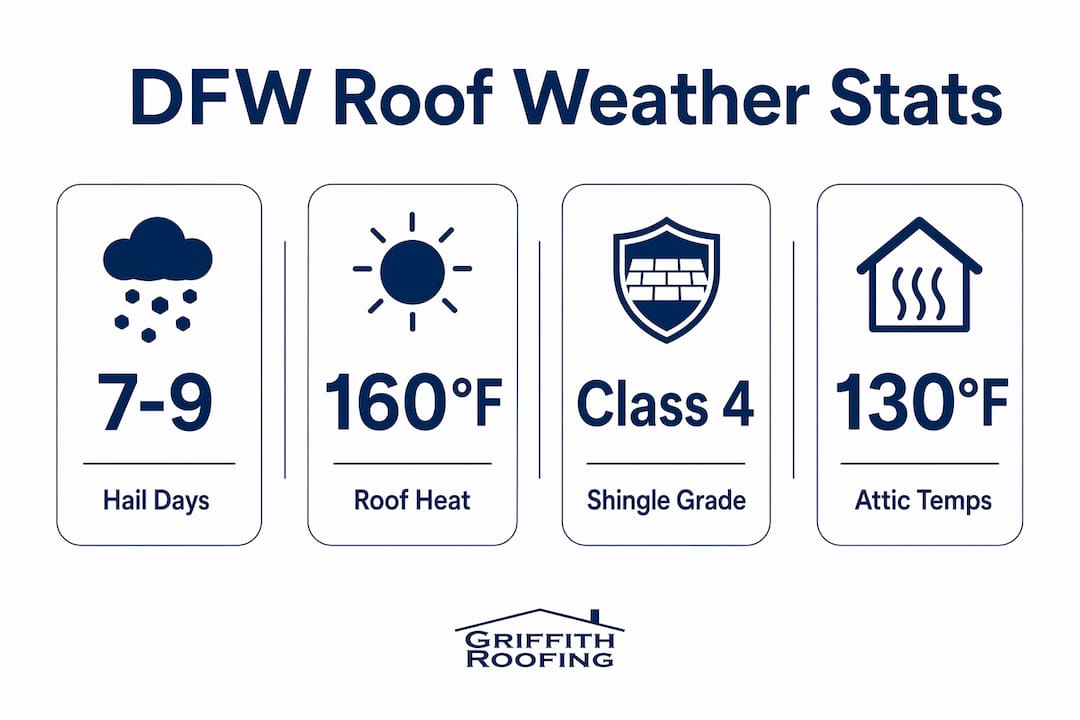
The short answer is geography. DFW sits along a meteorological boundary called the dryline, where dry air from the west collides with warm, moist air from the Gulf of Mexico. That collision supercharges thunderstorm development and produces hail at a rate that outpaces Houston, San Antonio, and Austin combined. DFW experiences damaging hail 7–9 days per year, with stones frequently exceeding one inch in diameter. That frequency alone accelerates granule loss and asphalt brittleness on a timeline most homeowners never expect.
The heat compounds the problem. Roof surfaces in DFW regularly reach 160°F during summer, and attic temperatures can climb past 130°F. Those numbers matter because asphalt shingles, the most common roofing material in the region including products like GAF Timberline HDZ, are petroleum-based. Sustained heat oxidizes the oils that keep shingles flexible. Once that flexibility is gone, the next hailstorm does not just bruise the surface. It cracks it.
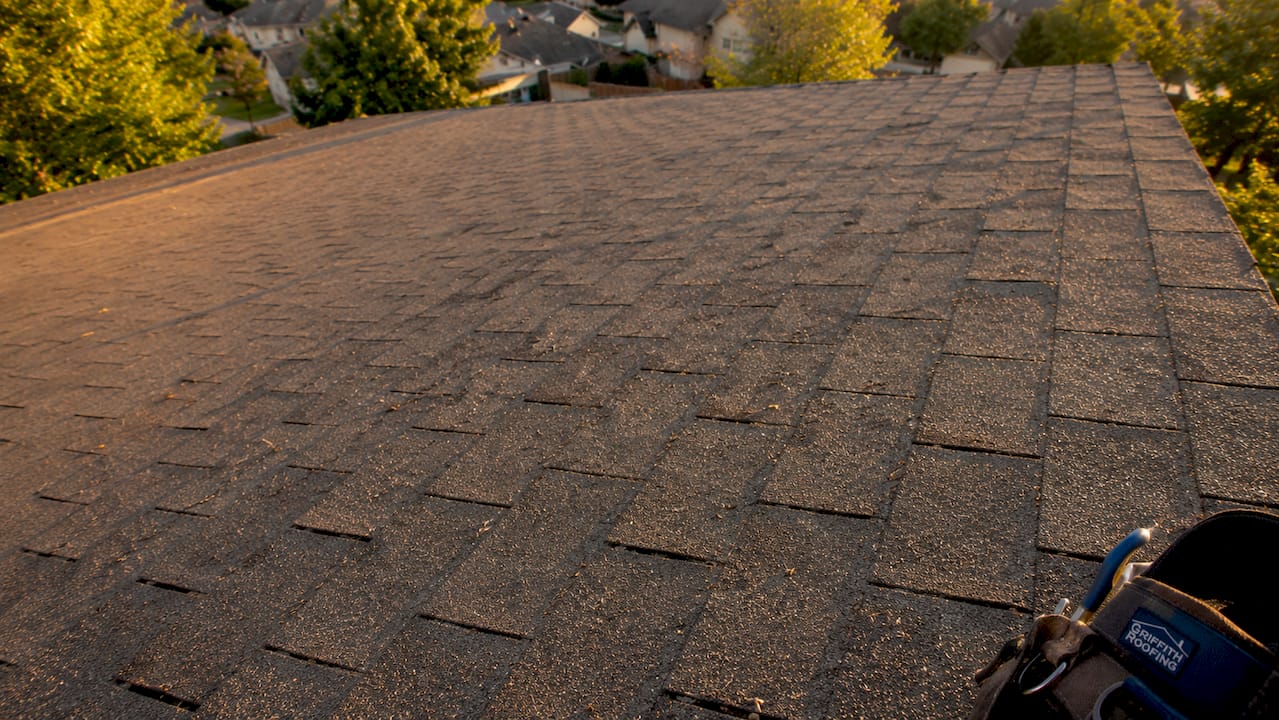
The industry term for this combined failure mode is accelerated weathering. It describes how multiple environmental stressors work together to age a roof system far faster than any single factor would on its own. DFW homeowners face this reality every single year.
How does dfw’s hail pattern accelerate roof aging?
Hail damage is not just about the size of the stone. It is about physics. A 2-inch hailstone carries over twenty times the impact energy of a 1-inch stone. That exponential relationship means the large hail DFW regularly sees does not just chip granules. It fractures the asphalt mat beneath them, creating entry points for moisture and UV radiation.
The damage plays out differently depending on your roof’s age. Five-year-old roofs are significantly less vulnerable to hail than fifteen-year-old roofs under identical storm conditions. Older shingles have already lost elasticity from years of heat cycling, so the same hailstone that bruises a new roof will fracture an aging one. This is why two homes on the same street can show completely different damage after the same storm.
“Storms along the DFW dryline often mature as they track northeast, directly impacting newer, expensive subdivisions where insurance losses are particularly high.” — Hail Protector
Here is what hail actually does to your shingles, step by step:
- Granule displacement: Impact knocks protective granules loose, exposing the asphalt layer to UV radiation.
- Mat fracturing: Harder impacts crack the fiberglass or organic mat beneath the asphalt, reducing structural integrity.
- Seal ring damage: Hail bruises the adhesive seal strips between shingles, allowing wind to lift them in future storms.
- Accelerated brittleness: Each impact event speeds up oxidation, making the shingle more vulnerable to the next storm.
Class 4 impact-resistant shingles, such as those meeting the UL 2218 standard, do reduce this damage significantly. They can lower insurance premiums by 10–20% and handle moderate hail well. They are not immune to baseball-sized hail, though. Think of them as a strong defense, not an impenetrable shield.
Pro Tip: After any hail event, check your gutters and downspouts for granule buildup. Heavy granule loss is a reliable early indicator of shingle damage even when the roof looks intact from the ground.
What role does extreme heat play in roof deterioration?
Heat is the silent killer of DFW roofs. While hail events make the news, continuous heat cycles cause thermal fracturing akin to metal fatigue. The process is gradual and invisible until it is not. Shingles expand in the heat of the day and contract as temperatures drop at night. Over hundreds of cycles per year, that movement creates microscopic cracks in the asphalt layer.
The problem gets worse when attic ventilation is poor. Attic temperatures exceeding 130°F essentially cook shingles from beneath while the sun bakes them from above. The result is accelerated oil loss, brittleness, and surface cracking that can take years off a roof’s expected lifespan. Poor ventilation is the most overlooked factor in premature roof failure across North Texas.
Thermal fracturing is worsened by a DFW-specific pattern: rapid temperature drops when storms roll in. A roof surface sitting at 150°F can drop 40 or 50 degrees in minutes when a cold front arrives. That rapid thermal stress amplifies the expansion and contraction fatigue already building up from summer heat. It is the roofing equivalent of pouring cold water on a hot glass.
The fix is a properly designed ventilation system. Balanced attic ventilation that keeps interior air within 10–15 degrees of outside temperature dramatically reduces shingle brittleness and extends roof life. Modern synthetic underlayments also help by acting as a thermal buffer between the deck and the shingle.
Pro Tip: Check your attic on a hot afternoon. If it feels like an oven, your ventilation is inadequate. A properly ventilated attic should feel warm but not stifling. Fixing this one issue can add years to your roof’s life.
How do wind, rain, and temperature swings compound the damage?
Hail and heat are the primary threats, but DFW’s full weather profile adds several more layers of stress. Each one accelerates the damage already done by the others. Here is how the compounding works:
- Wind uplift: Strong winds break the adhesive seals between shingles and lift their edges. Wind damage often appears minor initially but worsens without timely repair, allowing water to infiltrate with every subsequent rain event.
- Flashing failure: Wind loosens the metal flashing around chimneys, vents, and valleys. Once flashing separates, water channels directly into the roof deck.
- Water intrusion: Rain driven by wind or hail penetrates through compromised granule layers and cracked shingles, saturating the deck and insulation below.
- Freeze-thaw cycles: DFW winters are mild, but sudden cold fronts do arrive. Freeze-thaw cycles cause moisture trapped in cracks to expand, fracturing roofing materials further and loosening fasteners.
- Rapid temperature swings: A 70-degree temperature drop in 24 hours, which DFW sees multiple times per year, puts enormous stress on materials already weakened by summer heat.
The key takeaway here is that no single weather event tells the whole story. A roof that “survived” a hailstorm may have sustained seal damage that leads to a leak six months later during a heavy rain. Delayed repairs are the most expensive mistake DFW homeowners make.
Which roofing materials best withstand dfw’s climate?
Not all roofing materials respond to DFW’s weather the same way. Choosing the right one for your home is one of the most important decisions you will make as a homeowner. Installation quality and system design are as important as material choice in determining how long your roof lasts.
| Material | Hail Resistance | Heat Resistance | Avg. Lifespan in DFW | Relative Cost |
|---|---|---|---|---|
| Standard asphalt shingles | Moderate | Moderate | 15–20 years | Low |
| Class 4 impact-resistant shingles | High | Moderate | 20–25 years | Moderate |
| Metal roofing (standing seam) | Very High | Very High | 40–50 years | High |
| Synthetic composite shingles | High | High | 25–35 years | Moderate-High |
Metal roofing stands out for DFW conditions. It reflects heat rather than absorbing it, handles hail impact without granule loss, and does not experience thermal fracturing the way asphalt does. The upfront cost is higher, but the lifespan math often favors it for homeowners planning to stay long-term.
For homeowners who prefer asphalt, choosing the best roofing material means selecting Class 4 impact-resistant products and pairing them with a quality synthetic underlayment. The underlayment acts as a secondary water barrier and thermal buffer. Fastening technique also matters. Roofs installed with the correct nail pattern and depth resist wind uplift far better than those with shortcuts.
Pro Tip: Ask your contractor specifically about their underlayment spec and nail pattern before signing any contract. These details are invisible once the job is done, but they determine how your roof performs in the next big storm.
What maintenance strategies protect DFW roofs long-term?
Proactive maintenance is the most cost-effective tool you have. A roof inspection costs a fraction of what a full replacement does, and catching damage early prevents the compounding effect described above. Here is what a solid maintenance plan looks like for DFW homeowners:
- Inspect after every significant storm. Do not wait for a visible leak. Hail and storm damage signs often start subtle and worsen over months.
- Schedule a professional inspection twice a year. Spring and fall are ideal, catching damage before summer heat and before winter cold fronts arrive.
- Check attic ventilation annually. Look for blocked soffit vents, inadequate ridge venting, or signs of moisture buildup on the underside of the deck.
- Clear gutters and downspouts. Blocked drainage causes water to back up under shingles, accelerating deck rot and shingle failure.
- Document everything for insurance. Photograph your roof before and after storms. Hail damage claims require evidence, and a well-documented history strengthens your position.
Regular roof inspections in DFW’s climate are not optional maintenance. They are the primary defense against the cumulative damage that DFW weather inflicts year after year. When a professional identifies a cracked flashing or a lifted shingle early, a $300 repair prevents a $15,000 replacement.
Key takeaways
DFW roofs fail faster because hail frequency, extreme heat, and rapid temperature swings combine to age materials at a rate no single climate factor could achieve alone.
| Point | Details |
|---|---|
| DFW hail frequency is extreme | The region sees 7–9 damaging hail days per year, more than Houston, San Antonio, and Austin combined. |
| Heat causes thermal fracturing | Roof surfaces reach 160°F and attics exceed 130°F, oxidizing shingles and creating micro-cracks over time. |
| Age multiplies vulnerability | A 15-year-old roof suffers far more damage from the same storm than a 5-year-old roof on the same street. |
| Material and installation both matter | Class 4 shingles and metal roofing outperform standard asphalt, but only when installed with proper underlayment and fastening. |
| Early inspection saves money | Catching hail or wind damage early prevents compounding failures that turn minor repairs into full replacements. |
What 23 years in DFW roofing has taught me
I have been on thousands of roofs across the Metroplex since Griffith roofing opened in 2001. The pattern I see most often is not dramatic storm destruction. It is slow, cumulative damage that homeowners did not know was happening until water showed up on their ceiling.
The biggest mistake I see is treating the roof as a single material rather than a system. A homeowner upgrades to Class 4 shingles but keeps the original 1990s ventilation setup. The premium shingles are getting cooked from beneath every summer. The upgrade helps, but it does not solve the real problem. Roofing is a system. Shingles, underlayment, ventilation, flashing, and fastening all work together. Weak any one of those links and the whole system underperforms.
I also want to be direct about something the industry does not say enough: the newer subdivisions pushing into the northeast DFW corridor are sitting in the path of the most mature, most destructive hail storms in the region. If you bought a home in Frisco, McKinney, or Prosper in the last decade, your roof is statistically more likely to face a severe hail event than homes closer to the city center. That is not a reason to panic. It is a reason to be proactive, choose materials wisely, and inspect regularly.
Weather stress is cumulative. Every summer adds to the thermal fatigue. Every hailstorm adds to the granule loss. The homeowners who come out ahead are the ones who treat roof maintenance as an ongoing practice, not a one-time fix.
— Mark Griffith
Griffith roofing protects DFW homes from the ground up
DFW’s weather does not give your roof a break. Griffith roofing has spent over two decades building and repairing roofs specifically designed to handle this climate. From Class 4 impact-resistant shingles to standing seam metal roofing, every solution we recommend is matched to the real conditions your home faces.
Whether you need a post-storm inspection, a targeted repair, or a full replacement, our team brings the local knowledge that generic contractors simply do not have. Explore our residential roofing services to see how we approach DFW’s unique challenges, or get started with expert roof repair if you already suspect damage. We do not consider the job done until you are completely satisfied.
FAQ
How often does DFW get damaging hail?
DFW experiences damaging hail 7–9 days per year, more than any other major Texas metro. Hailstones frequently exceed one inch in diameter due to the region’s dryline meteorology.
What temperature does a DFW roof surface reach in summer?
Roof surfaces in DFW can reach up to 160°F during peak summer heat. Attic temperatures often exceed 130°F, which accelerates shingle brittleness from beneath.
Are class 4 impact-resistant shingles worth the cost in DFW?
Class 4 shingles reduce insurance premiums by 10–20% and handle moderate hail well. They are not immune to baseball-sized hail, so they work best as part of a complete roofing system with proper ventilation and underlayment.
How do i know if my roof has hail damage?
Check your gutters for granule buildup after a storm and look for circular bruising or cracked shingles on the surface. A professional inspection is the most reliable way to identify damage before it leads to leaks.
How long should a roof last in DFW?
Standard asphalt shingles typically last 15–20 years in DFW’s climate, compared to the 25–30 year ratings manufacturers advertise for milder regions. Metal roofing can last 40–50 years when properly installed.


