

Roofing felt is installed beneath shingles to serve as a secondary water barrier, support fire-resistance classifications, and protect the wood deck from moisture and resin damage. It is not decorative and not optional in most roofing assemblies. Here is what it actually does for your home:
- Secondary water barrier: Sheds wind-driven rain and meltwater that penetrate the outer shingle layer before it reaches the wood deck
- Fire resistance: UL fire-rated assemblies require underlayment. Asphalt shingles alone do not carry a Class A, B, or C fire classification without felt in the assembly
- Deck protection: Separates asphalt shingles from wood deck resins that can degrade shingles prematurely
- Visual quality: Reduces “picture framing,” the visible outline of deck panels telegraphing through finished shingles
- Temporary weather protection: Keeps the deck dry between tear-off and shingle installation
- Warranty compliance: Skipping underlayment voids manufacturer warranties and can invalidate fire ratings
What roofing felt actually is and how it works as underlayment
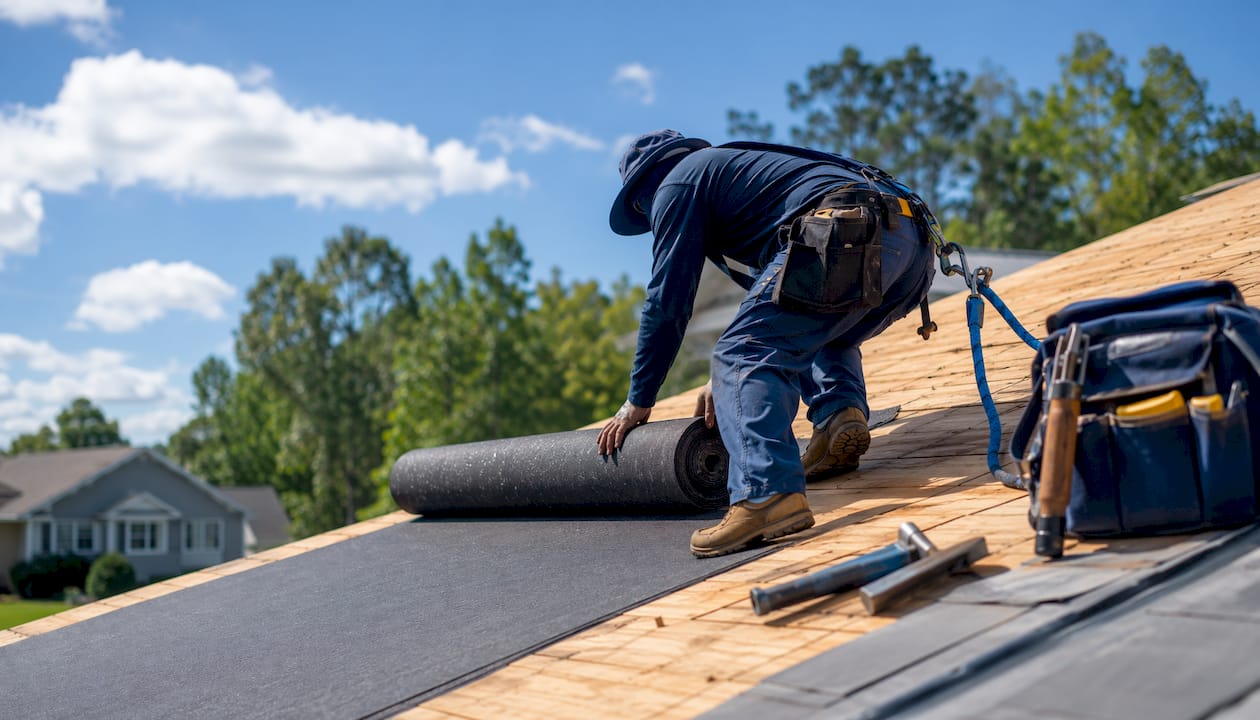
Roofing felt is an asphalt-saturated fabric installed directly on the roof deck before shingles, tiles, or metal panels go on. Historically made from organic materials like cotton or burlap, the substrate has evolved into fiberglass mats and synthetic polymers, though the core function has not changed. The Asphalt Roofing Manufacturers Association (ARMA) states plainly that asphalt shingles should never be installed directly on a wood deck without underlayment first.
The material works on two levels. First, it sheds water that bypasses the shingles, guiding moisture down and off the roof edge rather than letting it soak into the plywood or oriented strand board (OSB) below. Second, it acts as a physical separator, keeping wood resins from leaching up into the asphalt shingles and causing them to crack, stick, or wear out years ahead of schedule. Think of it as a quiet, invisible layer doing two jobs at once.
Roofing felt is also vapor-permeable to a degree, which matters for attic moisture management. It is not a vapor barrier in the way a plastic sheet is, but it does slow moisture movement between the deck and the shingles above.
What are the main types of roofing felt you should know?
The two standard weights are No. 15 felt (Type I) and No. 30 felt (Type II), both defined under ASTM D226. No. 15 is the lighter option and works well under standard 20- to 25-year asphalt shingles. No. 30 is heavier and more durable, suited for longer-life roof systems like slate or tile where the underlayment needs to match the covering’s expected service life.
- Organic felt: Asphalt-saturated organic mat. Water-resistant but absorbs some moisture over time; can wrinkle if wet before shingles are applied
- Fiberglass-reinforced felt: More dimensionally stable than organic felt; resists tearing during installation
- Synthetic underlayment: Polymer-based, lighter, and stronger per pound than traditional felt. Increasingly common but still tested alongside felt in most UL assemblies
- Self-adhering membranes: Used on low-slope sections or as ice-and-water shield at eaves. Seals around nails, offering a higher level of leak protection than mechanically fastened felt
Heavier or double-layer configurations are not just for premium roofs. For lower-slope sections where water drains slowly, the extra material is a code requirement, not an upgrade.
When is roofing felt required, and why does it matter?
Building codes in the United States require underlayment on virtually every residential roof. Section R905.1.1 of the 2024 International Residential Code (IRC) and section 1507.1.1 of the 2024 International Building Code (IBC) both contain specific underlayment requirements tied to roof slope and application type. Local amendments may add further requirements, so checking Fort Worth roofing codes before any project is worth the five minutes it takes.
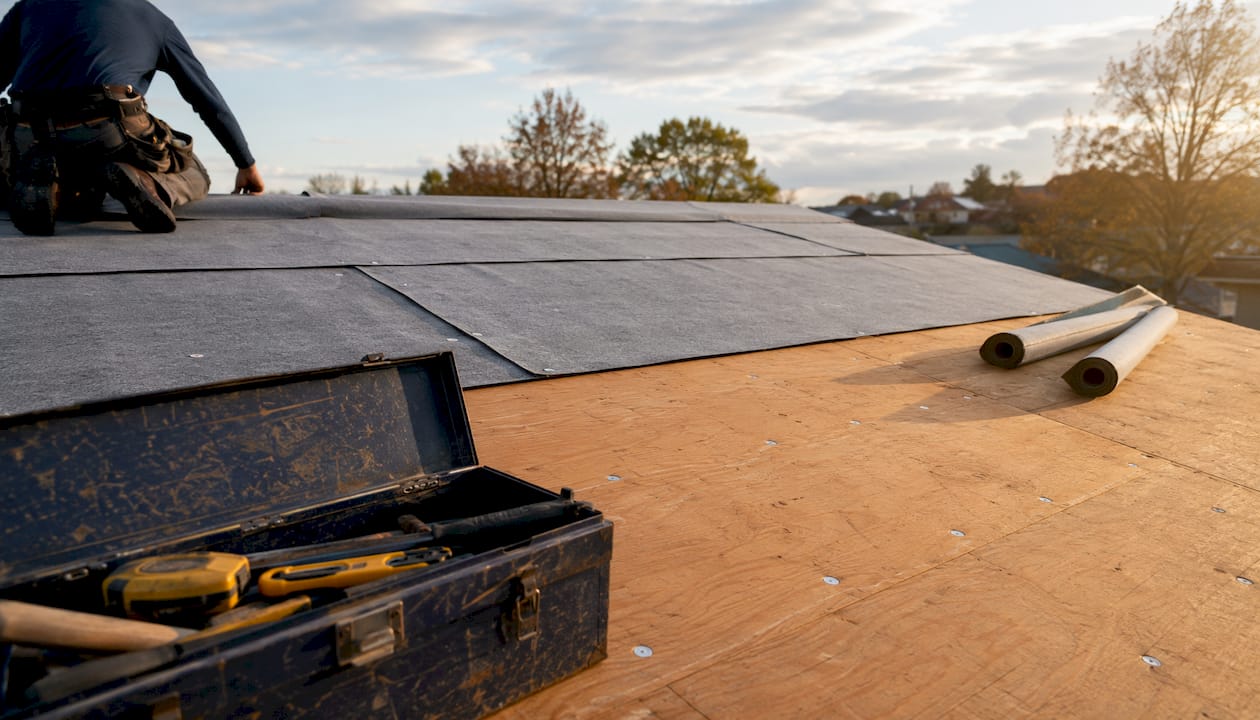
For low-slope roofs between 2:12 and 4:12, codes typically require either a double layer of mechanically fastened underlayment or a single layer of self-adhering underlayment. Steeper roofs generally allow a single layer of No. 15 felt, installed horizontally in shingle fashion starting at the eaves.
Beyond code, felt is especially critical in climates with heavy wind-driven rain, ice dams, or frequent storm activity. In the Dallas-Fort Worth area, where hail and severe thunderstorms are a regular seasonal threat, DFW weather conditions make a properly installed underlayment one of the most cost-effective protections you can have under your shingles.
How should roofing felt be installed to actually protect your roof?
Correct installation determines whether felt delivers on its promise or becomes a liability. The National Roofing Contractors Association (NRCA) recommends installing underlayment sheets horizontally in shingle fashion, with a minimum 2-inch lap on horizontal seams and a minimum 4-inch lap on vertical end joints. That overlap sequence is what allows water to run down and off rather than under.
- Fastening: Use nails or staples to hold felt in place until shingles go on. Nails hold more securely in high-wind areas; staples are faster but can pull through if the felt gets wet before shingles are applied
- Wrinkles: Slice any wrinkles with a utility knife and nail the felt flat. Buckled felt telegraphs through finished shingles and creates the picture-framing effect the underlayment is supposed to prevent
- Penetrations: Seal around pipes, vents, and flashings carefully. Poor seam overlaps and unsealed penetrations funnel water directly under the deck, negating every benefit the felt provides
- Low-slope sections: Double-layer or self-adhering underlayment is required. A single layer of No. 15 felt on a 2:12 slope will not shed water fast enough to stay effective
- Exposure time: Cover felt with shingles as quickly as possible. UV exposure degrades asphalt-saturated felt rapidly, making it brittle and less water-resistant
Pro Tip: Never walk on felt that has not been nailed down. Loose felt shifts underfoot and is a serious slip hazard, especially when dusty or damp.
Expert insights from Griffith roofing on felt’s protective role
At Griffith roofing, we have installed and inspected roofs across the Dallas-Fort Worth area for over two decades. One thing we see repeatedly: homeowners assume roofing felt is waterproof. It is not. Felt is a secondary water-resistant barrier, designed to shed water that gets past the shingles, not to stop a sustained leak on its own. If your shingles fail and water sits on the felt for days, the felt will eventually fail too.
The fire-rating piece surprises many homeowners. A shingle by itself carries no fire classification. The Class A, B, or C rating your roof holds comes from the entire assembly, and underlayment is a required component of every tested assembly. Remove the felt and you remove the rating, which can affect your insurance coverage and code compliance simultaneously.
Ventilation is the other factor worth understanding. Underlayments can slightly increase roof temperature by reducing airflow under the shingles, which accelerates shingle aging over time. Proper attic ventilation offsets this effect. When Griffith roofing installs or replaces underlayment, we always review the ventilation setup to make sure the two systems work together rather than against each other.
Underlayment that protects against voided warranties is genuinely inexpensive insurance relative to the cost of deck replacement. A sheet of No. 15 felt costs a fraction of what water-damaged OSB costs to tear out and replace.
How does roofing felt affect sustainability and the environment?
Traditional asphalt-saturated felt is a petroleum-based product, which means it carries an environmental footprint at both the manufacturing and disposal stages. When a roof is torn off, old felt typically goes to the landfill alongside the shingles, since separating and recycling the two materials is not practical at most facilities.
Synthetic underlayments made from polypropylene or polyester use less raw material by weight and tend to last longer, which reduces replacement frequency. Some manufacturers have introduced products with recycled content, though performance data on long-term durability varies. The most sustainable choice is usually the underlayment that matches your roof system’s service life precisely, so you are not replacing it ahead of schedule.
For homeowners interested in residential roofing options with a lower environmental impact, pairing a longer-life shingle with a heavier No. 30 felt or a quality synthetic underlayment reduces the total number of roof tear-offs over a home’s lifetime.
Common roofing felt failures and how to prevent them
Most felt failures trace back to installation errors, not material defects. The most common problems are mechanical damage from foot traffic or dropped tools, improper overlaps that let water run under the seams, and UV degradation from leaving felt exposed too long before shingles go on.
Wrinkles are a persistent issue. Felt that gets wet before shingles are applied can buckle as it dries, creating ridges that show through the finished surface. The fix is straightforward: slice the wrinkle, nail the felt flat, and apply a thin coat of asphalt-based roofing cement over any cuts if the deck will be exposed overnight.
Penetrations are the other common failure point. Every pipe, vent, and flashing creates an opportunity for water to bypass the felt if the seams around it are not sealed. Felt alone does not seal around fasteners the way a self-adhering membrane does, which is why high-risk areas like valleys and eaves often call for ice-and-water shield instead of standard felt. Choosing the right underlayment for each zone of the roof, rather than using one product everywhere, is how professional roofers prevent the failures that homeowners discover years later as stained ceilings and rotted decking.
Key Takeaways
Roofing felt is a required underlayment layer that protects the deck, supports fire ratings, and preserves shingle warranties in virtually every residential roof assembly.
| Point | Details |
|---|---|
| Secondary water barrier | Felt sheds wind-driven rain and meltwater that bypass shingles, protecting the wood deck below. |
| Fire rating requirement | UL Class A, B, and C fire classifications require underlayment as part of the tested assembly. |
| Warranty protection | Skipping underlayment voids manufacturer warranties and can invalidate fire ratings. |
| Low-slope code rules | Roofs between 2:12 and 4:12 require double mechanically fastened layers or self-adhering underlayment. |
| Installation quality matters | Poor overlaps and unsealed penetrations funnel water under the deck, negating felt’s protection. |
Ready to protect your roof the right way?
Griffith roofing has served homeowners across the Dallas-Fort Worth Metroplex since 2001. Whether you are replacing an aging roof or repairing storm damage, our team installs underlayment correctly the first time, matching the felt type to your roof’s slope, climate exposure, and shingle system. Explore our residential roofing services or reach out directly to schedule an inspection.
FAQ
Is felt necessary on a roof?
Yes. Building codes under the 2024 IRC and IBC require underlayment on virtually all residential roofs, and most shingle manufacturers require it to maintain warranty coverage and UL fire ratings.
What happens if you don’t use roofing felt?
Skipping underlayment exposes the wood deck to moisture from wind-driven rain and ice dams, voids manufacturer warranties, and removes the fire-resistance classification from the roof assembly.
Do roofers still use roofing felt?
Yes. Traditional asphalt-saturated felt remains widely used, though synthetic underlayments have grown in popularity. Both are accepted by building codes and manufacturer guidelines when they meet ASTM D226 or equivalent standards.
What is the main purpose of roof felt?
Felt acts as a secondary water barrier beneath shingles, shedding moisture that penetrates the outer layer while also separating the shingles from wood deck resins that can cause premature shingle degradation.


