

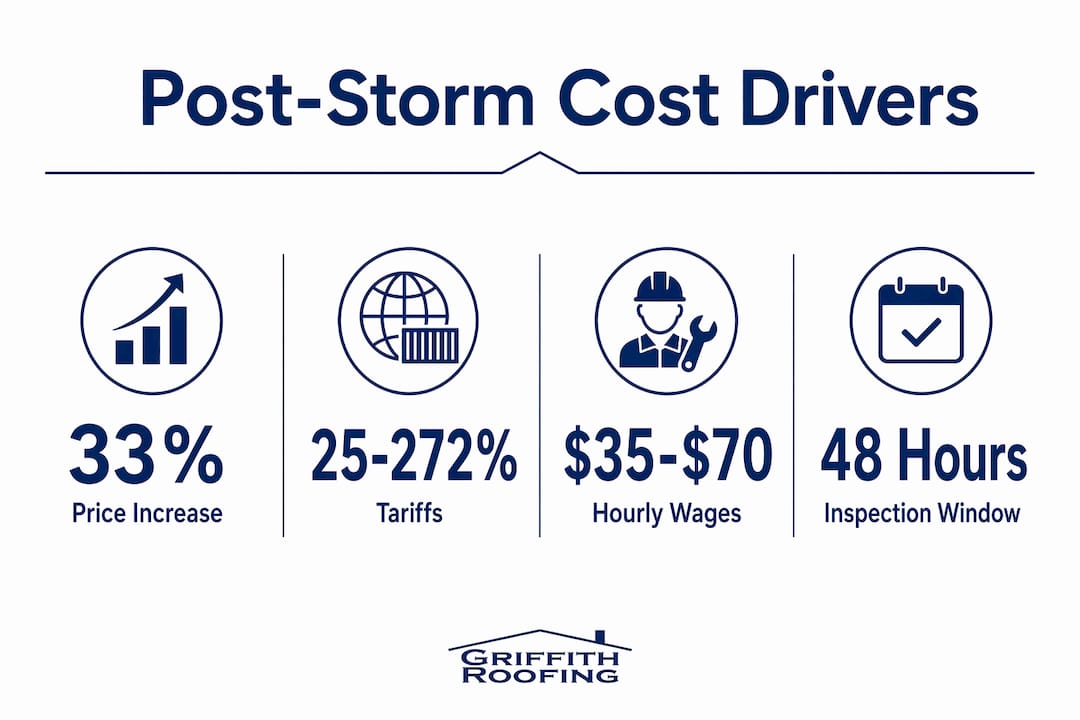
Roofing price surges after DFW storms are defined by a collision of hyper-demand, constrained materials, and workforce shortages that hit simultaneously the moment a major hail or wind event ends. Understanding why roofing prices spike after DFW storms is not just reassuring. It is the first step toward protecting your budget and your home. Average residential roof replacement costs hit $17,631 in 2025, a 33% jump above the prior four-year average. That number reflects a market under sustained pressure from demand spikes, material cost increases, labor shortages, and insurance dynamics that all compound after every significant storm.
Why roofing prices spike after DFW storms: supply and demand
The core driver of roofing cost increases after storms is simple economics. When a hailstorm pummels a large section of the DFW Metroplex, thousands of homeowners need roof repairs or replacements at the same time. Local contractors cannot absorb that volume. The result is a seller’s market for roofing labor and materials, and prices climb fast.
Roofing prices spike 20–40% immediately after major hail or wind events in DFW. That range is not a rough estimate. It reflects documented post-storm pricing behavior driven by hyper-demand and labor shortages in the same market window.
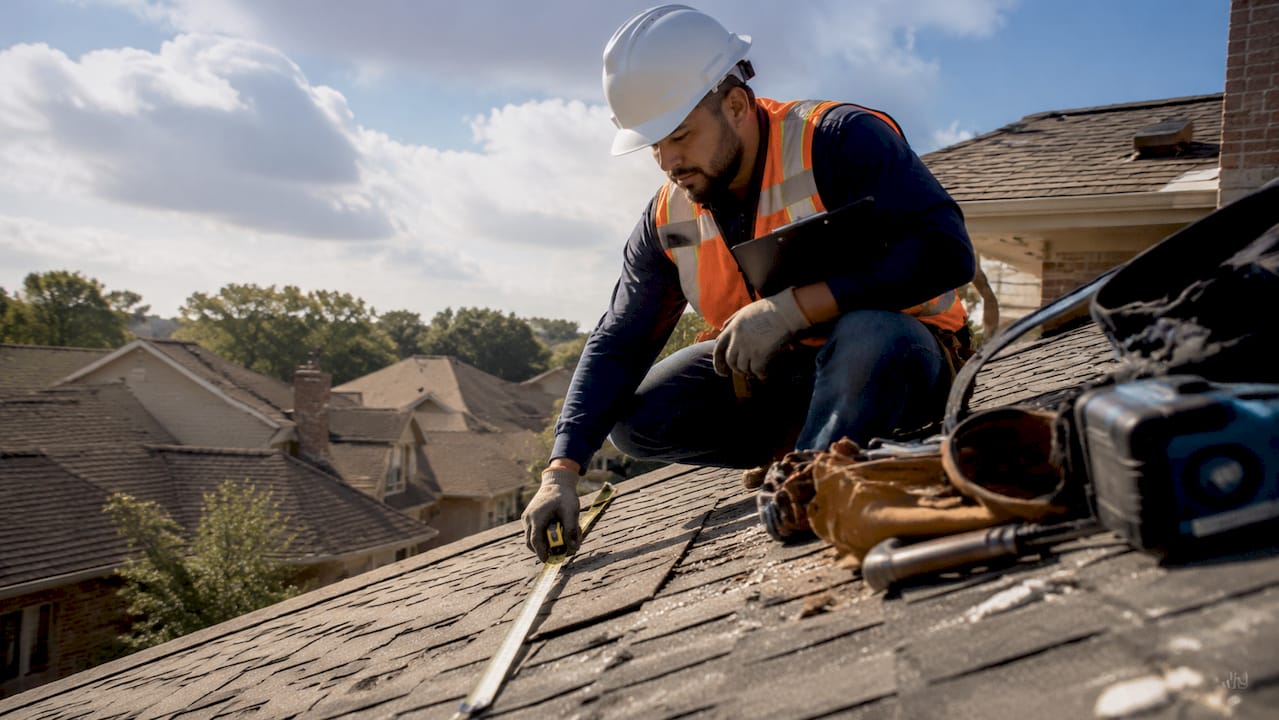
The supply side compounds the problem. Roofing materials such as asphalt shingles, underlayment, and decking boards move through regional distribution networks. When every contractor in North Texas orders supplies at once, local distributors run short. Shipping delays and allocation limits push prices higher before a single nail is driven.
Several factors accelerate this demand surge:
- Simultaneous damage across zip codes means every homeowner calls contractors on the same day.
- Insurance claim timelines create a compressed repair window, pushing all jobs into the same weeks.
- Out-of-state crews flood the market but cannot fully offset local contractor shortages.
- Material distributors face allocation limits and prioritize long-term contractor relationships over new buyers.
Pro Tip: Schedule your roof inspection within 48 hours of a storm. Contractors book fast, and early scheduling often locks in pre-surge pricing before the full demand wave hits.
How material costs and tariffs drive post-storm pricing in DFW
Material costs are a pricing floor that every contractor must build on. That floor rose sharply in 2025 and has not come back down. Major shingle manufacturers including GAF, Owens Corning, and CertainTeed raised prices 6–10% in the same quarter. Those increases apply to every job, storm or not. After a storm, they amplify an already elevated market.
Tariffs add another layer. Current tariffs of 25–272% on steel, aluminum, and roofing chemicals directly increase the cost of metal roofing panels, drip edge, flashing, and synthetic underlayment. Those costs pass directly to you as the homeowner.
Asphalt shingles carry their own vulnerability. Petroleum prices influence asphalt production costs, and any crude oil price movement ripples through shingle pricing within weeks. When storm demand spikes at the same time petroleum costs rise, the combined effect on DFW storm roofing pricing is significant.
| Material | Primary cost driver | Post-storm impact |
|---|---|---|
| Asphalt shingles | Petroleum prices, manufacturer hikes | Scarcity drives price above list |
| Metal panels and flashing | Steel and aluminum tariffs (25–272%) | Allocation limits slow delivery |
| Synthetic underlayment | Roofing chemical tariffs | Substitution costs increase |
| Decking and plywood | Lumber commodity markets | Regional shortages after large events |
Pro Tip: Ask your contractor for a written material quote locked to a specific date. Material prices can shift week to week after a storm, and a locked quote protects you from mid-project cost increases.
How labor shortages and storm chasers escalate DFW roofing prices
Skilled roofer wages in Texas metro areas range from $35 to $70 per hour, and demand outstrips supply after every significant storm. Local crews are booked weeks out. That scarcity alone pushes labor costs higher. The roofing trade in Texas faces a structural shortage of experienced workers, and no storm changes that overnight.
Storm chaser contractors fill part of the gap, but at a cost. These are out-of-state crews who follow storm events into markets like DFW, take on high volumes of work quickly, and leave. Storm chasers drive temporary labor rate hikes of 20–40% while introducing real risks around workmanship quality and warranty enforcement.
The risks of hiring storm chasers are concrete:
- No local license or bond in Texas means limited recourse if work fails.
- Warranty claims become nearly impossible to enforce once the crew leaves the state.
- Shortcuts in installation such as improper nail patterns or skipped underlayment layers create future leak points.
- Insurance fraud exposure increases when out-of-state contractors misrepresent scope or inflate claims.
Learning to spot roofing scams after Texas storms is one of the most practical skills a DFW homeowner can develop. The pressure to act fast after a storm is real, but a bad contractor costs far more than a delayed repair.
How insurance trends push roofing costs higher after storms
Insurance is not a passive backdrop to roofing prices. It actively shapes them. North Texas home insurance premiums have risen approximately 80% since 2020, driven in large part by frequent hail damage claims. Average premiums in DFW counties now exceed $4,000 annually. That cost pressure changes how homeowners budget for roof work and how insurers evaluate claims.
Roof condition is the largest variable in insurance underwriting, and older or damaged roofs incur significantly higher loss costs and premiums. Insurers now price policies based on roof age, material type, and condition. A 15-year-old three-tab shingle roof in Collin County carries a very different risk profile than a new impact-resistant roof in the same neighborhood.
Understanding what insurance pays for roof replacement in Texas requires knowing how your policy handles actual cash value versus replacement cost value. Many homeowners discover their deductible has grown to 1–2% of their home’s insured value, which on a $400,000 home means $4,000–$8,000 out of pocket before insurance covers anything.
Key insurance dynamics that affect your roofing costs after a storm:
- Age-based depreciation reduces claim payouts on older roofs, leaving larger gaps for homeowners to cover.
- Material-specific exclusions in some policies limit coverage for certain shingle types.
- Hail deductible riders separate from standard deductibles apply specifically to storm damage claims.
- Convective storms now drive the majority of roof claim severity, even in years without major catastrophic events.
Practical steps to manage roofing costs after a DFW storm
Knowing why roofing costs rise post-storm gives you real leverage. The homeowners and property managers who manage costs best after storms are the ones who prepared before the storm hit.
-
Schedule proactively before hail season. Replacing an aging roof in late winter or early spring, before the april through june peak storm window, avoids surge pricing entirely. Contractors have more availability, and material costs are stable.
-
Choose hail-resistant materials. Class 4 impact-resistant shingles qualify for insurance discounts in Texas and reduce future claim frequency. Selecting the right roofing material for North Texas weather is one of the highest-return decisions a homeowner can make.
-
Vet your contractor before signing anything. Verify Texas roofing license, local business address, and manufacturer certifications. A contractor certified by GAF or Owens Corning has met installation standards that protect your warranty. Understanding hail versus wind damage distinctions also helps you communicate accurately with both your contractor and your insurer.
-
File your insurance claim promptly and document everything. Photograph damage before any temporary repairs. Keep all receipts. Delays in filing can complicate claim approval, and incomplete documentation reduces your payout.
-
Review your policy before storm season. Know your deductible structure, your roof’s scheduled replacement cost, and whether your policy covers the full replacement cost or only actual cash value. Reviewing your Texas insurance roof coverage annually takes less than an hour and can save thousands.
Key Takeaways
Post-storm roofing price increases in DFW result from simultaneous demand surges, material cost floors set by manufacturer hikes and tariffs, labor shortages, and insurance premium pressures that compound every time a major storm hits North Texas.
| Point | Details |
|---|---|
| Demand surge drives prices 20–40% higher | Thousands of simultaneous repair needs overwhelm local contractors and material supply chains. |
| Material costs have a new, higher floor | GAF, Owens Corning, and CertainTeed raised shingle prices 6–10% in 2025, with tariffs adding further pressure. |
| Storm chasers inflate costs and add risk | Out-of-state crews charge 20–40% more and often leave homeowners without enforceable warranties. |
| Insurance premiums shape roofing budgets | North Texas premiums rose 80% since 2020, and roof condition is the top underwriting variable. |
| Proactive timing is the best cost control | Replacing or repairing before storm season avoids surge pricing and secures better contractor availability. |
What 23 years in DFW roofing taught me about storm pricing
I have watched this cycle repeat more times than I can count. A storm rolls through Tarrant or Collin County, and within 48 hours the phones ring constantly. Homeowners are stressed, prices are climbing, and out-of-state trucks are already parked in neighborhood cul-de-sacs.
The homeowners who come out best are never the ones who acted fastest. They are the ones who acted smartest. The biggest mistake I see is signing with the first contractor who knocks on the door after a storm. That contractor is often from out of state, carrying no local accountability, and quoting a price that sounds reasonable only because the homeowner has no baseline for comparison.
The second mistake is waiting too long to address an aging roof. A 15-year-old roof in DFW is not just a maintenance issue. It is a financial liability. Every storm season it survives is a roll of the dice, and when it finally fails, it fails during a surge when prices are at their peak and contractors are booked out for weeks.
My honest advice: treat your roof like a mechanical system with a service life, not a permanent fixture. Know its age, know its condition, and plan its replacement on your timeline rather than the storm’s. The impact of DFW weather on roofs is relentless, and the market punishes homeowners who are caught unprepared.
— Mark Griffith
Griffith roofing is ready when DFW storms hit
When a storm scars your roof, the last thing you need is uncertainty about who to call or what it will cost.
Griffith roofing has served DFW homeowners since 2001 with licensed, locally accountable crews who do not disappear after the job is done. Whether you need storm damage repair or a full residential roof replacement, Griffith roofing provides honest assessments, manufacturer-certified installation, and transparent pricing. Flexible financing options are available for homeowners facing unexpected replacement costs after a storm. You get a local team that stands behind its work long after the storm chasers have moved on.
FAQ
Why do roofing prices rise so fast after a DFW storm?
Prices spike because thousands of homeowners need repairs simultaneously, overwhelming local contractor capacity and material supply chains. Industry data shows prices rise 20–40% immediately after major hail or wind events in DFW.
How much does a roof replacement cost after a DFW storm?
Average residential roof replacement costs reached $17,631 in 2025, a 33% increase above the prior four-year average. Post-storm surge pricing can push that figure higher depending on material availability and contractor demand.
Are storm chaser contractors safe to hire after a DFW storm?
Storm chasers carry significant risks including no local license, unenforceable warranties, and a higher likelihood of installation shortcuts. Hiring a locally licensed, manufacturer-certified contractor protects your investment and your insurance claim.
How does my roof’s condition affect my insurance premium?
Roof condition is the largest variable in insurance underwriting. Older or damaged roofs incur significantly higher premiums and loss costs, and many DFW insurers now factor in roof age and material type when setting annual rates.
When is the best time to replace a roof to avoid storm surge pricing?
Replacing your roof in late winter or early spring, before the peak april through june storm season, gives you stable material pricing, better contractor availability, and protection heading into the highest-risk months for DFW hail events.


